Oman is a country that, in many ways, shatters stereotypes about the arid Arabian Peninsula. Here you’ll find rivers that never run dry, lush forests, mountains, and underground wells with salty water. The cities lack the ostentatious luxury found in the UAE, but you’ll find a decent standard of living and excellent service everywhere, and ancient forts and a unique culture will complement your beach vacation. The 2026 Oman Travel Guide will help you navigate the leisure options this visa-free country has to offer travelers.
- Useful Information
- Visas and Documents
- Traveling to Oman
- Tours to Oman
- Hotels in Oman
- Prices and Currency
- Interesting Facts
- Beaches and Resorts
- Mobile Networks and Internet
- Cuisine and Restaurants
- Holidays and Events
- Useful Phone Numbers
- Tips from Travelers
- FAQ
Useful Information
| Capital | Muscat |
| Language | Arabic; English is widely spoken in the tourism sector and hotels |
| Currency | Omani rial (OMR); dollars can be exchanged at banks and currency exchange offices |
| Time difference | 3 hour ahead Central European Time (UTC+4) |
| Do you need a visa | Citizens of 103 countries and territories can enter Oman visa-free for up to 14 days (you can check below in “Useful links”) |
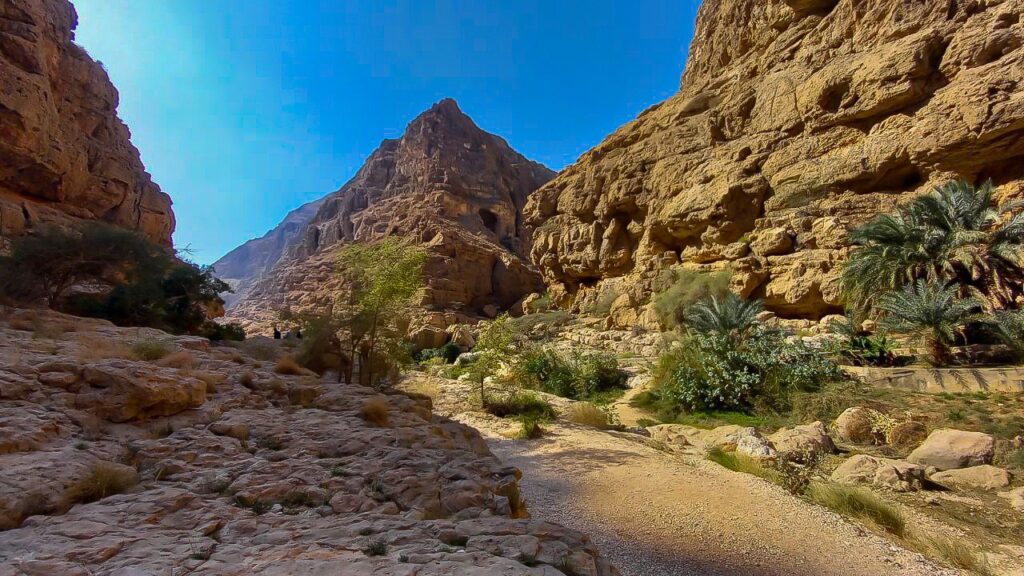
| Where do tourists go | Muscat, Salalah, the Wahiba Desert, the Jebel Akhdar Mountains, Musandam, Wadi Shab and Bani Khalid, Nizwa, and Bahla |
| Best time to visit | Best time: October–April; summers are very hot and humid |
| Internet and communication | Mobile coverage reaches 98% of the populated area; local SIM cards are sold at the airport and in mobile shops; Wi-Fi is available in hotels, cafes, and shopping centers |
Visas and Documents for Travel to Oman
Citizens of 103 countries and territories can enter Oman visa-free for up to 30 days per trip. However, the total duration of stay in Oman may not exceed 90 days per calendar year. You can check your passport and nationality below in the Oman Police Department website in “Useful links”.
Your passport must be valid for at least six months from the date of departure and have two blank pages for stamps. Border control officers may ask to see your return ticket and hotel reservation in Oman.
Traveling to Oman
By Air
Europe to Oman offers many flight options. Most flights go to Muscat. Some routes serve Salala. Oman Air operates most of these flights.
Flights to Muscat
| Country | City (airport) | Airlines |
|---|---|---|
| Austria | Vienna | SalamAir |
| Bosnia & Herzegovina | Sarajevo | SalamAir |
| Czechia | Prague | SmartWings |
| France | Paris (CDG) | Oman Air |
| Germany | Frankfurt, Munich | Oman Air |
| Italy | Milan, Rome | Oman Air, Neos |
| Netherlands | Amsterdam | Oman Air |
| Russia | Moscow (SVO), Sochi | Oman Air |
| Switzerland | Zurich | Oman Air |
| Turkey | Istanbul (IST, SAW), Trabzon | Oman Air, Turkish Airlines, SalamAir, Pegasus |
| United Kingdom | London (LHR) | Oman Air |
Flights to Salalah
To Salalah from Europe there is only seasonal flights and only from Italy:
- Rome (Fiumicino)
- Milan (Malpensa)
- Verona
Some routes operate seasonally. Check with your airline for current schedules. Search aggregators like Trip.com or Kiwi.com help you find specific flights.
Oman from UAE
Many tourists visit Oman as part of a cruise in the Persian Gulf; there are plenty of such options departing from ports in the neighboring Emirates.
You can also travel by land from the UAE—buses run from Dubai, Abu Dhabi, and Sharjah. Travel time ranges from 6 to 9 hours, depending on the departure point and border wait times.
Another option for experienced travelers is to drive a rental car from the UAE; many rental companies in the Emirates allow travel to neighboring countries, but this must be discussed before booking. You can check at Localrent.com.
Tours to Oman
Despite the beautiful Indian Ocean beaches in Salalah, tours to the Sultanate of Oman are not yet very popular. There are no charter flights, but tour operators offer package tours with scheduled flights, mostly with a layover in Abu Dhabi. Such tours can be found through many major tour operators and on travel search aggregators.
As for resorts, Salalah is the main option—a classic beachfront hotel vacation with a wide range of dining options, including ultra-all-inclusive packages. There are also tours with accommodations in Muscat and, very rarely, in remote hotels in the mountains.
In addition to beach vacations, active tours are in high demand—desert safaris, dune surfing, diving, hiking, and paragliding. However, these are usually excursion options for guests staying at hotels in Salalah or Muscat.
Hotels in Oman
Hotels in the country are distinguished by their high standards, spacious rooms, and understated elegance—even in the capital, there are no towering skyscrapers to take your breath away, and resort complexes outside the city generally blend seamlessly into the landscape. Most popular hotels are concentrated in Muscat, as well as in the Salalah resorts and the country’s mountainous regions.
Four- and five-star hotels predominate, featuring spacious rooms and high-quality service, with a distinct blend of traditional Omani architecture and modern design. Hotels are geared toward a peaceful vacation experience without loud parties or mass entertainment. There are excellent beach resorts with their own private beaches and a large number of hotels featuring private coves, spas, and villas.
Currency and Prices in Oman
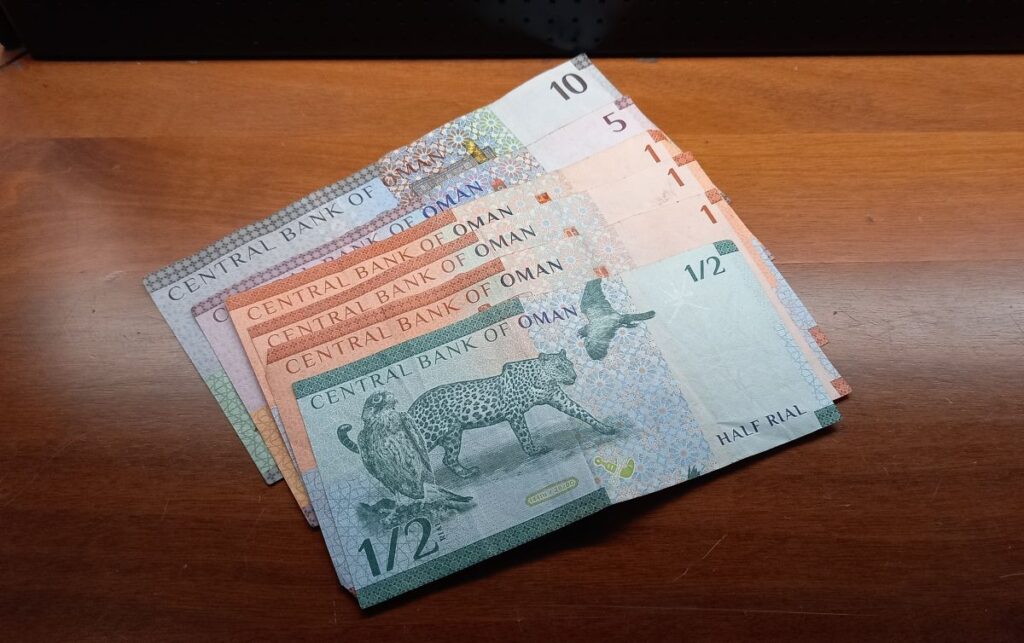
The country’s national currency is the Omani rial (OMR), which is considered one of the most valuable currencies in the world—one rial is worth more than two euros. You can check the exchange rate in the “Useful Links” section.
Due to its high value, you can find a banknote of a very interesting denomination in the country—half a rial—a real find for currency collectors. The Omani rial is not divided into 100 baiz, as one might assume, but into 1,000, and to the delight of collectors, 100-baiz bills can be found.
The Omani rial is pegged to the dollar at the government level (1 rial equals 2.6 dollars), though the exchange rate may vary depending on the bank or exchange office. The best exchange rate is found at banks and exchange offices in the city. Exchange offices can be found in shopping malls, markets, and tourist areas of Muscat and Salalah. The least favorable rate is at the airport and in hotels, but there are advantages—you can exchange money there at any time.
The best option is to bring U.S. dollars with you; they are easy to exchange, have a stable exchange rate, and are accepted at any exchange office. Many exchange offices offer a better rate for new and crisp high-denomination dollar bills.
Interesting Facts About Life in Oman
About the Country
Oman is a country in the southeastern part of the Arabian Peninsula, bordered by the Indian Ocean. The country also has access to the Persian Gulf and the Strait of Hormuz via an exclave separated by the territory of the United Arab Emirates.
Oman is a sultanate, and its official religion is Islam. But even here, things are quite unusual: the majority of the country’s population is neither Sunni nor Shia, but Ibadhi.
Oman is considered one of the most peaceful and safe countries in the Middle East, where modern infrastructure blends with Arab culture, ancient forts, and oriental markets.
Interesting fact: there are virtually no skyscrapers in the country; the authorities limit building heights to preserve the national architectural style and natural landscapes.
Oman’s natural landscape differs greatly from the typical image of Gulf countries. Here you’ll find not only deserts but also green mountains, deep canyons, oases, long beaches along the Indian Ocean, and even a rainy season in the southern province of Dhofar.
Omanis are known for their hospitality and laid-back lifestyle. Tourism is actively developing, but the authorities are focusing on a peaceful vacation without mass entertainment and a bustling nightlife. Many choose the country for its beautiful nature, diving, ocean beaches, desert tours, and the atmosphere of the “real East” without large crowds of tourists.
Climate and Weather
Oman’s climate is generally hot and dry across most of the country, but there are many exceptions due to the varied terrain. For example, the Al-Akhdar Mountains are very green and significantly cooler than the central part of the country, offering a welcome respite from the summer heat.
The most comfortable season for a vacation is from October to April. During this time, temperatures usually range from 25 to 32 degrees Celsius, humidity decreases, and the weather is ideal for excursions, beach vacations, and trips around the country.
In summer, however, temperatures often exceed 40 degrees Celsius, and the heat is particularly unbearable in desert areas. You can spend time on the beach with caution, but you definitely shouldn’t go on excursions in such weather.
In the south of the country, closer to the border with Yemen, the climate is significantly different, especially in summer. From June to September, the kharif season takes place here—a wet monsoon period when temperatures drop, bringing fog, rain, and lush green landscapes. This is where Salalah is located—the country’s main resort and a popular summer vacation destination for residents of the Persian Gulf countries.
Beaches and Resorts
Muscat
The country’s main economic and cultural hub and the capital of Oman. It is most often visited by culture and history enthusiasts, as well as business travelers. Beach vacations are also an option here, and there are quite a few decent beaches, though there aren’t many hotels along the coastline, and Muscat does not market itself as a beach resort. However, the forts of Matrah, Al Mirani, and Al Jalali, the Riyam Tower, and the Omani Cultural Museum (Beit al-Zubair) with its rich collection of artifacts, all located in the eastern part of the city, attract a large number of travelers. The capital’s atmosphere is complemented by its oriental bazaars.
Wadi Shab
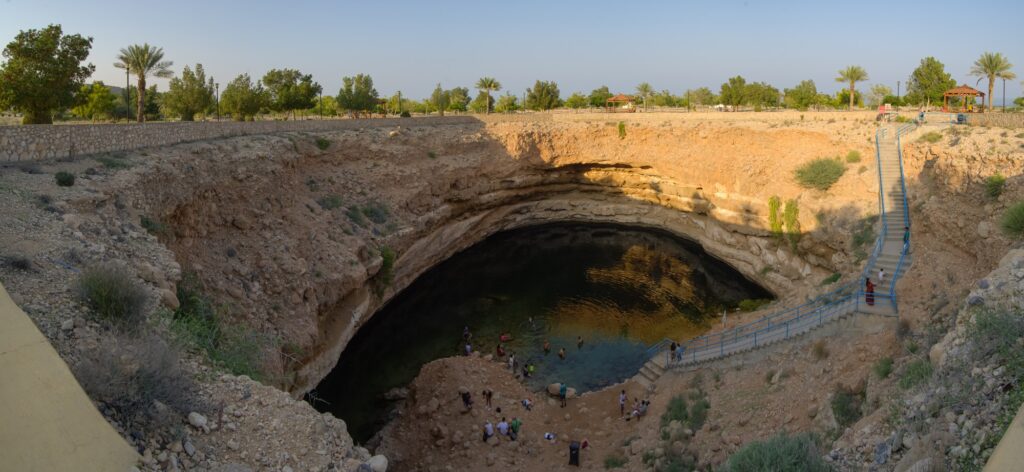
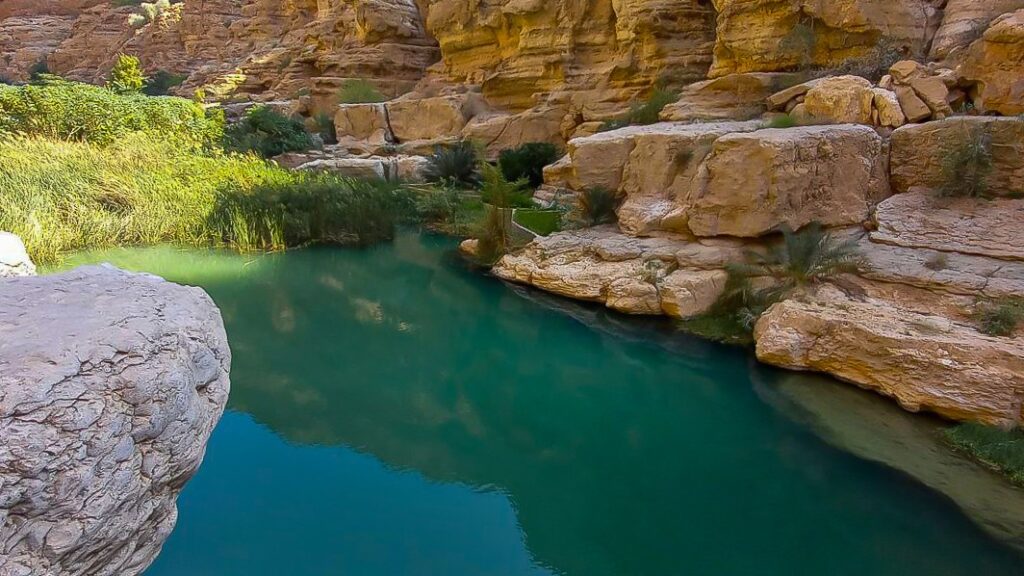
This is the country’s most popular natural attraction—a water-filled canyon that never dries up, even in summer. It’s just over an hour’s drive from Oman’s capital, and you can even visit during a long stopover in Muscat. Don’t forget to bring your swimming gear—to see more than half of the gorge’s beauty, you’ll need to walk and sometimes swim in fresh water. Nearby is another popular spot—the Bimma Sinkhole. Due to its distinctive shape, it is believed to be of meteorite origin, but in reality, it consists of rock formations eroded by water into bizarre shapes. The well is connected underground by a tunnel to the sea, so the water here is already salty, but there are showers at the park entrance.
Salalah
Oman’s most popular resort, located in the south of the country, and quite unusual for the Arabian Peninsula as a whole. It is known for the kharif season, when the region turns green in the summer thanks to the monsoons. Tourists are drawn to the waterfalls, coconut groves, long sandy beaches, and a milder climate compared to the rest of the country. It is here that the majority of Oman’s accommodation is concentrated, ranging from small hotels to large family resorts.
Jebel Akhdar
A mountain resort region popular for its cool climate and beautiful scenery. It features canyons, terraced gardens, mountain villages, and high-end hotels with panoramic views. Ideal for trekking and secluded getaways. It is also home to the popular Ash-Sham Canyon with its picturesque ledges, where tourists love to take photos.
Wahiba Sands
The Wahiba Sands, also known as the Sharqiya Sands, is a desert stretching 180 kilometers from north to south and 80 kilometers from east to west. But the desert is far from empty; it is home to 16,000 invertebrates and 200 species of other wildlife. Among its natural attractions, the towering dunes stand out, while Bedouin camps are a cultural highlight. Tourists come here for desert safaris, overnight stays in the desert, stargazing, and experiencing traditional Bedouin culture.
Musandam
The northern region of Oman, often called the “Norway of Arabia” because of its fjords and mountain bays. This is Oman’s exclave, separated from the main part of the country by the territory of the UAE and jutting completely into the Strait of Hormuz. It is popular with tourists for boat trips, diving, snorkeling, and dolphin watching. The resort will be of particular interest to nature lovers and those seeking active recreation. There are flights from Muscat, but it is much more interesting to take a boat trip to Musandam; these are also organized from Oman’s capital.
Mobile Networks and Internet
Mobile networks cover 98% of the populated territory—which speaks volumes about Oman’s telecommunications infrastructure. Coverage is particularly strong in major cities and tourist areas.
The main operators are Omantel and Ooredoo Oman, and Vodafone Oman also operates there. You can buy a local SIM card immediately upon arrival at Muscat Airport—there are official operator counters there. You’ll need a passport to purchase one.
Approximate Ooredoo rates:
- 8 GB and 50 minutes of international calls for 10 days — 5 rials
- 10 GB and 100 minutes of international calls for 15 days — 10 rials
- 20 GB and 200 minutes of international calls for 20 days — 20 rials
Approximate Omantel rates:
- 1 GB for 10 days — 2 riyals
- 8 GB for 10 days — 5 riyals
- 15 GB for 28 days — 10 riyals
You can activate an eSIM for smartphones that support this technology either on-site or in advance.
In deserts, mountains, and remote areas, reception may be weaker; according to tourist reviews, Omantel typically has better coverage in remote regions, while Ooredoo is often chosen for its affordable rates and good speeds in cities.
Wi-Fi is available in most hotels, cafes, and shopping centers. Internet service is good in city hotels, but speeds may be slow in desert camps or mountain hotels.
Cuisine, Restaurants, Cafés
Oman is a trading nation with former territories along the Indian Ocean coast, including much of Africa, so its local cuisine is a blend of Arab, Indian, Persian, and African traditions.
- Shuwa is Oman’s main festive dish: lamb or goat marinated in spices and slow-cooked in an earthen oven for over a day.
- The everyday national dish is Mahboos, which is rice with chicken, lamb, or fish, cooked with cardamom, cloves, and saffron.
- During Ramadan, haris—a creamy porridge made from wheat and meat, cooked until smooth—is often served.
- In coastal cities, mashuai (fried fish, usually kingfish, served with rice and lemon sauce) is a common dish.
- Among street snacks, sambusas are popular—triangular pastries filled with meat or vegetables and deep-fried.
- As a light appetizer before the main course, lentil soup with cumin, garlic, and turmeric is served.
- For dessert, Omanis will invariably offer halva with ghee, cardamom, rose water, and nuts, as well as Lukimat—fried dough balls drizzled with honey or syrup.
- As for drinks, locals prefer coffee with cardamom and dates, as well as black tea with spices, the same cardamom, and sometimes milk.
Alcohol in Oman
Although the country is Muslim, alcohol is not completely banned, though you won’t be able to buy it just anywhere. Tourists can purchase alcoholic beverages only in licensed bars, which are typically high-end hotels and a few select clubs. Drink prices are high due to licensing fees and import duties.
You can bring alcohol with you, but no more than one liter of spirits per person (or 2 liters of wine and up to 48 cans of beer). You can also buy alcohol at duty-free shops upon arrival in Muscat or Salalah.
Holidays and Events
Oman celebrates both Muslim holidays and events marking important dates in the country’s history.
- The Night of the Prophet’s Ascension — second half of January
- The Sultan’s Accession Day — January 15
- Eid al-Fitr — the end of the Ramadan fast (exact dates are determined by the lunar calendar and shift earlier each year)
- Islamic New Year — mid-June, dates vary
- Eid al-Adha — the festival marking the end of the Hajj (exact dates are determined by the lunar calendar and shift earlier each year)
- Renaissance Day — July 23
- Mawlid — celebration of the Prophet Muhammad’s birthday (August or September, dates vary due to the lunar calendar)
- Oman National Day — November 20–21 (for 2026), dates may vary
Oman also hosts various festivals; here are the main events.
- Muscat Nights — throughout January, featuring a variety of cultural programs at different venues across the capital
- The Khareef Festival in Salalah — July 5–August 31, coinciding with the monsoon season
- The Sultan’s Cup Camel Race in Muscat — November–December
Useful Phone Numbers
| Single emergency number | 9999 |
| Ambulance (other than 9999) | 24343666 |
| Water emergencies | 24714888 |
| Ambulance in Salalah | 23218888 |
| Muscat International Airport | 24519223, 24519456 |
| Muscat Tourism Hotline | 24736611 |
| Salalah Tourism Hotline | 23290099 |
| Information Hotline | 1010 |
Useful Links
- Omani Rial to US Dollar Exchange Rate google.com/finance/quote/USD-OMR
- Official Oman Tourism Portal experienceoman.om
- Oman Customs Service customs.gov.om
- Civil Aviation Authority for Drone Registration caa.gov.om
- Visa Eligibility Wizard: evisa.rop.gov.om/visa-eligibility
Tips from Travelers in Oman
Insurance
Medical insurance is not strictly mandatory for entry to Oman. However, we strongly recommend getting it. Foreigners pay for medical services in Oman, and costs are high. An insurance policy speeds up access to care.
Planning desert safaris, diving, rock climbing, or kitesurfing? Add the “active recreation / sports” option to your policy.
Safety
Oman ranks among the safest Middle Eastern countries. It stands as one of the world’s most stable nations. Statistics confirm Oman is safer than most European resorts. The country holds the 6th place globally on the safety index. Oman shows one of the world’s lowest global crime index scores. Terrorist threats are practically non-existent. Visitors enjoy a forgotten convenience: free airport entry without security screening.
What You Cannot Import or Export from Oman
Tourists over 21 may import alcohol for personal use duty-free. Limits: up to 1 liter of spirits, 2 liters of wine, or 48 cans of beer. You may only bring alcohol through airports. Land borders prohibit alcohol in any quantity. Alcohol must stay in a sealed duty-free bag. Tobacco limit: no more than 400 cigarettes.
Oman strictly prohibits importing drugs and psychotropic substances. Banned items also include weapons and ammunition, extremist or pornographic materials, currency and goods from Israel, and animal products without certificates.
You need permits to import strong medications, pets, plants, or seeds. Travelers taking prescription drugs should carry the original prescription with an English translation and a medical certificate.
Register drones with the Civil Aviation Authority. Find the official website in the “Useful links” section.
Do not export ancient coins, ceramics, jewelry, manuscripts, or national daggers from Oman. Exporting antique bladed weapons, corals, seashells, animal taxidermy, or natural materials from protected reserves is also prohibited.
Declare currency exceeding 6,000 Omani rials when leaving Oman. Fill out the declaration online or on a form at the airport. You must specify the source of funds and the purpose.
Shopping
Oman lacks the shopping scale and massive malls of neighboring UAE. But local markets offer their own unique charm. The capital also features impressive shopping centers.
Tourists bring frankincense home from Oman. It is a national symbol available in different grades. They buy silver items with Bedouin patterns. Local halva with ghee, cardamom, rose water, and nuts makes a great gift. Oil perfumes with oud, rose, and frankincense are popular. Visitors also purchase dates, cardamom coffee, and natural camel milk soap.
Look for local crafts like clay jugs and plates. Traditional decor features authentic patterns. Wooden boxes and mubakhars (frankincense burners) are unique finds. Omani scarves, embroidered pillows, and rugs add character. Copper trays, jugs, and other decor items showcase local artistry.
You might want to buy an Omani khanjar. This ceremonial dagger is a national symbol. Export rules allow only new souvenir models. Ask the shop for a certificate confirming it is a souvenir. Keep your receipt just in case.
Tourists can claim a 5% VAT refund. Meet these conditions: minimum receipt of 25 OMR, items in original packaging, receipts, and a completed form. Visit refund points at Muscat or Salalah airports. Present your goods, documents, and passport to process the refund.
Public Transportation
Omani cities have no metro system yet. Muscat operates the Mwasalat bus network. Routes connect the airport with the city. Fares cost 0.2 to 0.5 rials depending on distance. Salalah has fewer buses, but main routes link east with west and the center with beaches. Buses reserve front rows for women. Air conditioning sometimes works too strongly.
International taxi services do not operate in Oman. The local OTaxi app serves as Oman’s official taxi service. Download the app and pay by card or cash. A short city trip costs 1.5 to 3 rials. Street taxis work without meters. Drivers may overcharge passengers.
Travelers can rent a car in Oman. Minimum driver age is 21 years. Some companies require drivers to be 25. You need at least 1 year of driving experience. Some agencies ask for 2 years. A credit card in the driver’s name is mandatory. Basic insurance is required. Full coverage remains optional. Traffic moves on the right. Many speed cameras monitor roads. Muscat charges for parking.
Frequently Asked Questions
When is the best time to visit Oman for a vacation?
The optimal travel period runs from October to April. Air temperature ranges from +25 to +30°C. This weather suits beach vacations and excursions. Summer months (May to September) bring extreme heat (+40 to +45°C). This season suits only air-conditioned hotels, Salalah (June to September), or mountain areas.
How much will a vacation in Oman cost?
A budget trip costs 700–1,100 euros per week per person. Mid-range travel ranges from 1,400 to 2,300 euros weekly per person. Luxury options start at 3,000 euros per week (excluding flights). Prices depend on season, accommodation type, and travel program.
What can you bring back from Oman?
Popular souvenirs include Omani halva and frankincense (luban). Travelers buy Bedouin-style silver jewelry. Traditional khanjar daggers make unique gifts (new models only, keep your receipt). Dates and Arabic perfumes (attar) are also popular.
What is the time difference between Europe and Oman?
Oman runs 3 hours ahead of the EU. Oman follows UTC+4, while the EU mostly uses UTC+1. When Europe shows 15:00, Oman shows 18:00.
Where in Oman do many expats live?
Oman has no large expat community by numbers. Most foreigners work temporarily in the tourism sector. They usually live in Muscat or resort areas near Salalah.