Long layovers aren’t a hassle at all — they’re a chance to explore the country where you’re connecting. Usually, people stick to the city where their layover takes place. But in Oman, a daytime layover gives you the opportunity to venture outside the capital and see some of the country’s most unique natural attractions.
We’re talking about the Wadi Shab oasis and the Bimmah Well. We had a layover from 8 a.m. to 10 p.m., which gave us plenty of time for a tour. Guides can pick you up right from the airport and take you back there after the tour. You can even manage to take a walk around Muscat and head to the airport by taxi.
So, our guide Abdullah picked us up. On the way, we caught a brief glimpse of the city through the car window, including the famous Sultan Qaboos Mosque and the Mohammed Al-Amin Mosque.
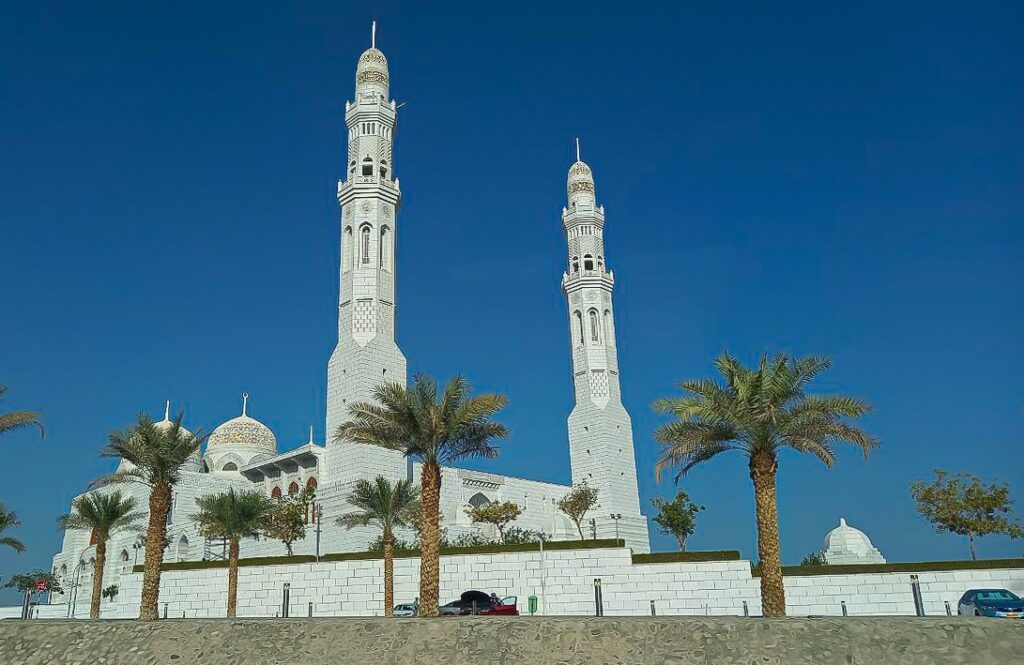
Wadi Shab
The drive from Muscat takes about two hours. Along the way, the guide stops so travelers can buy coral shoes and a waterproof phone case — be sure to get one! I bought one and didn’t regret it. Now I have photos and videos from underwater.
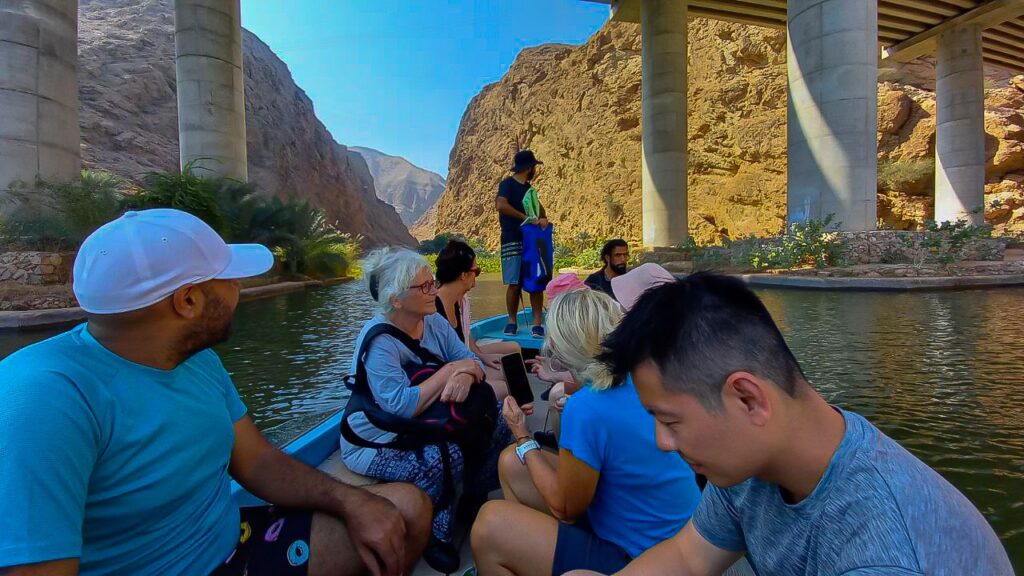
In front of the gorge stands a rather impressive bridge, with a parking lot and restrooms underneath. To reach the trail leading deeper into the gorge, you’ll have to cross a waterway filled with lotus flowers. The crossing costs about a dollar, but the tour price includes it. You can also buy phone cases from the boatmen.
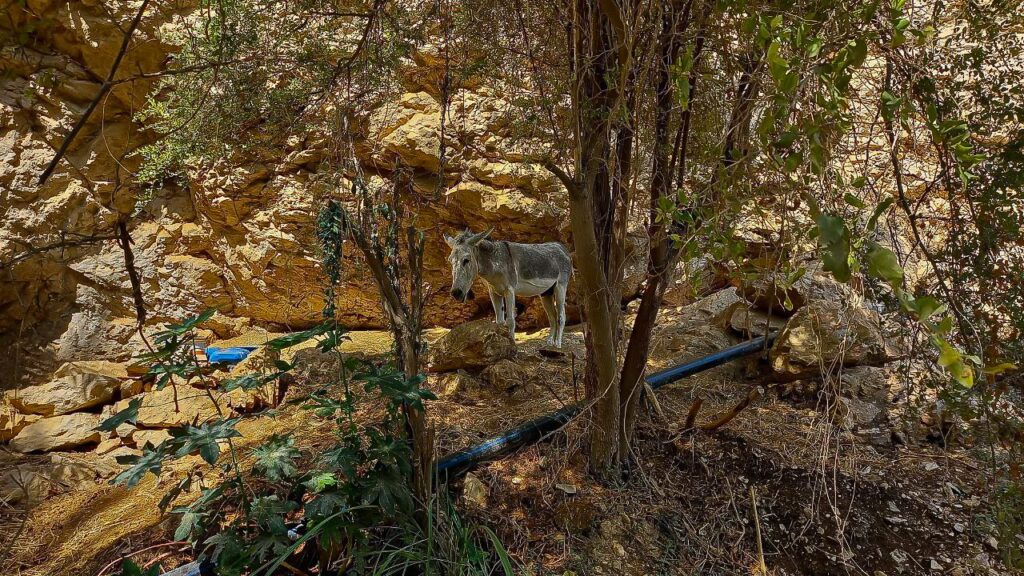
Farmers privately own the oasis area here. You can see fruit growing and donkeys grazing.
Water channels also run along the stream. Locals call them aflaj — an ancient Omani irrigation system. These channels divide the water flow from underground springs. In fact, the word “aflaj” translates as “to divide into parts.” Oman has over 3,000 such systems, and UNESCO includes five of them on its World Heritage List.
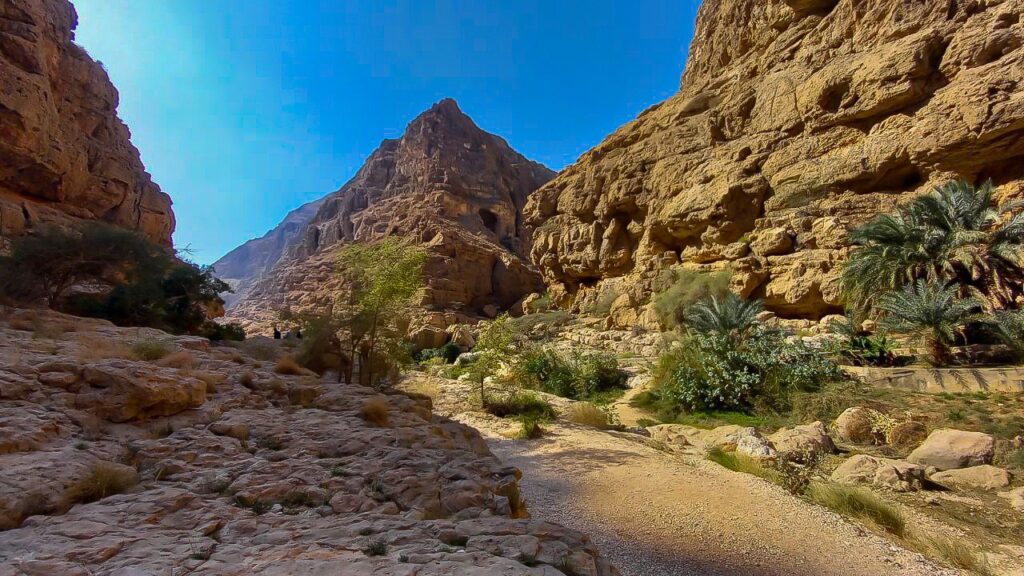
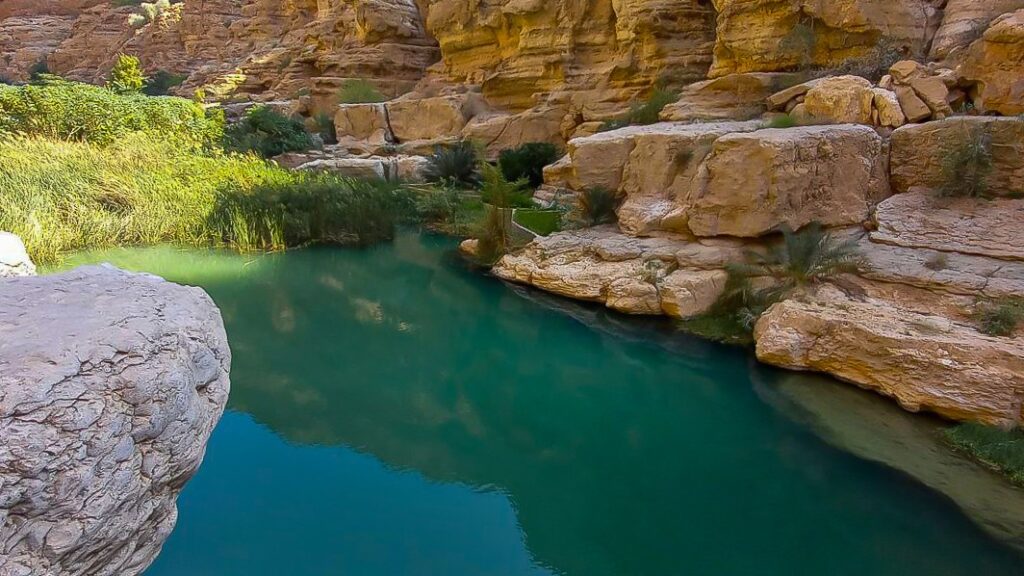
It takes about half an hour to reach the first body of water where you can take a dip. With photo stops, though, the walk can take up to an hour — the surroundings are simply too picturesque. Water and wind have done a tremendous job here, decorating the gorge with a wide variety of patterns.
As Abdullah explained, Wadi Shab differs from other oases because water remains here year-round. Even during the dry season, enough water stays here for swimming.
But now we’ve reached the start of the water portion of the route. If you can’t swim, the guide will give you a life jacket; you can also rent one from the boatmen. The deep sections aren’t very long, so you can easily manage without one. Still, if you want to take photos in deep water, a life jacket can help keep your hands free.
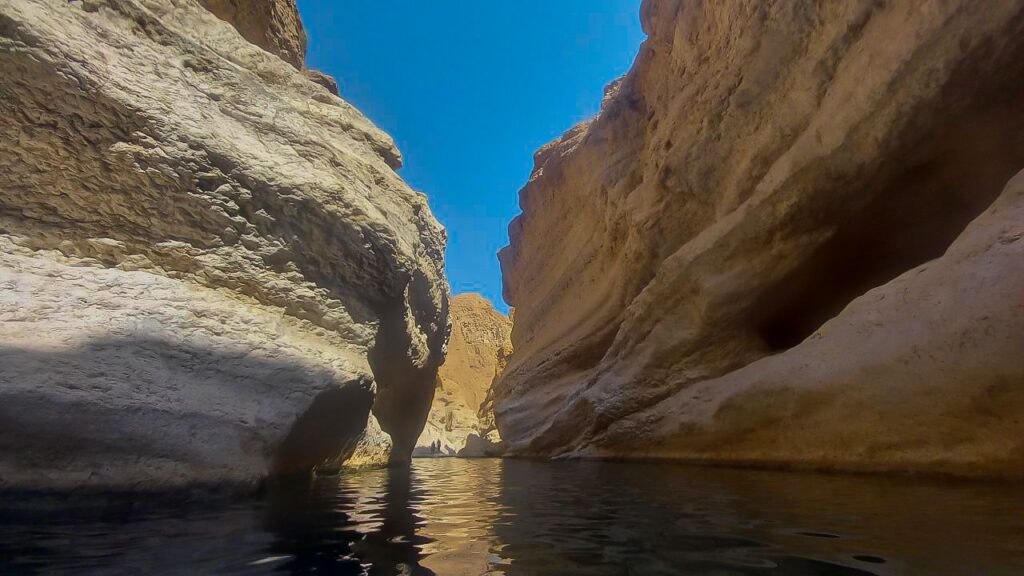
Deep sections alternate with walking sections where you have to wade along the stream. This variety keeps the hike interesting, and time flies by unnoticed.
At the end of the route, a cave awaited us. To get inside, you have to submerge almost completely, though your head stays almost entirely above the surface. For some reason, many people don’t swim in there — don’t make that mistake!
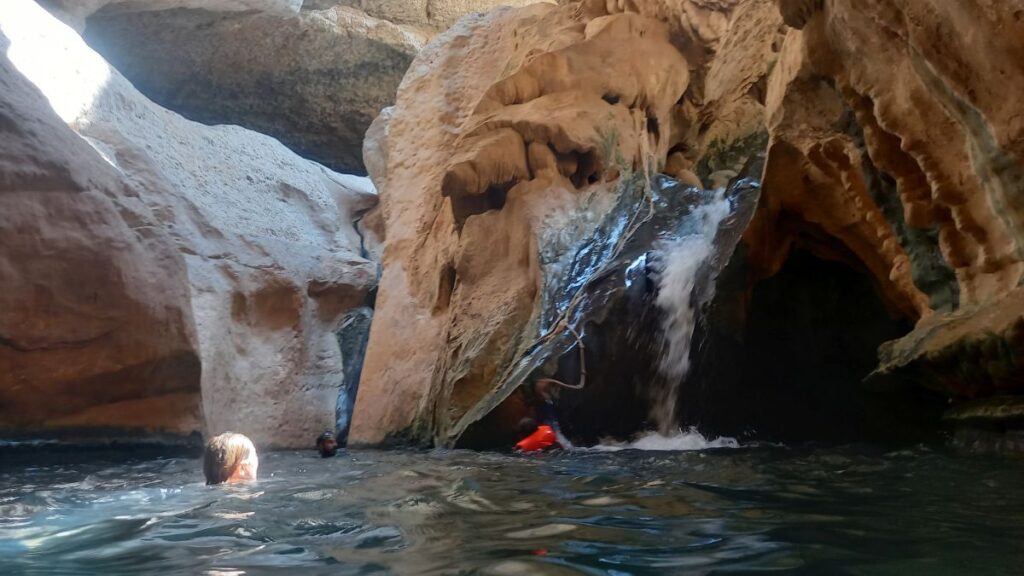
Inside, everything looks absolutely picturesque! Daylight streams through a round hole in the rock, and a waterfall pours water into the cave. By the way, you can climb up to the waterfall and jump into the water from it, which I, of course, did.
In short, Wadi Shab gets my highest recommendation — it’s a must-visit!
Bimma sinkhole
On the way back, another interesting spot awaited us—the Bimma sinkhole. According to Abdullah, locals once believed a space object created the crater after crashing there. In reality, it’s a cenote — something people interested in Mexico have probably heard a lot about. But here you go — cenotes exist even closer to home!
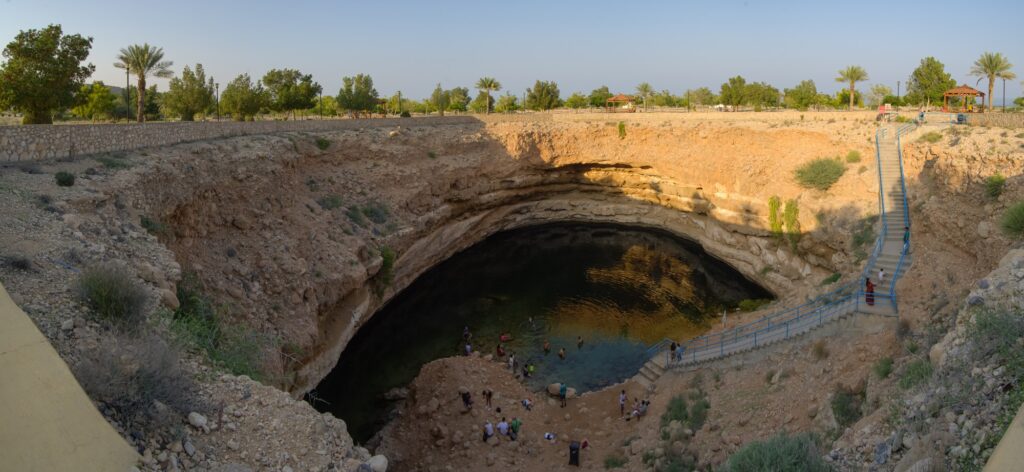
A picturesque park surrounds the karst sinkhole. It has walking paths, benches, play areas, and a restroom.
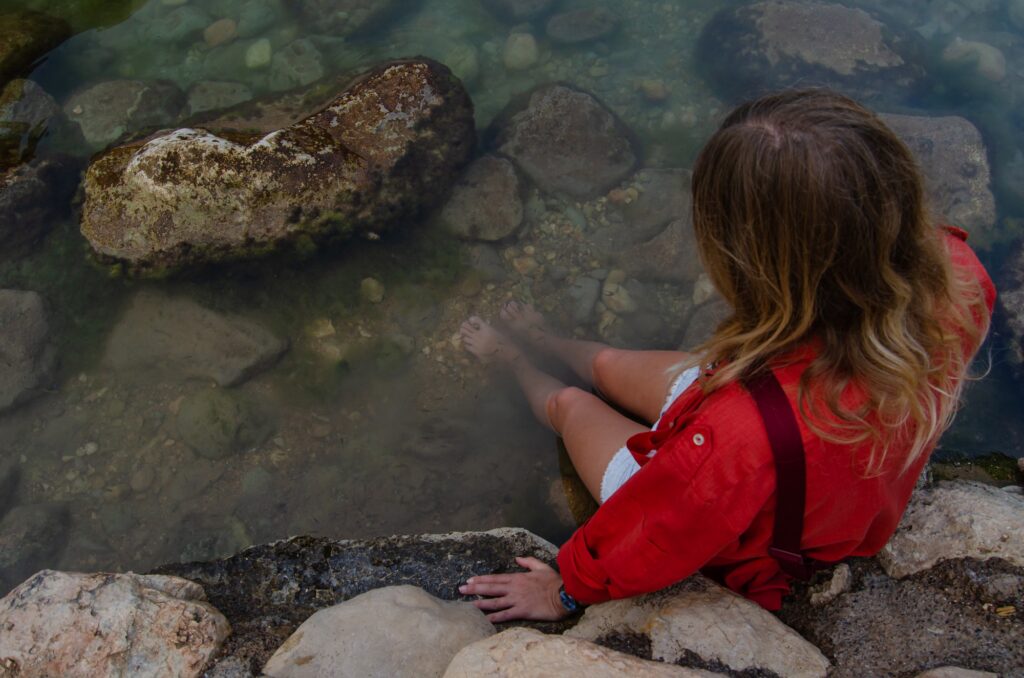
Once you head down to the water, a real-deal fish spa awaits you — the kind people usually pay for in Thailand. And it really works exactly like the aquariums do. Tons of tiny fish eagerly nibble at your dead skin, perhaps even more actively than the fish I’ve seen in Thai aquariums.
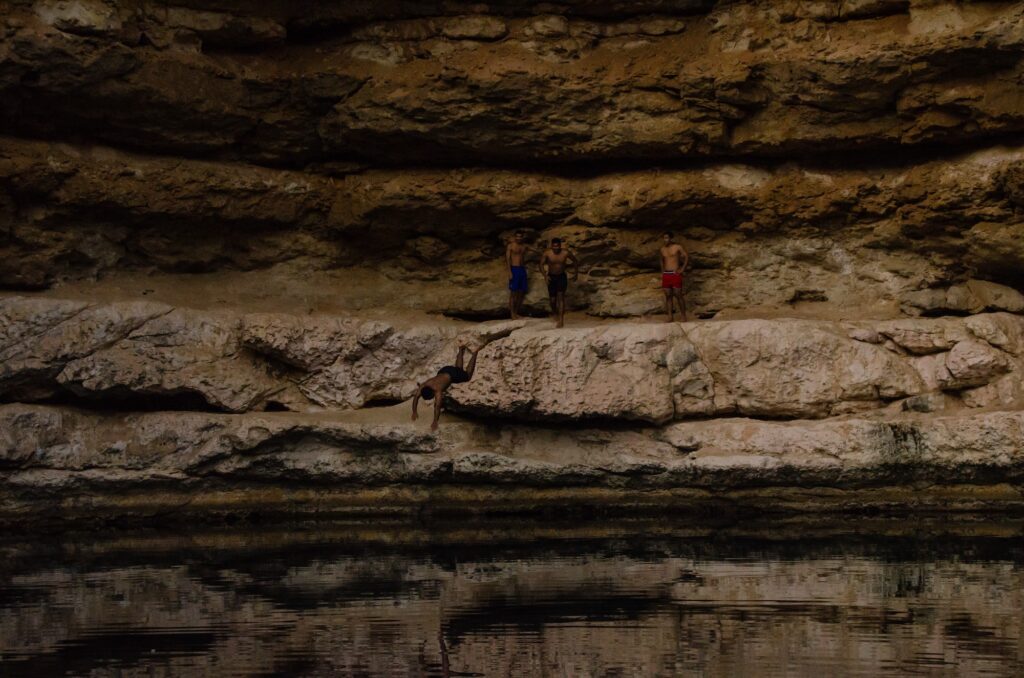
Local guys dive off the rocks and entertain the crowd.
After a fish spa session and some time admiring the scenery, you can consider the day’s itinerary complete. I also thought about popping into town, strolling around the bazaar area, and checking out the forts in the old harbor. But I had to scrap that idea and head to the airport early just in case. That turned out to be the right decision — I needed to book a return ticket from India immediately, or the airline wouldn’t let us check in for the flight!
Anyway, I’ll save Muscat for my next trip. From what I’ve managed to see and read, the city offers plenty to explore. So — see you soon!