Montenegro is a small country on the Adriatic coast, where medieval villages and Venetian fortresses stand alongside mountains, forests, and clear blue waters. Travelers come here for diverse landscapes—from beaches to the Bay of Kotor and the Tara River Canyon. This 2026 Montenegro guide covers the best time to visit, key destinations, travel tips, and transport options.
- Useful Information
- Visas and Documents
- Traveling to Montenegro
- Tours to Montenegro
- Hotels in Montenegro
- Prices and Currency
- Interesting Facts
- Beaches and Resorts
- Mobile Networks and Internet
- Cuisine and Restaurants
- Holidays and Events
- Useful Phone Numbers
- Tips from Travelers
- FAQ
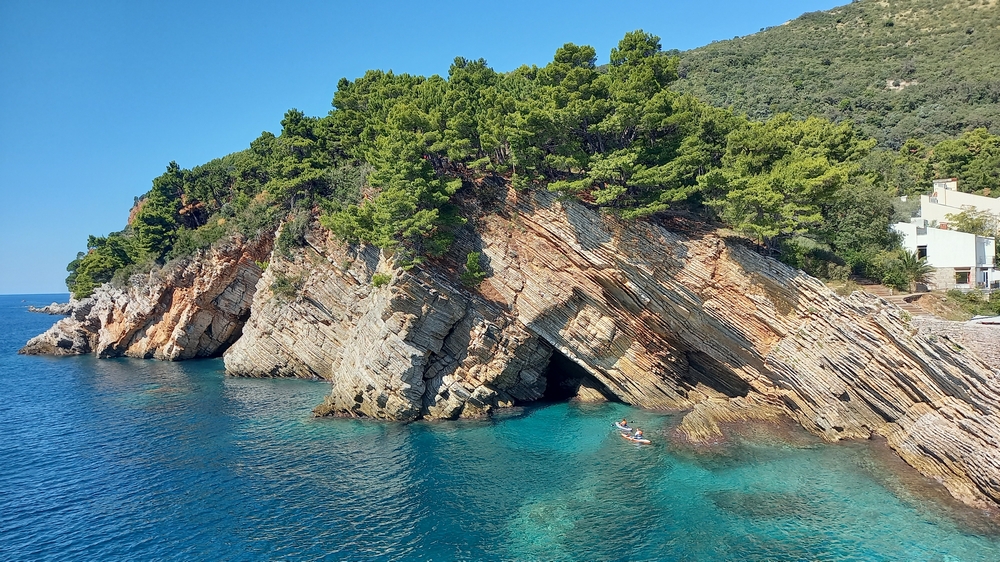
Useful Information
| Capital | Podgorica (administrative capital) and Cetinje (the residence of the president) |
| Language | The official language is Montenegrin, but most people also speak Serbian; English is understood in tourist areas |
| Currency | Euro (EUR, €) |
| Time difference | Same time as Central European Time |
| Do you need a visa | EU citizens do not need a visa for stays of up to 90 days for tourist travel |
| Where do tourists go | Budva, Bečići, Rafailovici, Petrovac, Kotor, Tivat |
| Best time to visit | Beach season — May through October The most comfortable time — September through mid-October Winter — ski season |
| Internet and communication | Internet and mobile connectivity in Montenegro are well developed, especially along the coast. Wi-Fi is available in almost all cafes and hotels |
Visas and Documents for Travel to Montenegro
EU citizens can enter Montenegro without a visa. Travelers can stay up to 90 days with a passport or up to 30 days with an ID card. Make sure your passport remains valid for at least three months after your trip.
After arrival, register your stay within 24 hours. Hotels and apartment hosts usually handle this process. If not, visit a police station or tourist office.
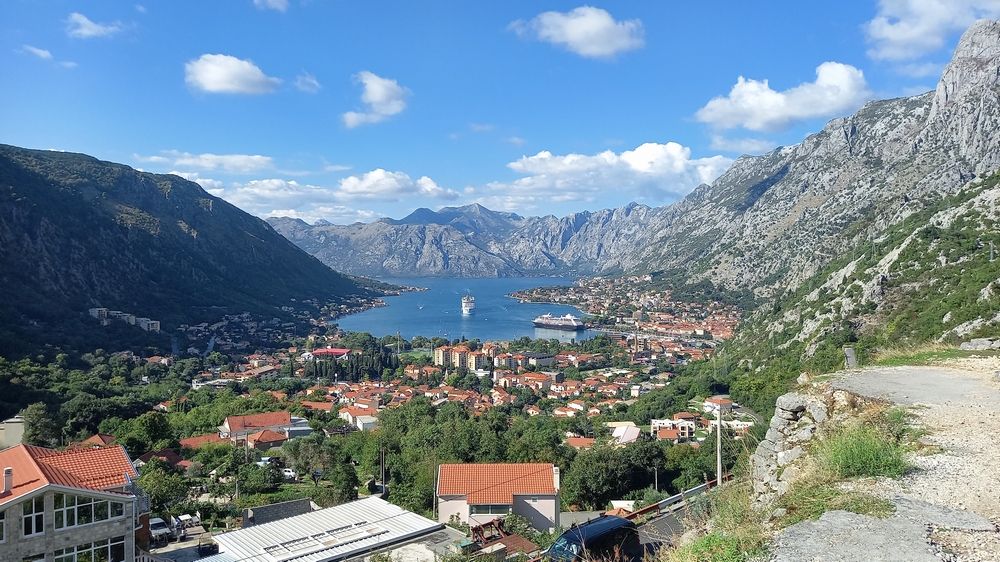
Traveling to Montenegro
By Air
Direct flights connect Montenegro with many European cities, mainly via Podgorica, but you can fly not only to the country’s capital but also to Tivat, especially in the high season.
Flights to Podgorica
Flights to the Montenegro capital depart from almost all European capitals and major cities, as well as from several cities in Turkey and Kazakhstan.
- Austria (Vienna)
- Belgium (Brussels Charleroi)
- Czech Republic (Prague, Brno)
- France (Paris (Charles de Gaulle, Orly, Beauvais), Lille, Nantes)
- Germany (Berlin, Frankfurt, Hamburg, Cologne-Bonn, Dortmund, Karlsruhe / Baden-Baden, Memmingen)
- Greece (Athens)
- Hungary (Budapest)
- Italy (Rome Fiumicino, Milano, Malpensa, Catania)
- Kazakhstan (Almaty, Astana)
- Lithuania (Vilnius)
- Netherlands (Maastricht Aachen)
- Poland (Warsaw, Krakow, Gdańsk, Katowice, Poznań, Wrocław, Rzeszów)
- Serbia (Belgrade)
- Slovakia (Bratislava)
- Slovenia (Ljubljana)
- Spain (Barcelona)
- Sweden (Malmö)
- Switzerland (Zürich, Basel Mulhouse Freiburg)
- Turkey (Istanbul (IST and Sabiha Gökçen), Antalya, Ankara, Izmir)
- United Kingdom (London Gatwick, London Stansted)
Flights to Tivat
Tivat is Montenegro’s second-busiest airport; it receives flights from several European countries, but in the summer it can be more popular than Podgorica.
- Albania (Tirana)
- Armenia (Yerevan)
- Austria (Vienna)
- Azerbaijan (Baku)
- Belgium (Brussels)
- Czech Republic (Brno, Prague)
- Denmark (Copenhagen)
- Finland (Helsinki)
- France (Lyon, Paris Orly)
- Germany (Berlin, Düsseldorf, Frankfurt, Munich, Stuttgart)
- Iceland (Reykjavik)
- Israel (Tel Aviv)
- Kosovo (Pristina)
- Kuwait (Kuwait City)
- Latvia (Riga)
- Luxembourg (Luxembourg City)
- Netherlands (Amsterdam)
- Norway (Oslo)
- Serbia (Belgrade, Kraljevo, Niš)
- Slovenia (Ljubljana)
- Spain (Barcelona, Madrid)
- Sweden (Stockholm Arlanda)
- Switzerland (Geneva, Zürich)
- Turkey (Istanbul New)
- United Arab Emirates (Dubai)
- United Kingdom (Birmingham, Bristol, London (Gatwick, Heathrow, Luton, Stansted), Manchester)
By Train
The only way to reach Montenegro by train from major European cities is via Serbia (Belgrade). The train goes to Podgorica and Bar. Travel time is about 12 hours. There are daily trains with a scenic route and night trains.
Tours to Montenegro
Travel companies offer tours that include flights, accommodation, and transfers. Most packages focus on beach holidays.
You can also choose sightseeing tours of historic towns and national parks, active trips with hiking and rafting, wellness programs, and gastronomic tours. In winter, operators organize trips to mountain resorts.
Hotels in Montenegro
Montenegro offers more private accommodation than large hotel chains. Apartments, villas, and guesthouses dominate the market. Most hotels provide breakfast or half-board, while all-inclusive options remain rare. Many apartments include a kitchen.
Most hotels are located along the coast, especially in Budva, Kotor, Tivat, and Herceg Novi. In the mountains, you’ll find smaller hotels and chalets near national parks.
Currency and Prices in Montenegro
Montenegro uses the euro. You can bring up to €10,000 without declaration. Banks offer better exchange rates than airports and hotels, but they usually close on weekends.
Interesting Facts About Life in Montenegro
About the Country
Montenegro lies in the southwestern Balkans and borders the Adriatic Sea. It shares borders with Serbia, Bosnia and Herzegovina, Albania, and Croatia. The country became independent in 2006 and operates as a parliamentary republic.
Most residents follow Orthodox Christianity, though Muslim and Catholic communities also live here.
The name “Montenegro” comes from the Venetian expression monte negro, meaning “black mountain.”
Despite its small size, the country features varied landscapes. You can travel from the coast to mountains over 2,500 meters high. Forests cover large areas, which earned Montenegro the nickname “the Switzerland of the Balkans.”
Climate and Weather
Montenegro has different climate zones. The coast has a Mediterranean climate with hot summers and mild winters. The central region has a continental climate, while the mountains experience alpine conditions.
Summer on the Adriatic lasts from June to September. Temperatures range from 23°C to 30°C, and the sea stays warm. The beach season begins in May and continues until October.
Winter on the coast remains mild but rainy, while snow covers the mountains.
The best time for a beach holiday is May, June, or September–October. July and August suit those who enjoy heat. In winter, travelers head to the mountains for skiing.
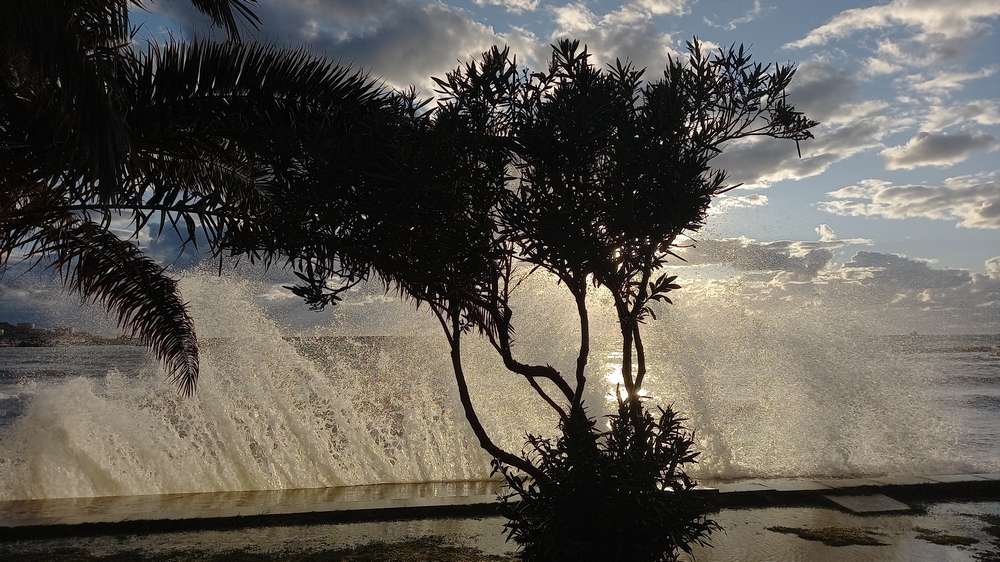
Beaches and Resorts
Budva
Budva is Montenegro’s most popular resort. It lies on the Adriatic coast and is famous for its medieval architecture and sandy beaches. The resort suits travelers who want to combine relaxing days by the sea with an active nightlife. You’ll find many clubs, bars, and beach discos here.
Kotor
Kotor is an ancient fortress town surrounded by mountains. It has few beaches, so most visitors come to explore the Old Town and its medieval landmarks. The historic center features narrow streets, ancient churches, and Venetian buildings. UNESCO includes it on the World Heritage list.
Tivat
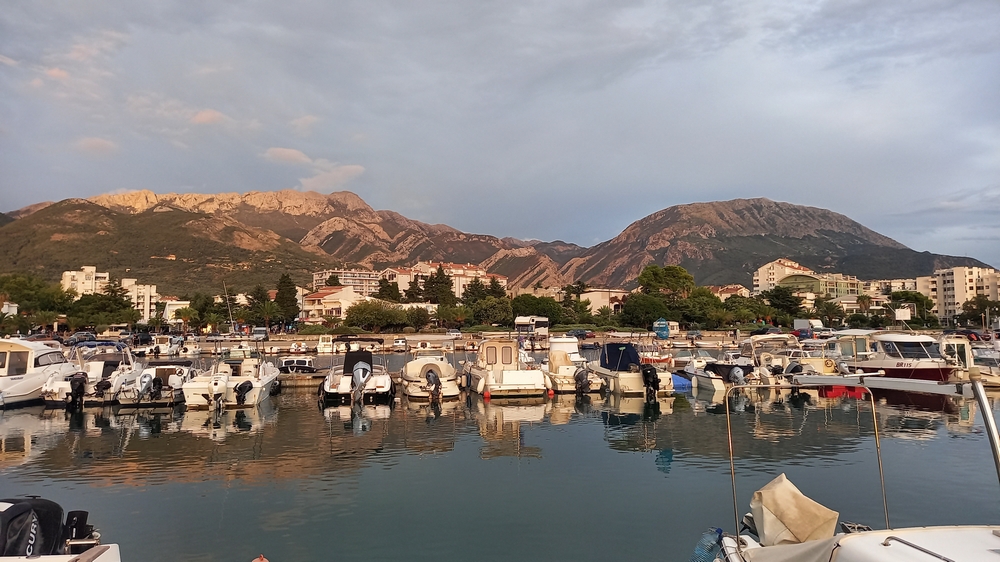
Tivat lies near Kotor but feels more modern. Travelers choose it for a relaxed atmosphere, seaside walks, and local cuisine in cafés and restaurants. It is also home to the largest marina on the Adriatic and offers yacht tours. The city has an international airport.
Bečići, Rafailovici
Bečići and Rafailovici are popular with families. They sit next to each other and often form one resort area. Both are close to Budva, and you can walk there along the seaside promenade. Rafailovici keeps the charm of a fishing village and is known for its seafood restaurants. Bečići is larger, with developed water sports, luxury hotels, and a water park.
Petrovac
Petrovac sits among pine forests and olive groves. It offers both sandy and pebble beaches. The town lies 17 km from Budva and attracts fewer tourists. Nearby, you’ll find historical sites such as the 16th-century Castello Fortress on a cape. Today, it houses a museum with ancient Roman mosaics.
Ulcinj
Ulcinj is Montenegro’s southernmost town, located near the Albanian border. The area features the country’s longest sandy beaches, which are wide and easy to access. These beaches are ideal for families and for activities like kiteboarding and windsurfing.
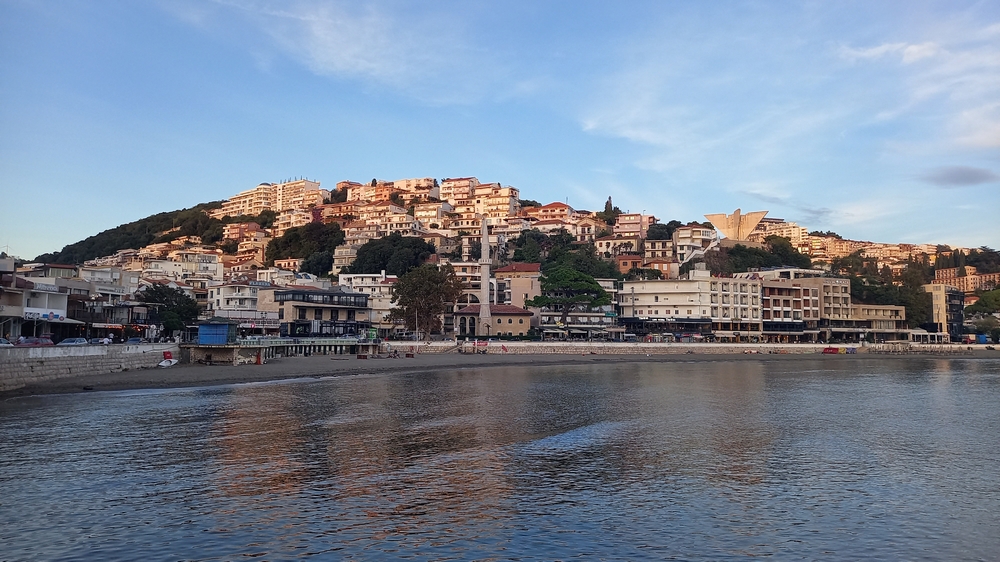
Mobile Networks and Internet
In Montenegro, mobile service is provided by three major carriers: One, M:tel, and T-Mobile. To purchase a local SIM card with an international data plan, you will need a passport.
Wi-Fi is available in almost all hotels, apartments, cafes, and restaurants throughout the country.
Cuisine, Restaurants, Cafés
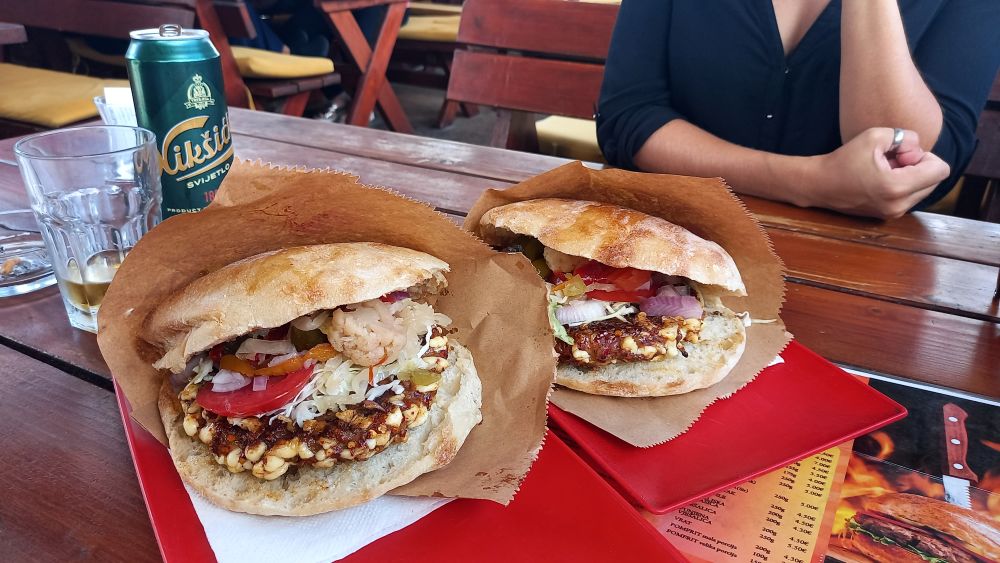
Montenegrin cuisine blends Balkan and Mediterranean traditions. On the coast, people focus on fish and seafood. In the north, they prefer meat and dairy products. Most dishes are simple and use fresh, natural ingredients.
Start your culinary journey with pršut and kajmak. Locals air-dry and smoke pršut (cured pork leg) in mountain air, then slice it thin and serve it with bread and soft cheese. Kajmak is a delicate, creamy dairy product with a slight tang. People spread it on bread or add it to hot dishes for extra richness.
If you enjoy meat, try čevapi—small minced-meat sausages—and pljeskavica, a large grilled patty with a golden crust. You should also try meat “ispod sača.” Cooks prepare it under a metal lid over coals with potatoes and vegetables.
On the coast, don’t miss sea bream, sea bass, mussels, or grilled shrimp with olive oil and herbs. Fish chorba, a thick soup with paprika and tomatoes, is also popular.
Local drinks include red and white wines, as well as rakija made from grapes or plums. People usually serve coffee with baklava or a thin crepe topped with nuts, chocolate, or jam.
Holidays and Events
Major national and religious holidays in Montenegro:
- January 1 — New Year’s Day is celebrated with concerts and fireworks in city squares.
- January 7 — Christmas according to the Orthodox calendar is marked by church services and family gatherings.
- Easter (in the spring) — a time for church services and family dinners.
- May 1 — Labor Day.
- May 21–22 — Independence Day, commemorating the 2006 referendum.
- July 13–15 — Statehood Day, commemorating the recognition of independence in 1878 and the events of 1941.
- November 13 — Negos Day, a national cultural holiday.
- December 19 — St. Nicholas the Wonderworker’s Day.
In addition to official holidays, the country hosts many festivals. In February, the Mimosa Festival takes place in Herceg Novi. In the summer, Budva, Kotor, and Podgorica come alive with theater and music shows. In the fall, marathons and food festivals are held. In December, festive winter markets are organized on the city streets.
Useful Phone Numbers
| Emergency | 112 |
| Police | 122 |
| Fire Department | 123 |
| Ambulance | 124 |
| Podgorica Airport Information | +382 20 444 244 |
| Tivat Airport Information | +382 32 671 337 |
Useful Links
- Montenegro official tourist website: Montenegro.travel
- Ministry of Tourism website: gov.me/en/mt
- Podgorica airport real-time flights: montenegroairports.com/en/podgorica-airport
- Tivat airport real-time flights: montenegroairports.com/en/tivat-airport
Tips from Travelers in Montenegro
Insurance
Medical insurance is not mandatory for entry to Montenegro, but it is strongly recommended. Healthcare services can be expensive, so having a policy will help you avoid significant costs in case of illness or injury.
Safety
Montenegro is considered a safe destination. Tourists generally feel comfortable, including families with children, and street crime rates are low. Locals are friendly toward visitors. Still, basic precautions should be observed, especially in crowded tourist areas.
What You Cannot Import or Export from Montenegro
It is prohibited to import or export weapons and ammunition. Hunting and sports weapons are allowed only with official permits. Dangerous chemicals and narcotic substances are strictly banned. If you carry items of historical or artistic value, you must obtain special authorization for customs clearance.
Pets can enter the country only with proper veterinary documents, and plants are subject to mandatory phytosanitary control.
There are no restrictions on bringing foreign currency into or out of the country, but amounts exceeding €10,000 must be declared.
Shopping
Large stores are mainly located in Podgorica and Bar, and are typically open from 9:00 AM to 9:00 PM. You’ll find plenty of European clothing and shoes at affordable prices—the selection in Bar is particularly good. In Budva, shopping takes a back seat to relaxation and evening entertainment, but you’ll also find boutiques near the entrance to the Old Town.
Be sure to visit the markets, where they sell fresh cheeses, olives, spices, nuts, fruits, homemade rakija, and red and white wine.
It’s not worth haggling aggressively. It’s not customary to haggle Montenegrins down to half price. At most, ask for a discount of a couple of euros if you’re making a large purchase.
For unique souvenirs, check out the monastery shops: they offer mountain honey, herbal teas, natural cosmetics, and lavender for the home.
It’s important to remember that on Sundays, no grocery stores are open anywhere in the country.
Public Transportation
Cities in Montenegro are relatively small, so there is no extensive urban transport system. Intercity buses connect coastal resorts with Podgorica and other towns. However, schedules are often approximate, and delays are common.
Taxis are widely available. It is more reliable to book them via local services such as Red Taxi, Terrae Taxi, or Halo Taxi. Tipping drivers 5–15% is customary.
Renting a car is a convenient option for longer trips. You can rent a vehicle using a Russian driver’s license, along with your passport. The minimum age is typically 21–22 years, with at least 1–2 years of driving experience. Keep in mind that parking is limited, fuel is relatively expensive, fines for violations are high, and traffic congestion is common on the coast during summer. Roads are generally in good condition, though some sections are toll-based, such as the tunnel between Bar and Podgorica. Mountain roads require careful driving.
Frequently Asked Questions
When is the best time to visit Montenegro for a vacation?
The beach season lasts from May to October. July and August are the hottest and busiest months. September and the first half of October are considered the most comfortable periods, with warm sea temperatures and fewer tourists. In winter, the coast becomes cooler, but it is a good time for relaxed sightseeing, while the mountains offer opportunities for winter sports.
How much will a vacation in Montenegro cost?
On average, a trip to Montenegro costs about €55–80 per person per day, excluding flights. Budget travel is possible at €30–50 per day. A more comfortable stay with quality accommodation and dining typically costs €80–120 per day. A one-week package tour with flights starts from around €1,500 for two people, depending on the season, airline, and hotel category.
What can you bring back from Montenegro?
Popular souvenirs include local food products such as red and white wines, rakija, mountain honey, olive oil, pršut, and cheeses. Travelers also buy handmade ceramics, silver jewelry, wool products, lavender, and natural cosmetics. Monastery shops often offer herbal blends and religious icons.
What is the time difference between Europe and Montenegro?
Montenegro is in the same time zone as Central Europe; there is no time difference. Keep in mind, however, that the country observes daylight saving time.
Where in Montenegro do many expats live?
Foreign residents in Montenegro are mainly concentrated along the coast, particularly in Budva, Herceg Novi, and Bar. A significant expat community also lives in Podgorica.