So, in the previous part we escaped the snowy trap of Titlis in Engelberg, finally enjoyed some good-weather skiing, jumped on a train, and pointed our skis south — toward the Italian border, where we planned to ride the slopes of the world-famous resort of Zermatt.
Any traveler who’s even slightly into trips has probably heard this name. The resort is huge, very diverse, with an enormous ski area, and it stays popular even in summer. The Matterhorn, almost 4.5 kilometers high, plays a major role in that. But let me go step by step.
- Trains: as precise as Swiss watches
- The resort: the best in the world
- Skiing: all kinds, for everyone
- Day two: the way to the mountain top
- Useful information and links
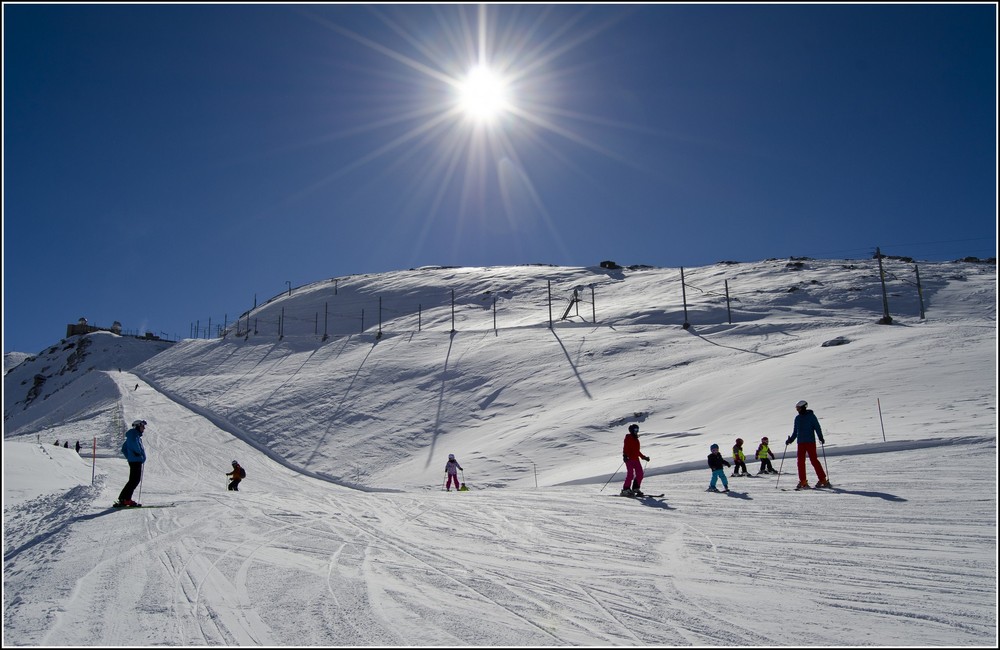
Trains: as precise as Swiss watches
The journey from Engelberg to Zermatt takes more than four hours and requires several transfers. But it doesn’t bother you at all, especially once you get to know the Swiss railways better. The trains have two classes, and honestly, the second class doesn’t differ much from the first — maybe just in a few details and a bit more space thanks to the higher price. Everything feels intuitive, and there are lots of memorable little features, like a fold-down ramp between the train and the platform for rolling your suitcase on, or even a volume control for the driver’s announcements.
The rail network is huge, but you often have to transfer. That happens because different regions use different types of trains (mountainous ones need cogwheel trains), and also because this setup keeps departures frequent. If there’s no direct route, you just hop off and change trains on the same or a neighboring platform — and the wait is never long.
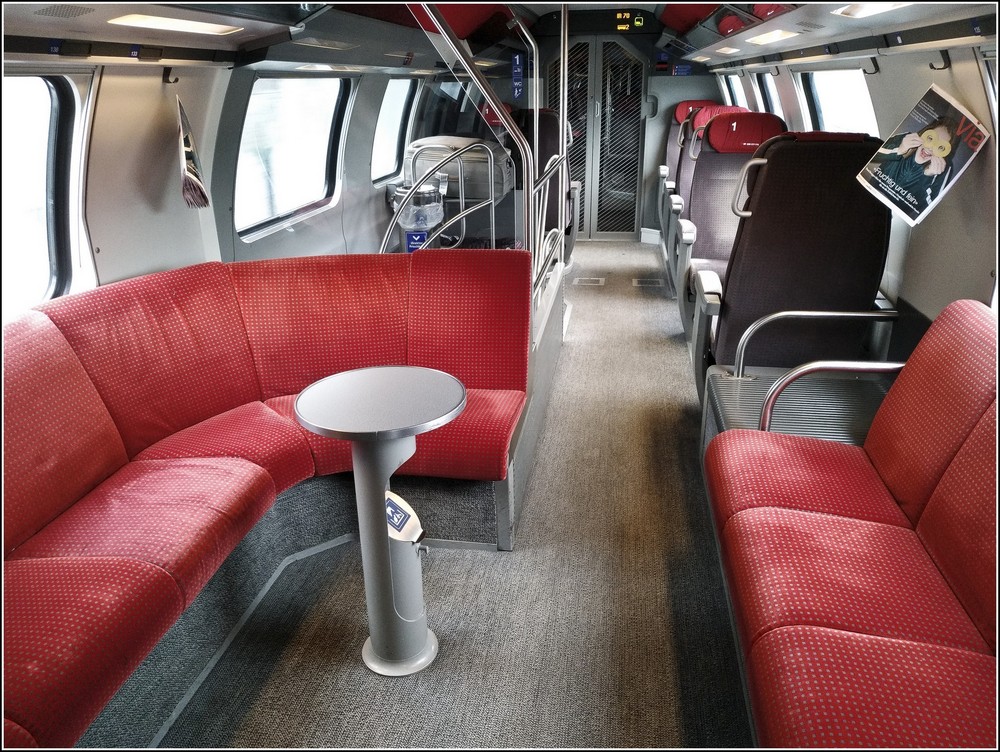
The punctuality truly amazed me. On our way from Engelberg to Zermatt I looked at our printed ticket. We had three transfers, including one only six minutes long — and we still had to switch platforms! I looked at Alina, who had been to Switzerland dozens of times already. She smiled and said, “Don’t worry, we’ll make it.” The train arrived exactly on the dot, the route to the next platform took just a couple of minutes thanks to the simple navigation and handy ramps, and in the end I even had time for a smoke.
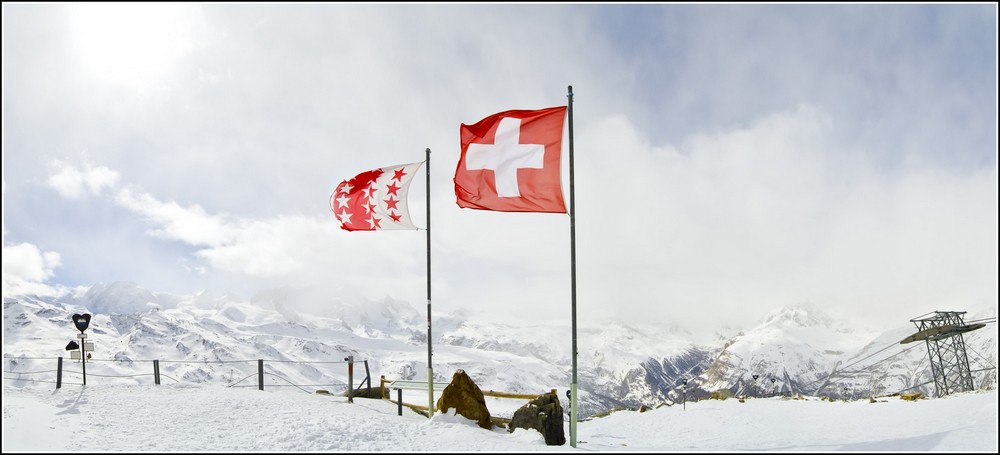
We had bought a Swiss Travel Pass in advance — an all-in-one travel pass for trains, buses, boats, and even public transport in 75 Swiss cities. It also includes extras like free entry to more than 500 museums. The famous panoramic trains (the Glacier Express, the Bernina Express and others), which are attractions on their own, are also covered — you just pay a seat reservation fee. Here’s the website if you plan to travel actively around the country; this pass will save you tons of money and time. They come in two classes and are available for 3, 4, 8, and 15 days. Prices for adults start at 232 francs.
Those four-plus hours to Zermatt flew by. As usual, Swiss cheese and wine helped, as well as the mind-blowing views from the windows. This really is the kind of country where traveling never feels tiring — you almost don’t want to get off the train at all.
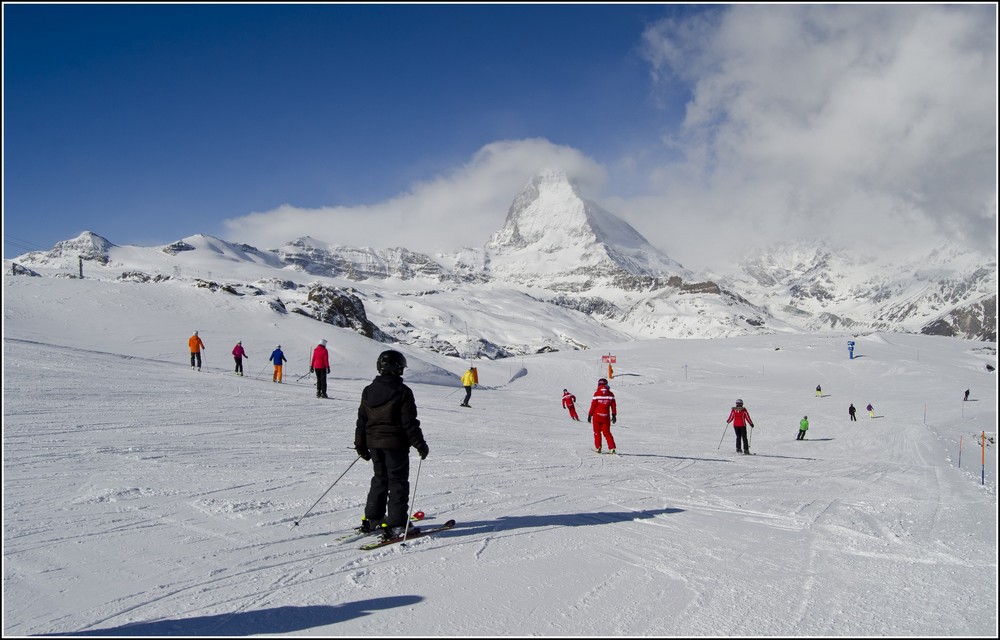
Now, a bit more about trains, jumping ahead. Almost all ski resorts take their visitors up the mountains from the lower part of the valley using a lift — usually gondolas that bring you to a base area with gentler slopes, and from there chairlifts take more experienced riders higher, to the red and black pistes. Almost all — but not Zermatt. Though it has the usual gondolas from the edge of the town (the Furi lift) and the Sunnegga funicular, the main climb from the center works differently.
Skiers and snowboarders load into a real mountain cogwheel train — the Gornergrat. It covers more than nine kilometers and rises from 1609 to 3089 meters above sea level. Between Zermatt and the final station there are four intermediate stops.
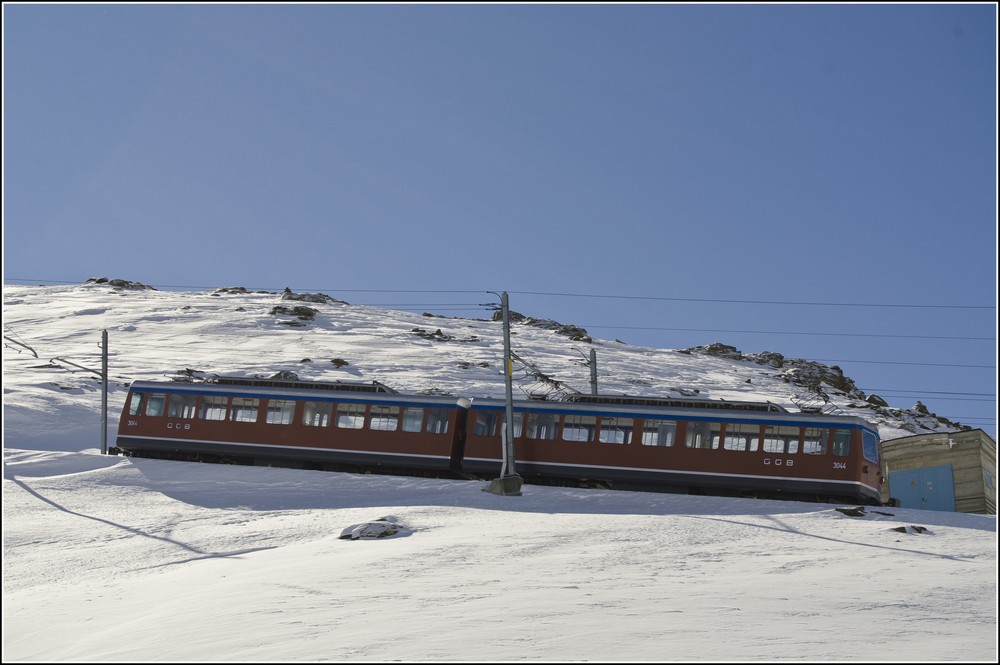
The Gornergrat Railway also holds a height record. Technically the highest railway in Europe is the Jungfrau Railway, also Swiss, but seven out of its nine kilometers run through tunnels. So Gornergrat counts as the highest open-air railway in Europe. Though it also has short tunnels — just four — plus an avalanche-protection gallery and two bridges.
And the absolute leader in its class, without any caveats, is the Riffelalp tramway, connecting the Riffelalp intermediate station with the hotel of the same name. It’s the highest-altitude tram line in Europe. It opened just a year after Gornergrat, in 1899, and still runs with its historic cars adapted for modern conditions and powered by batteries.
The resort: the best in the world
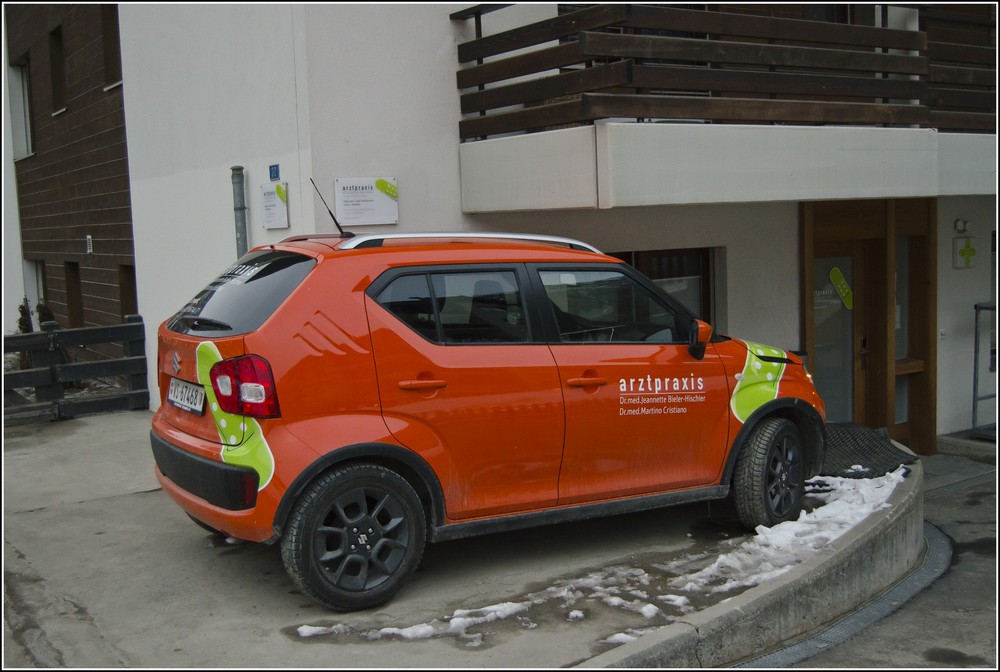
Since we arrived by train, we found ourselves right in the center of the resort. If we had come by car, we still would’ve switched to a train in Täsch, a small place five kilometers from Zermatt. Cars don’t run inside the resort at all — only electric vehicles do. Taxis, trucks, even the bus that takes riders to the lift — everything runs on electricity. I only spotted one exception: the doctor’s car, which ran on a combustion engine.
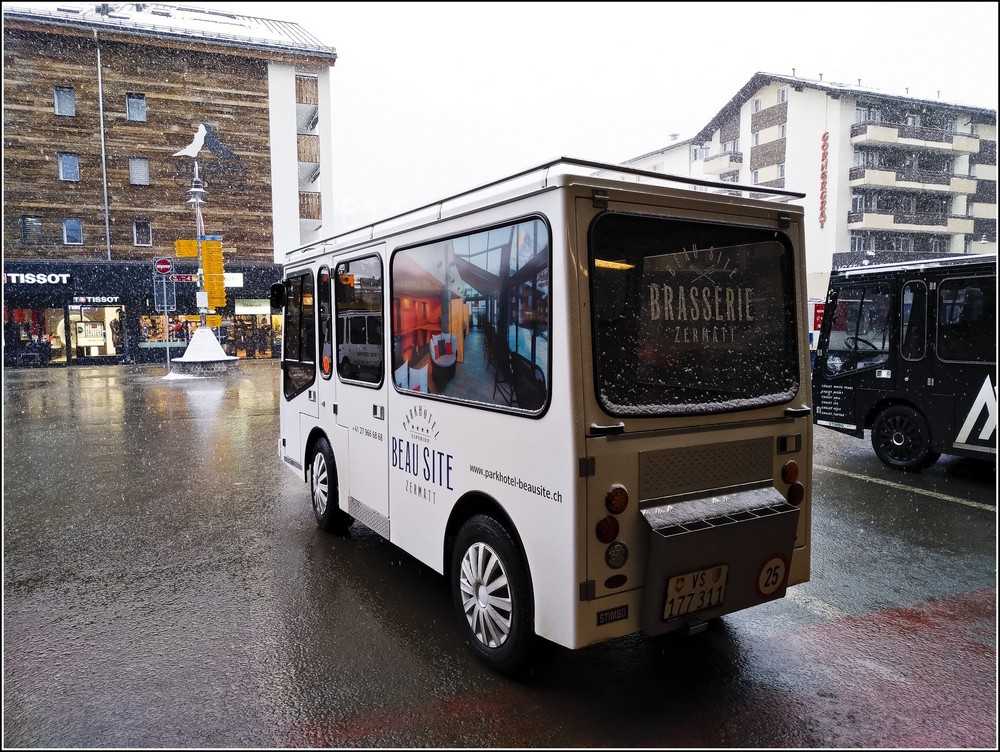
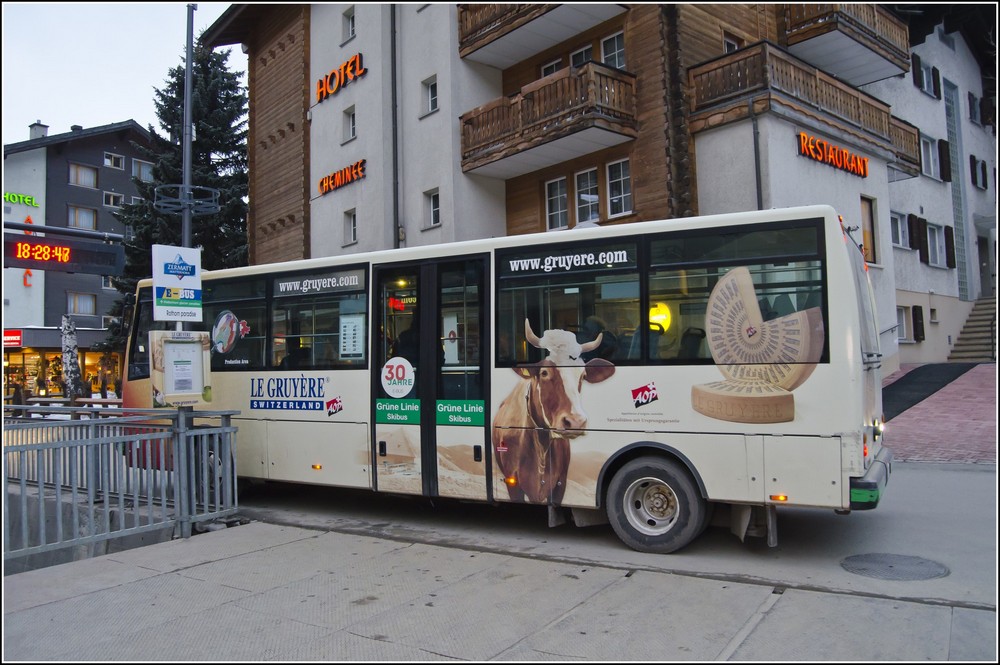
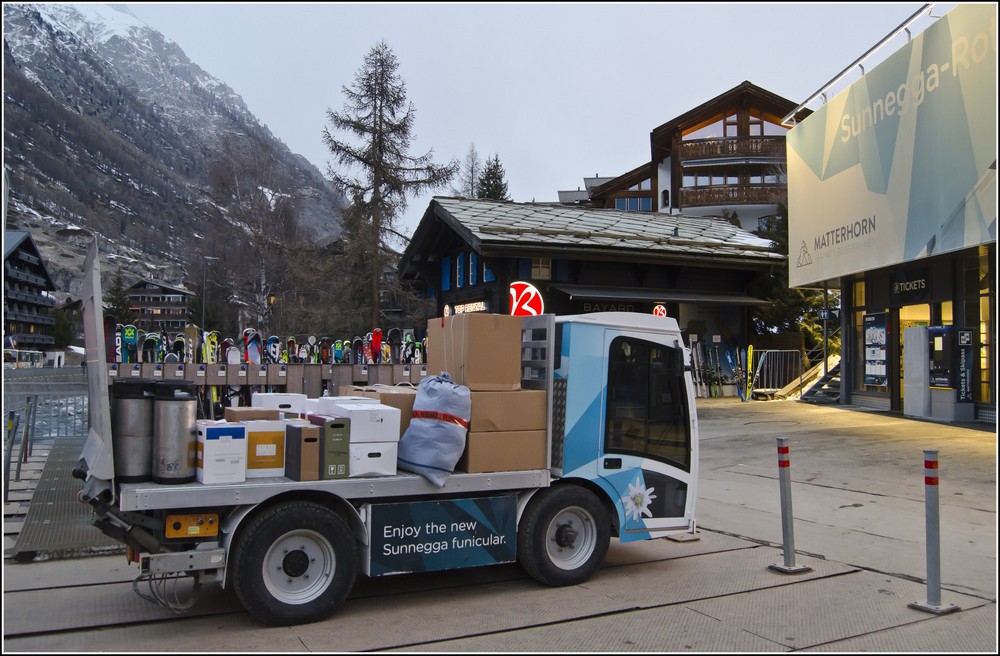
I never figured out if owners of electric cars can drive into the resort. I doubt it matters for most of us anyway. One way or another, you leave your car in Täsch and ride the train to Zermatt — it takes about ten minutes. You can also grab a taxi. And if your budget allows it, you can reach Zermatt from Zurich Airport by helicopter in about an hour — that trip costs from six thousand francs one way. But honestly, at this point it’s already clear: if you’re in Switzerland, you’d better travel everywhere by train!
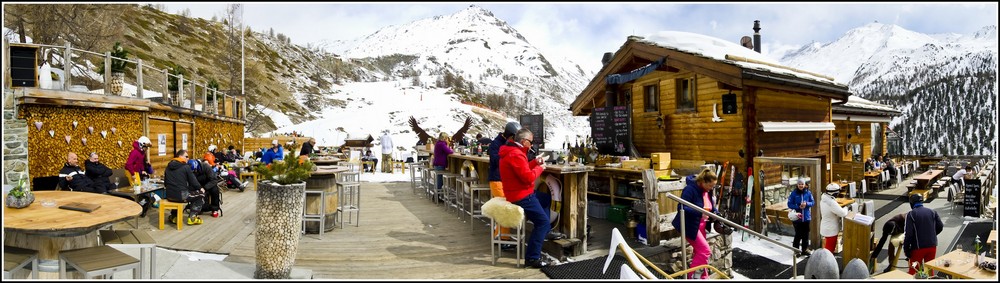
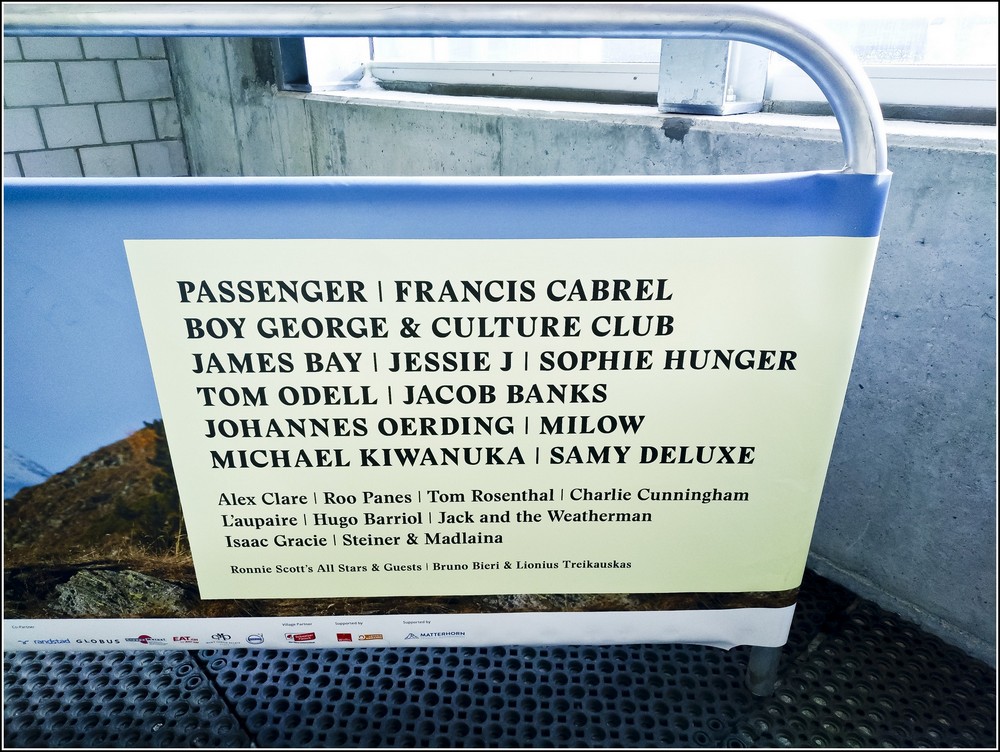
Compared to quiet and calm Engelberg, Zermatt lives a completely different lifestyle. About a hundred restaurants and bars (a couple of them even have Michelin stars), clubs, a casino, spas, shopping — you won’t get bored here. Every evening the bars fill with skiers and snowboarders relaxing after a long day. Everyone laughs, drinks, and shares stories from the slopes — amazing atmosphere! Popular DJs and well-known musicians visit regularly. Here’s a poster I bumped into right on the mountain, featuring one of my favorites — Michael Kiwanuka.
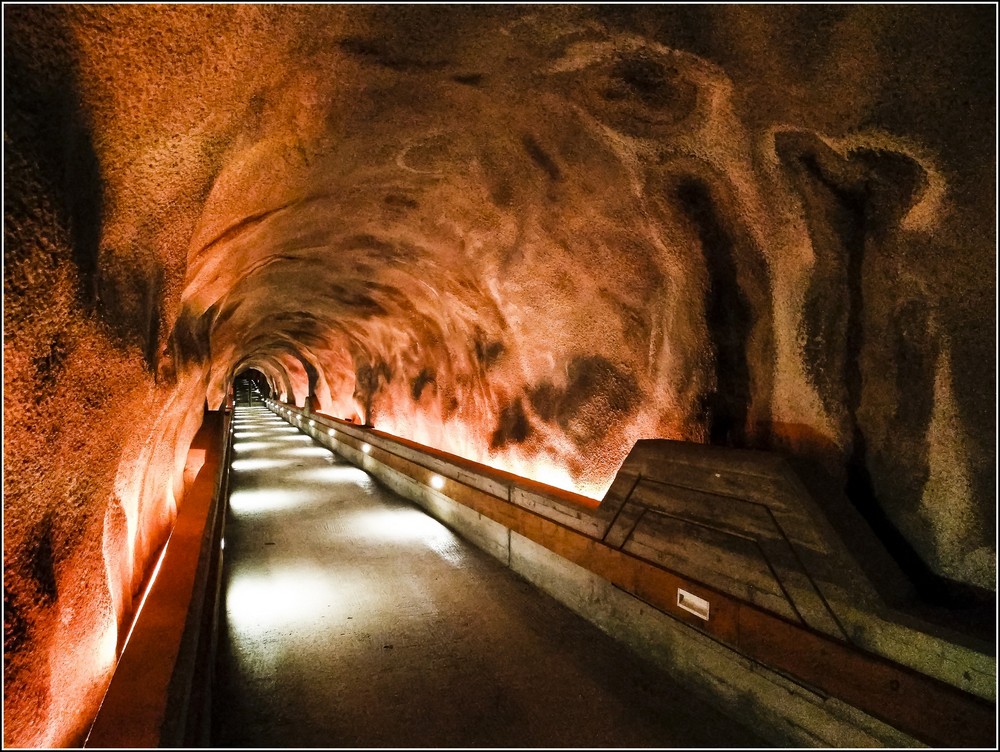
We decided to join the nonstop celebration and headed to the restaurant at the hotel Chateaux Schönegg. Two things make it special. First — the tunnel: you need to spot a discreet entrance from the riverside, walk through a beautifully lit corridor and take an elevator up to the restaurant. Second — the view of the Matterhorn. We missed it because night fell while we wandered around searching for the entrance. But in daylight, the terrace looks out over a stunning panorama of Zermatt and the iconic mountain. With its flat pyramid-like faces, the Matterhorn reflects sunlight in a spectacular way. No wonder it officially holds the title of the most photographed peak in Europe, even though 38 higher four-thousanders surround it!
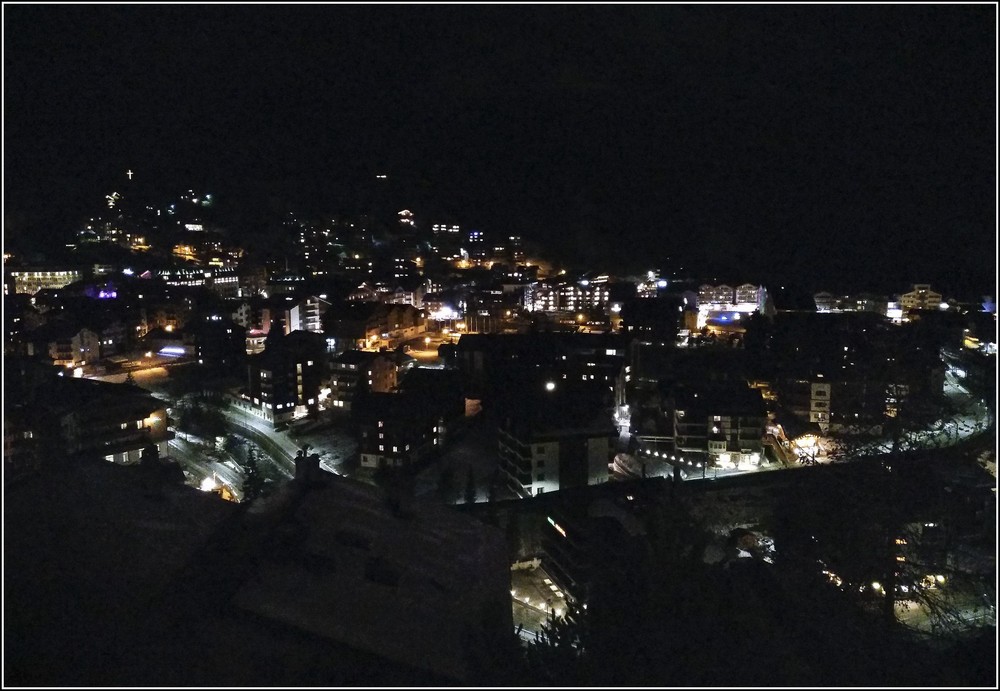
The Matterhorn isn’t the only reason for Zermatt’s fame. The resort offers such a wide range of experiences that Switzerland Tourism labeled it “Family Friendly.” Along with loud après-ski parties, the resort provides ideal conditions for kids. It also hosts Matterhorn Glacier Paradise — the biggest and highest summer ski area in Europe. Many national ski teams train here during the off-season, which also boosts the resort’s popularity. No surprise Zermatt earned the title of the world’s best ski resort in the 2018–2019 season.
Skiing: all kinds, for everyone
As you probably already figured out, the resort offers enough variety for absolutely every type of skier. I’d even say the resort covers polar opposites. The choice doesn’t just impress — it shocks. Try wrapping your head around this: the combined Zermatt ski area includes 360 kilometers of slopes. Three. Hundred. Sixty. You need to push yourself pretty hard to cover most of it in one week.

Let me drop a few more numbers. Total vertical drop: 2263 meters, from 3883 meters at the Klein Matterhorn lift (the highest in Europe, by the way) down to 1620 meters in Zermatt. 33 lifts (and 52 in the combined area)! I’m not sure if the Gornergrat train counts as a lift, but the year-round gondola line with Swarovski-decorated cabins definitely does. That gondola carries riders and tourists up to 3883 meters and into Matterhorn Glacier Paradise — the area where you can ski even in summer.
In Engelberg we suffered through a bad-weather first day and then enjoyed perfect conditions on the second. Here everything flipped: day one greeted us with sun and perfect snow. Day two was colder, snowy and cloudy, but still very much skiable — nothing close to Engelberg’s madness.
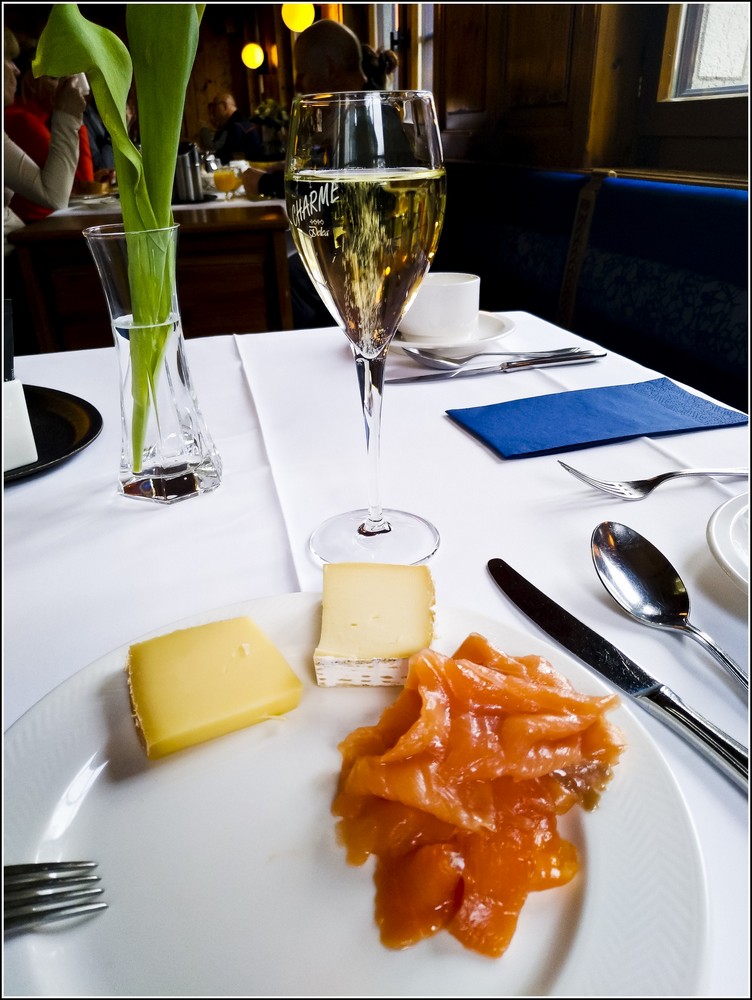
After a breakfast of champagne and cheese — as the fancy life here expects — we walked to the rental station and then straight to the Gornergrat train. Our Hotel National, sat in the very center of the resort, so everything was just a short stroll away. The train carried us up toward the ski area, and right from the start it gave us an incredible view of the Matterhorn towering above the resort.
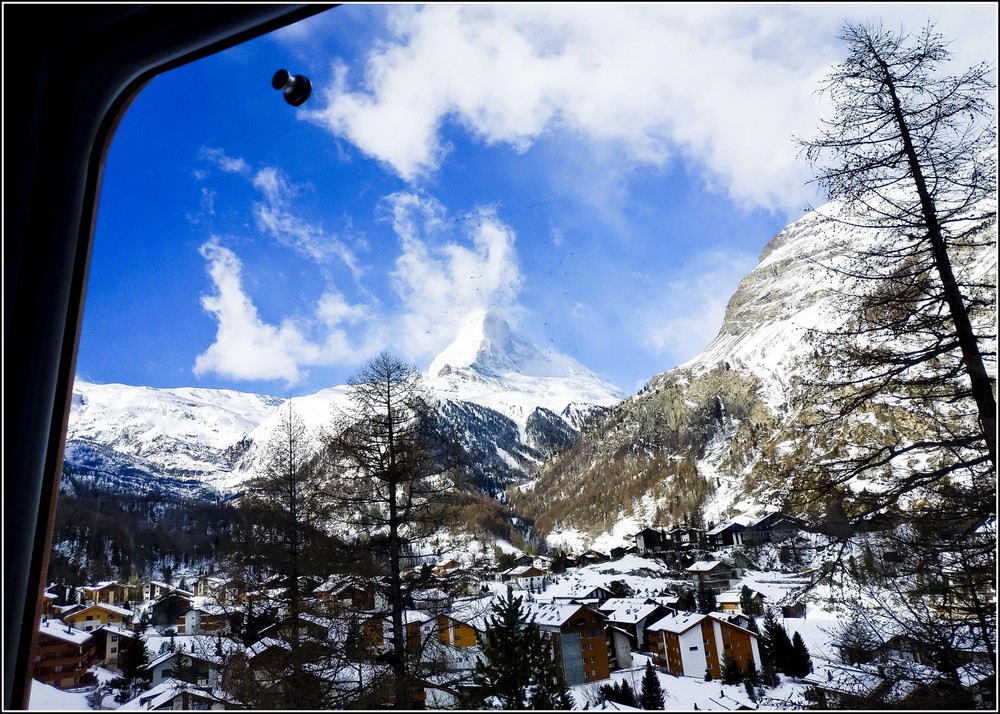
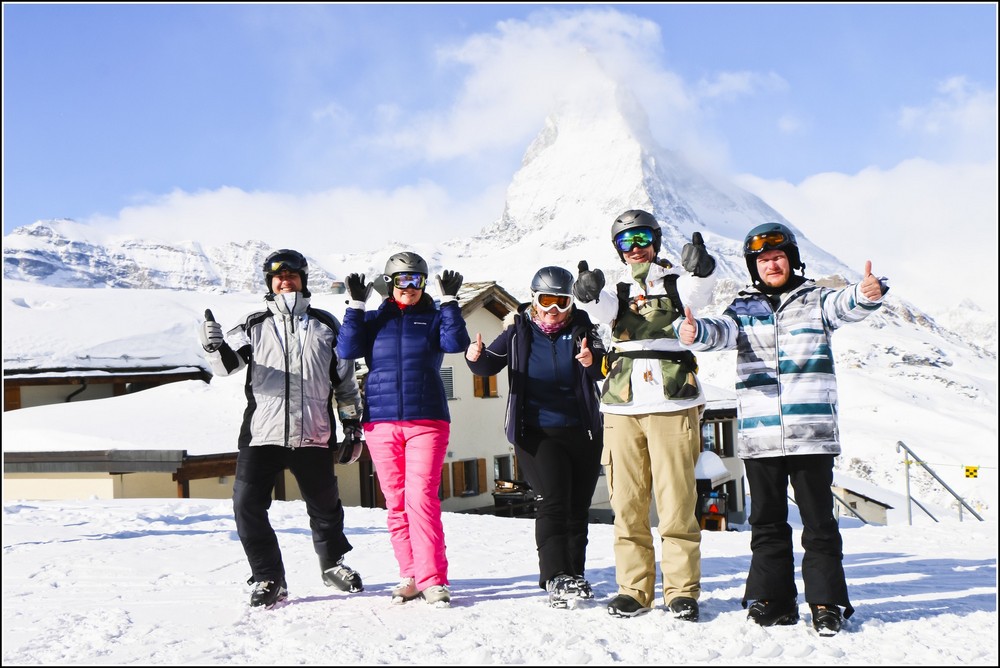
We passed Riffelalp and climbed to Riffelberg. Sunshine, perfect visibility, perfectly groomed slopes — everything promised a fantastic day! And of course, the Matterhorn kept watching over us like a giant guardian.
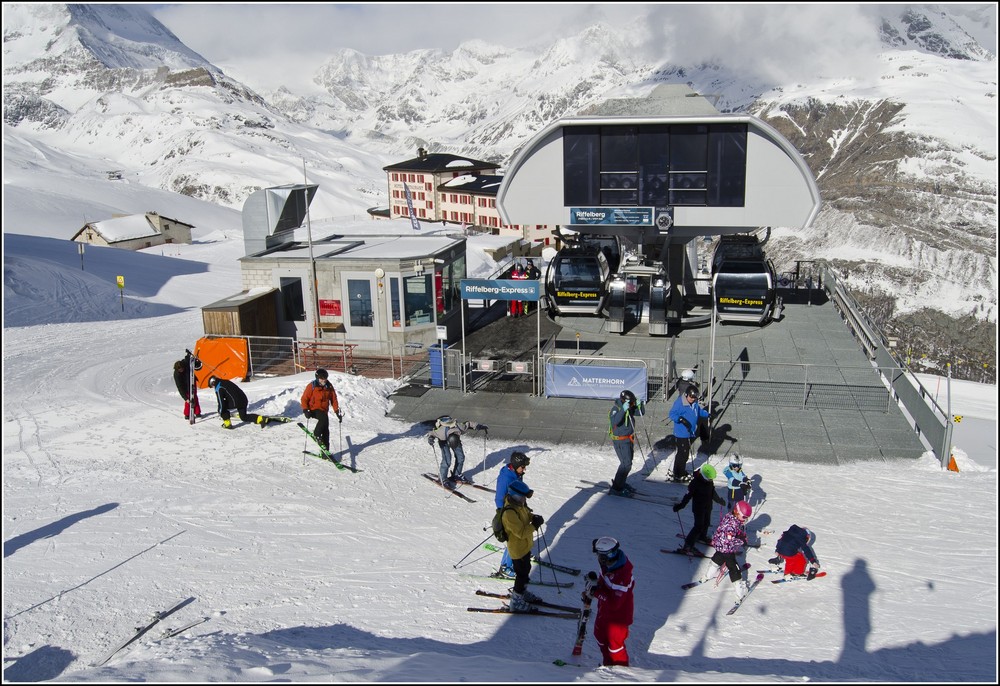
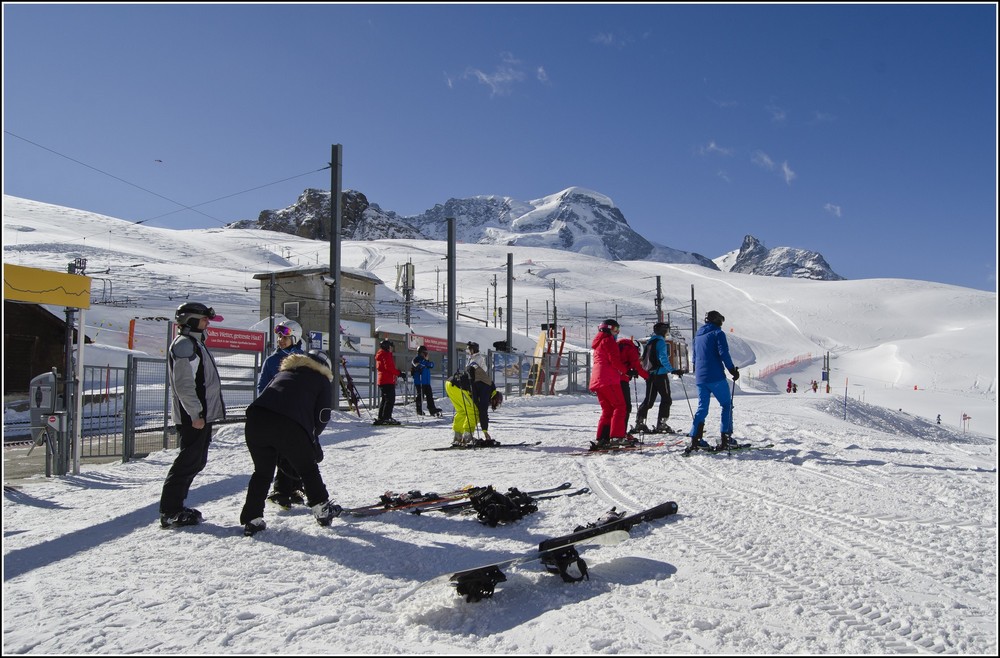
Speaking of the Matterhorn — it doesn’t hold any height records. It ranks 12th in the Alps and nine Swiss four-thousanders stand even higher. But its perfect pyramid shape and steep snow-free rock faces make it arguably the most beautiful. Also the most dangerous — climbers conquered it last among major Alpine peaks, and only half of the first ascent team returned alive in 1865. Since then, the mountain has claimed more than 500 lives, earning its grim reputation as the deadliest alpine summit.
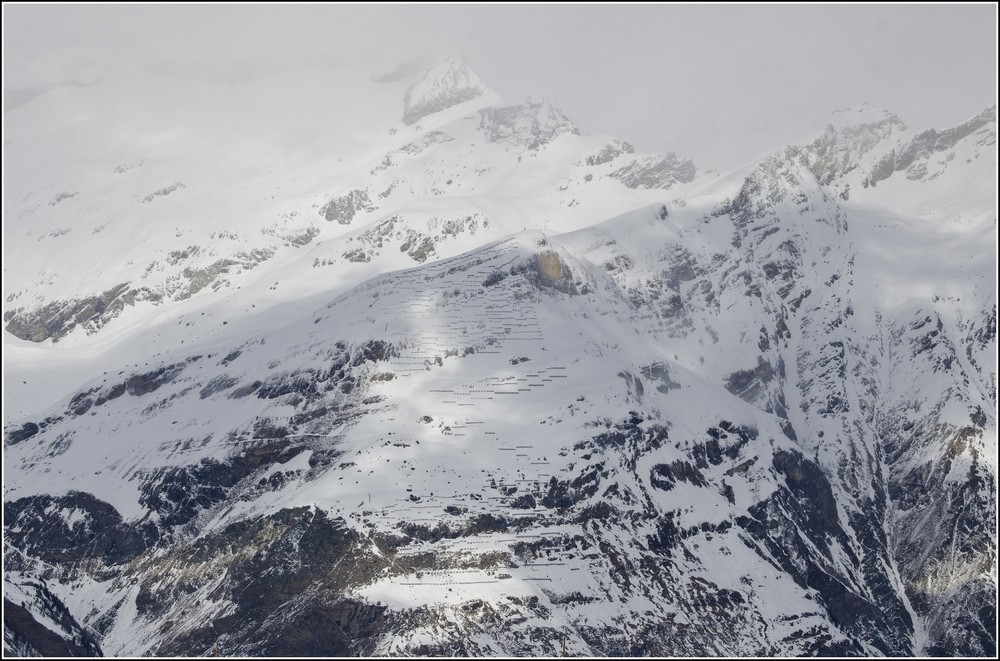
We admired the mountain safely from below — “only” from 2500 meters — and on marked slopes where visibility stayed perfect. Even freeride zones get marked here: Zermatt offers 36 kilometers of secured off-piste routes in Rothorn, Stockhorn and Schwarzsee, with avalanche-controlled powder. After Engelberg’s wilderness experiments, we wanted to explore as many pistes as possible. So we dipped into the powder once for the experience and then stuck to endless new trails and branches.
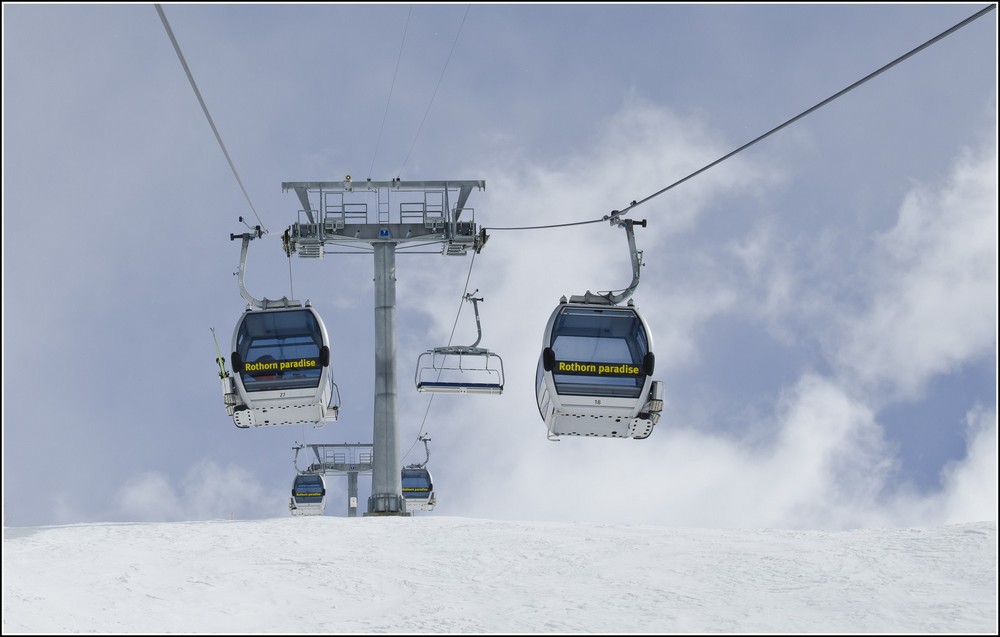
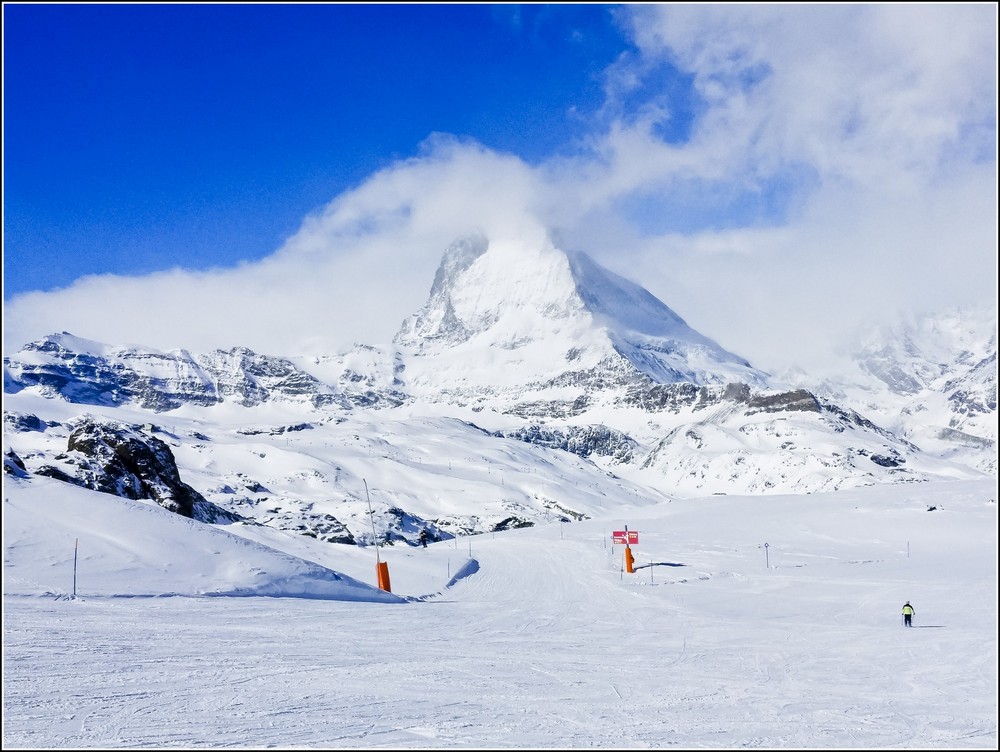
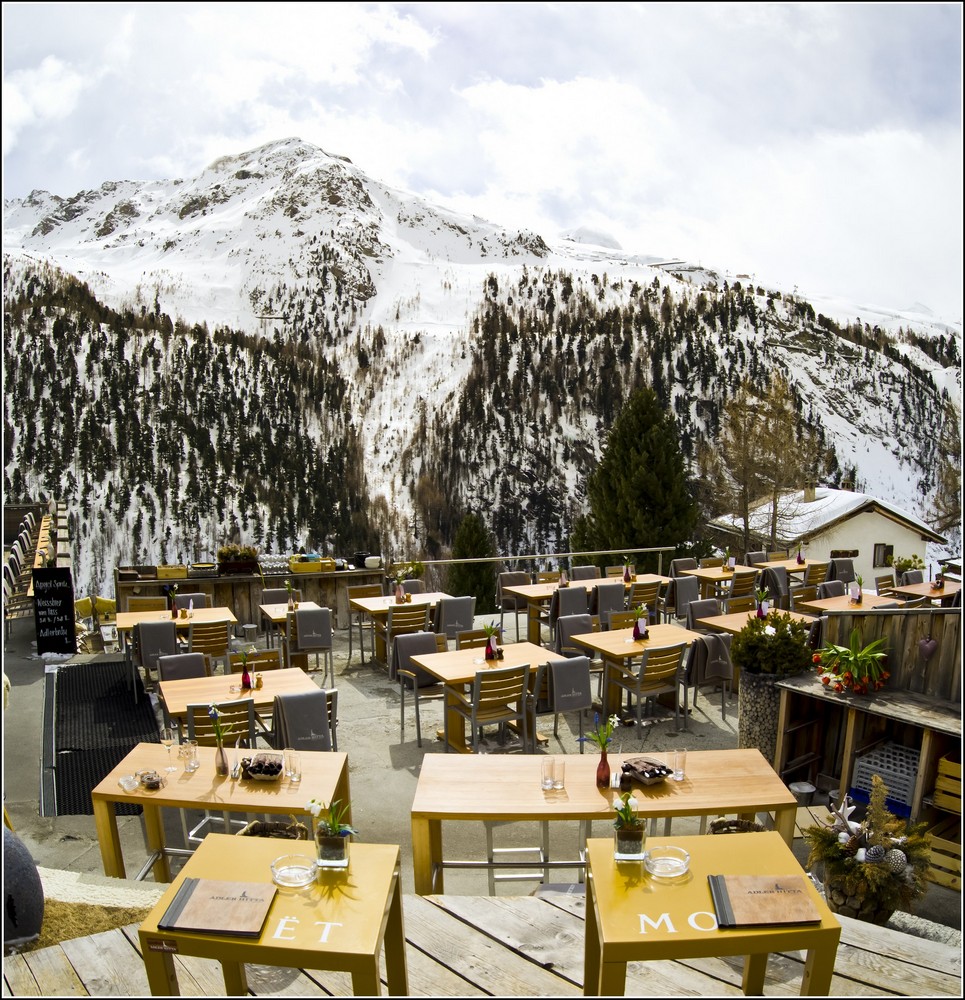
We had a lunch reservation at Adler Hitta in a different part of the ski area, so by swapping lifts and traversing slopes (without dropping down to the resort), we moved toward Rothorn.
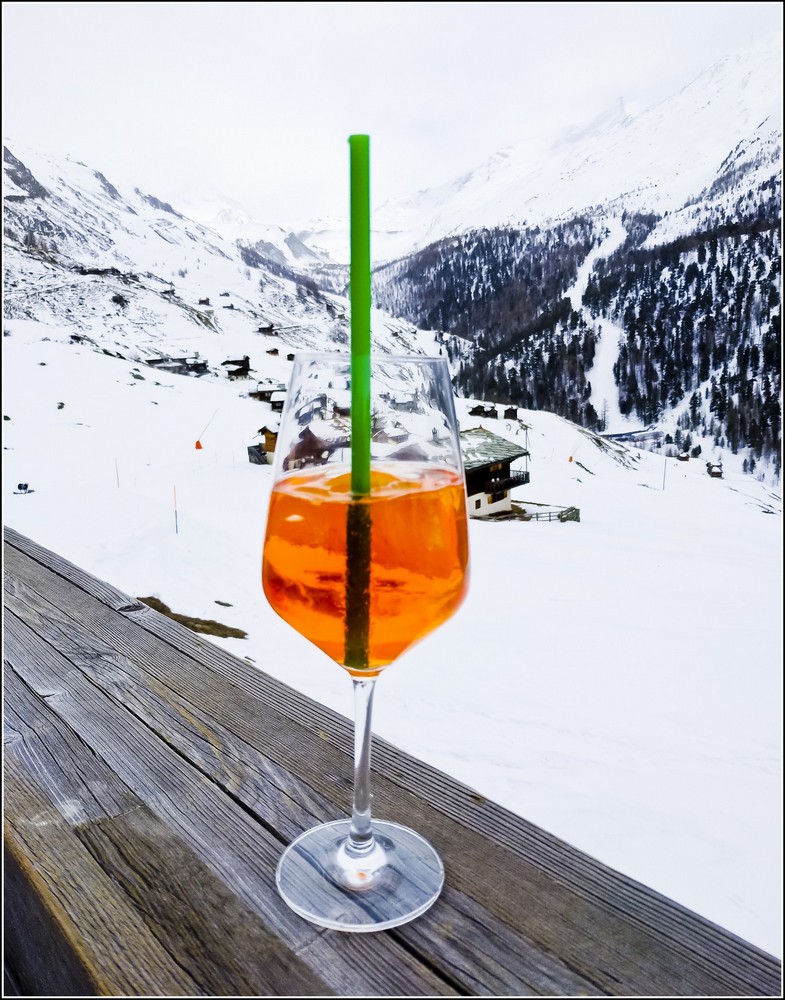
There I met my first black slope. Thanks to good snow, sunshine, and plenty of energy, I handled it surprisingly well. Not as scary as you imagine. The real horror awaited me later. For now — lunchtime! I love slope-side restaurants where you literally ski right to the entrance. This one offered great food and, importantly, an excellent Aperol Spritz — something I craved after the black run.
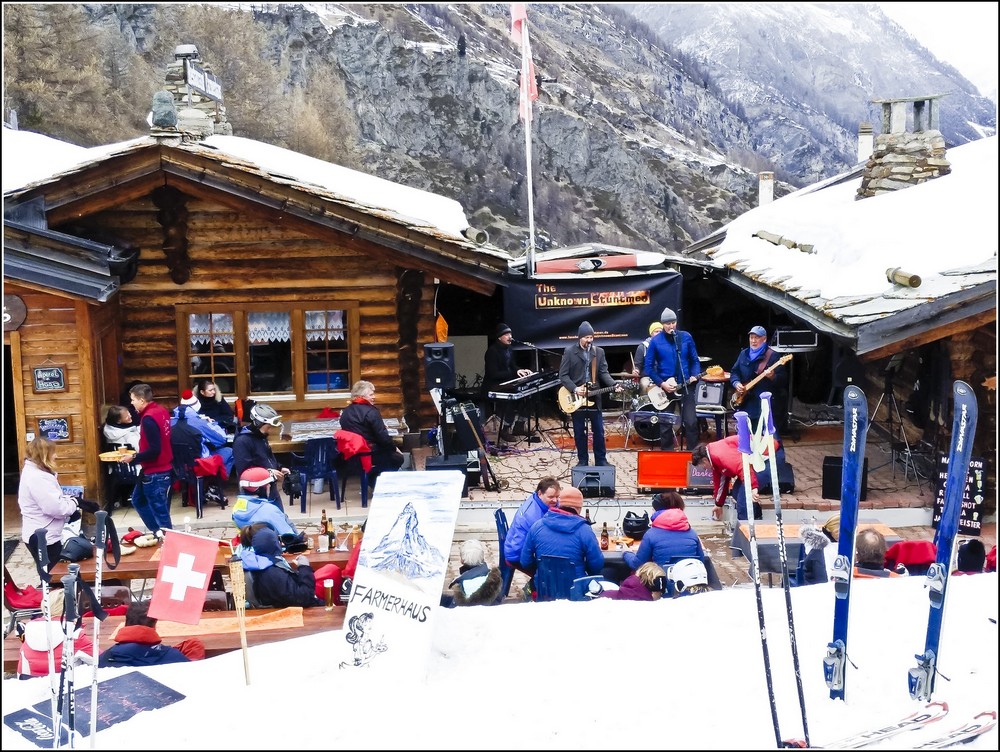
Later, while skiing on the right side toward Italy near Trockener Steg, I stumbled upon an entire village of cafés, bars and terraces built right along a ski trail — like a highway going through a small town. You stop, unclip, eat, drink, listen to live music (the band sounded really good!), clip back in and keep skiing.
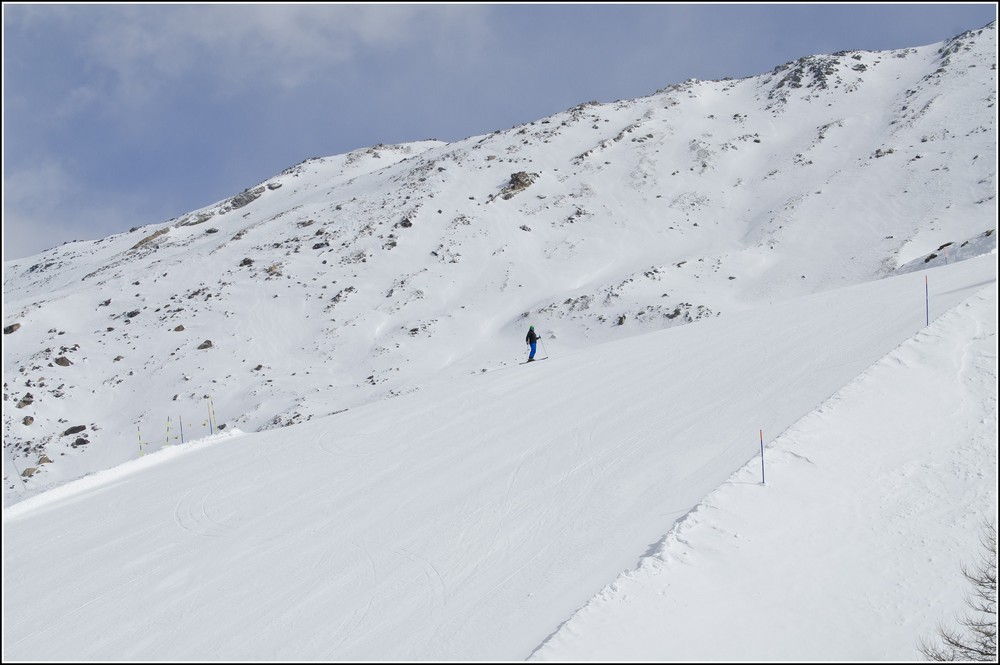
After lunch we cruised lazily around Rothorn on the easier slopes. Funny enough, even though the area rises to 3103 meters and offers everything from black runs to simple reds, we chilled so much that Alyona crashed on one of the slopes. Her knee. A passing instructor radioed for rescue. Soon a wiry sun-baked mountain guy in his 50s or 60s arrived — the kind of man who looks like he was born on these slopes and can ski any run backward with his eyes closed. He pulled a pair of rescue sleds behind him. Sleds!? I couldn’t believe it. Where’s the helicopter? Or at least a snowmobile? We laughed about these “primitive” methods and decided to follow the rescue sled down to the medical station. But no chance! He skied so fast that we could barely keep up even without dragging anyone!
Here’s the bill: around 500 euros for the sled transport and the same amount for X-rays and the doctor’s visit. Insurance paid everything back, so it worked out fine. And let me repeat: always buy mountain insurance. And how lucky we were that they used sleds instead of a helicopter — few people carry that kind of cash!
After that incident we took the hint and left Rothorn, heading toward Gornergrat and then Trockener Steg. We hoped to climb higher to the glacier, but the weather turned worse, so we postponed that for the next morning. Still, even the lower slopes impressed us — especially the section with black mogul runs. And visibility kept dropping because of snowfall. You can avoid all that by sticking to gentler red slopes (beginners shouldn’t go here), but hey — who doesn’t love some speed?

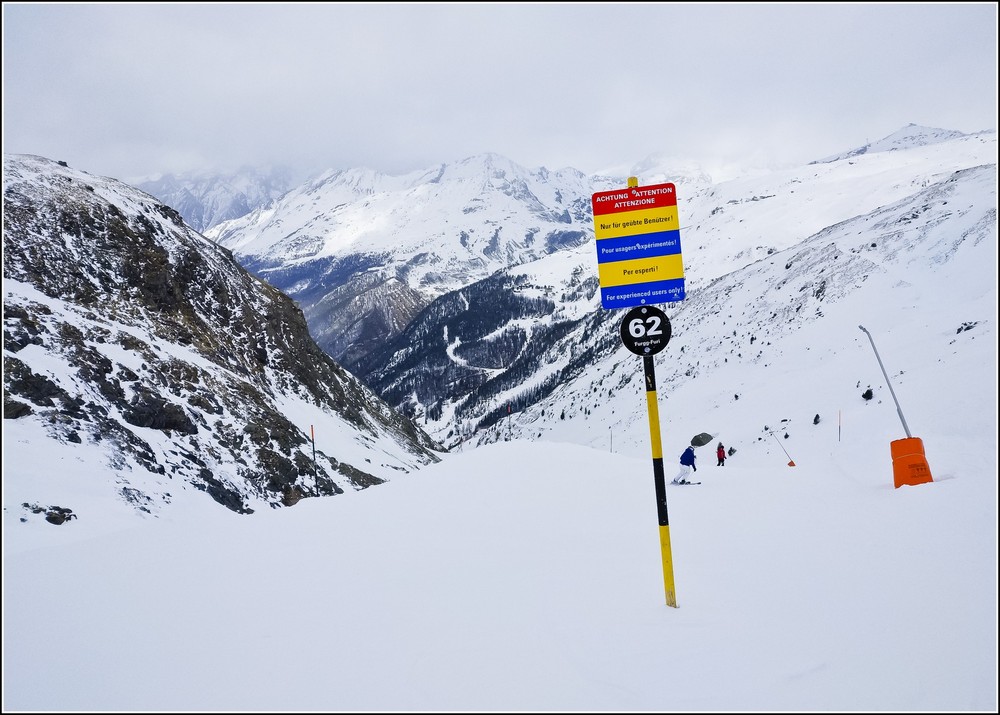
Anyway, black moguls in a snowstorm — that’s brutal. After that, nothing scares you. Some red runs felt almost black, too. But eventually the terrain eased up, cafés appeared on both sides, and we rewarded ourselves with a glass of Aperol or mulled wine. The only downside in this area — the final descent to the village becomes too flat. No matter how fast you go, you lose all speed and walk the last stretch toward the bridge over the stream. But it’s short and very picturesque. You reach an electric bus stop and the bus drives you along the main street of Zermatt. If you’re choosing a hotel — stay close to the riverside.
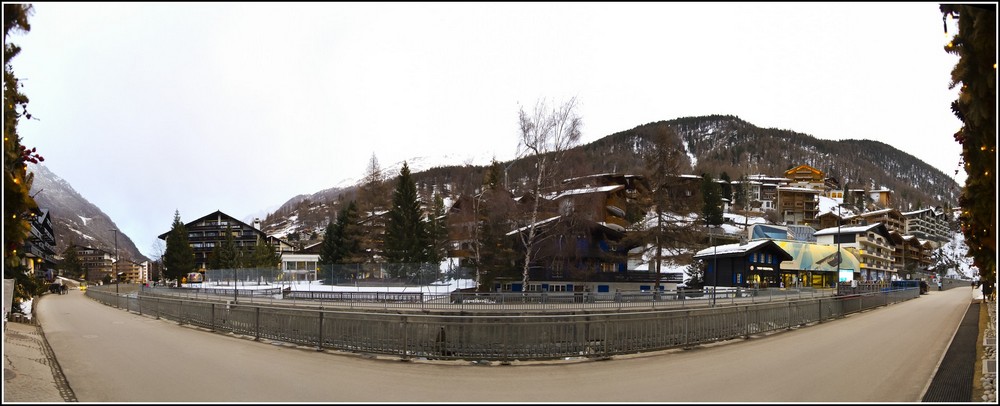
Our hotel sat right by the river, just 200 meters from that bus stop. Walking there in ski boots was easy enough. And once you reach the hotel — oh, the bliss of the sauna, spa, and pool! Hot-cold showers, hammam, warm and cool pools — if you ski hard, pick a hotel with a proper spa. Our Hotel National left nothing but the best impressions.
Day Two: the way to the mountain top
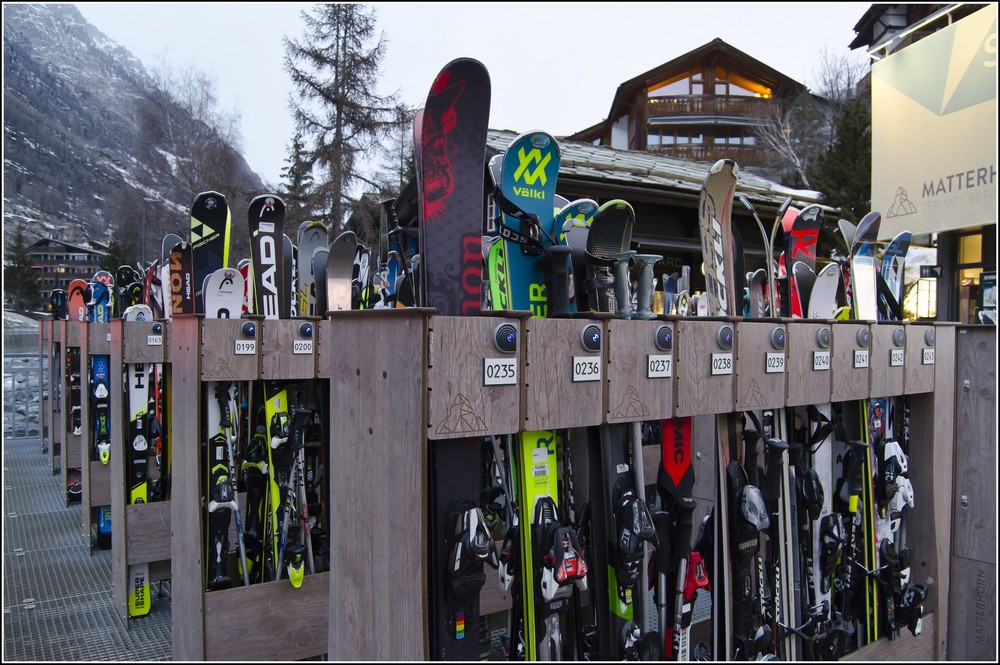
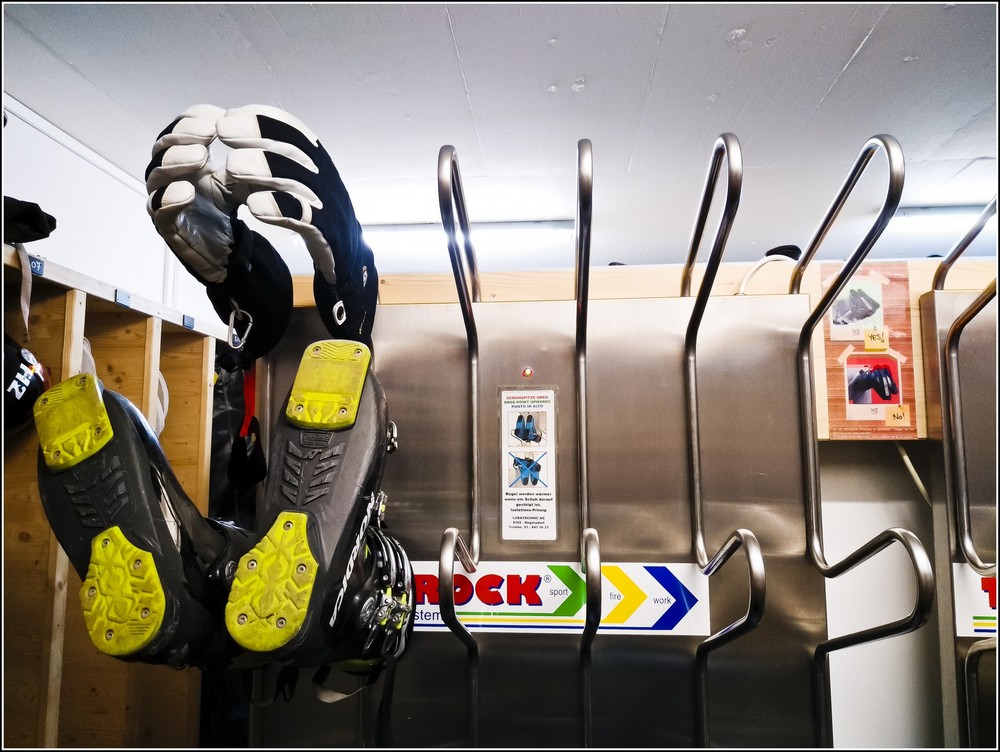
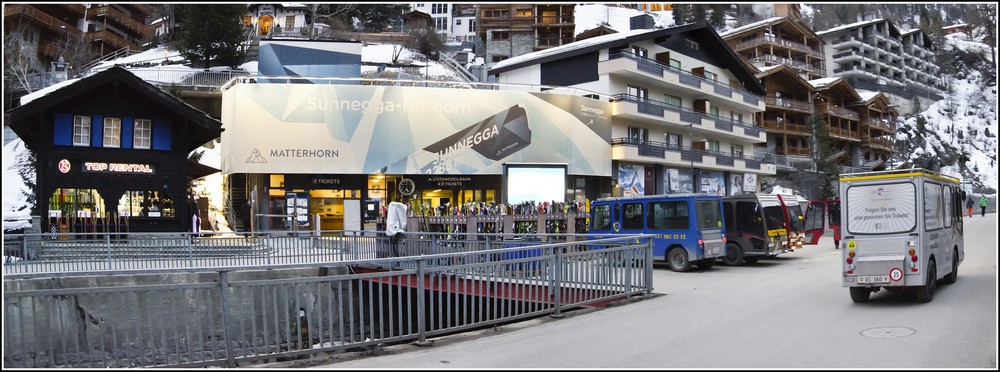
On the second day, just as we planned, we headed toward the glacier. But not right away. First, we tried the Sunnegga funicular, since its lower station stood directly across from our hotel. By the way, right next to the funicular there are convenient outdoor ski racks, so you don’t need to drag everything into the hotel. Most hotels in Zermatt (I think basically all of them) also offer ski rooms — ours had one too, with a boot dryer.
After warming up on that side, we started moving toward the glacier using different lifts: go up — ski down to the left, another lift — again ski down to the left. The weather down below looked better than yesterday, and we still had plenty of energy in the morning, so we skied the black mogul slopes again. But after that, we needed to hurry toward the glacier and try to peek into Italy, because after lunch we had to pack and catch our train.

As I said before, mountain weather can change extremely fast. And if the resort has a vertical drop of more than 2,000 meters, and the top misses the 4,000-meter mark by barely a hundred meters, the weather at the bottom and the weather at the top at the same moment differ about as much as the weather in Milano and the weather in Oslo. The closer we came to the glacier, the clearer we felt that difference, and at the top the temperature hit a lively –20°C.
Zermatt has a very handy app (for iOS and Android). Even without internet, it helps a lot — it shows lift layouts, piste maps, and plenty of useful offline info. With internet you also get live weather conditions at every upper station, info on which slopes stay open or closed, and real-time lift status during unstable weather.
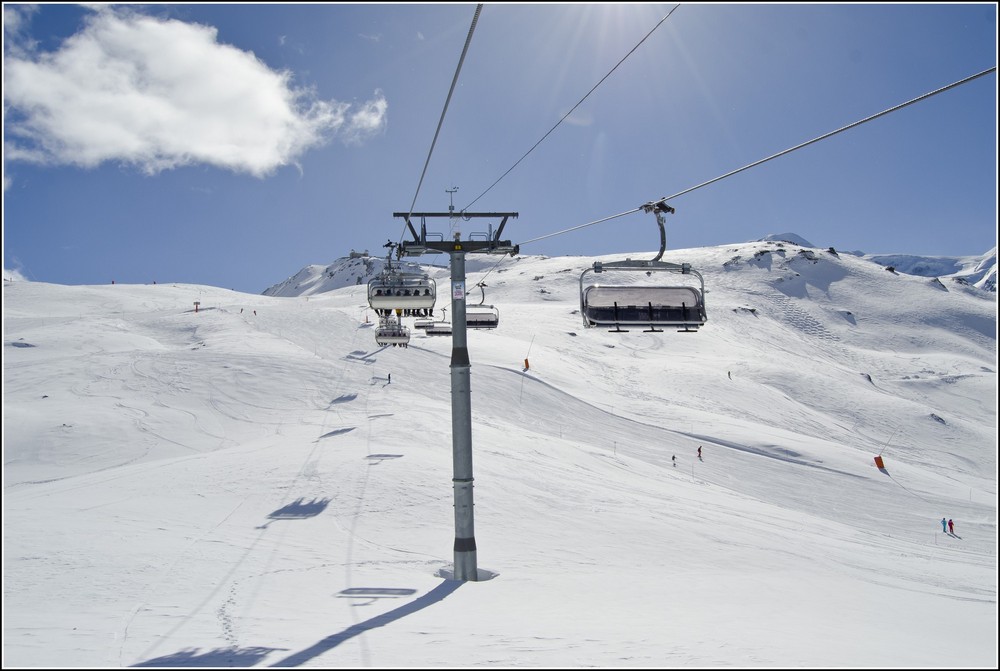
One of us had mobile internet, and after checking the updates we reluctantly concluded that we wouldn’t make it to the Italian side. The lift there could close at any moment because of the weather. It felt frustrating — our ski passes covered the whole linked area with Italy. Maybe we could have made it in time, but we didn’t want to take risks. If the weather got worse, the three of us (only Dima, Yura, and I went to the glacier) would have to find a taxi with all our gear and ride back over the passes from the Italian village of Cervinia to Swiss Zermatt. Money wasn’t the issue (although the ride costs 200–300 euros) — the problem was that we might miss our train. Ahh, we really should’ve gone to Italy yesterday, because I really wanted to cross the border on skis. Well, next time. For now we could still keep climbing to the top and skiing on the glacier; even if the lifts stopped, we would easily ski a couple of kilometers back down to the village.

The glacier skiing itself didn’t amaze me much, except for the fact of it. The terrain isn’t steep; the slopes feel slow, even the red ones. The strong wind gets in the way, and visibility at that altitude can’t compare to what we had below. But you definitely feel the scale of the place, and skiing at that height feels cool on its own. Still, glacier skiing is more of a summer thing, when you don’t have many alternatives. In winter it’s much more fun to ski lower down where the terrain varies a lot more.
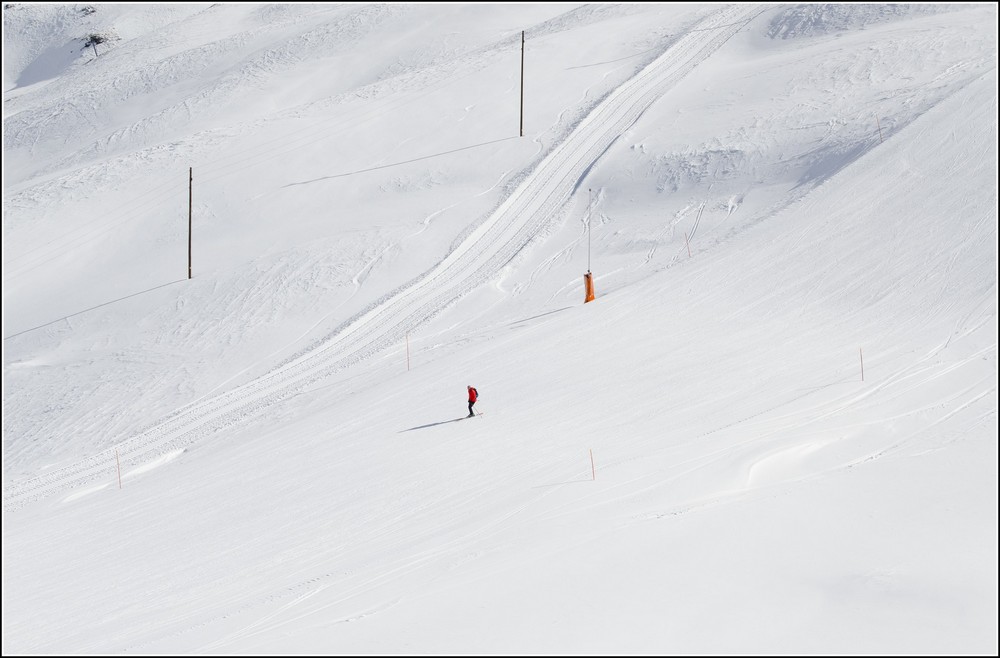
What impressed me most was the way toward the glacier — a huge, non-stop, mixed-terrain descent. First, we skied from Rothorn (3103 m) down to Gant (2223 m). Then we took a giant cable car to Hohtälli (3286 m). After that came the long descent with a 1.5-kilometer vertical drop to Furi (1867 m). Then the climb to Matterhorn Glacier Paradise (3883 m) with a transfer and a change of cable car at Trockener Steg, and finally the last stretch above the glacier up to 3899 meters — the final difference in altitude is only 16 meters, so the slope there barely lets you move; it’s more for checking the box and looking toward Italy. In our case, the snowfall blocked most of the view anyway.

By the way, if these names still mean nothing to you but Zermatt caught your interest, I strongly recommend checking the resort’s interactive map before your trip. You can display all slopes or only currently open ones, and do the same with lifts. The map also shows restaurants, après-ski spots, photo points, and beginner learning areas.

Once we reached the highest point, we decided that we had completed our mission, and we began to descend toward the village. From 3899 to 1620 meters — a 2279-meter vertical drop — and who knows how long the actual descent is, but it took us quite a while. And again on the way we met that same black mogul slope. In short, even though we spent only half the day on the mountain, we covered everything we wanted. After a day like that, lasagna for lunch (Italy is right next door!) hit so perfectly that my taste buds barely noticed anything — but I’m sure it tasted great!
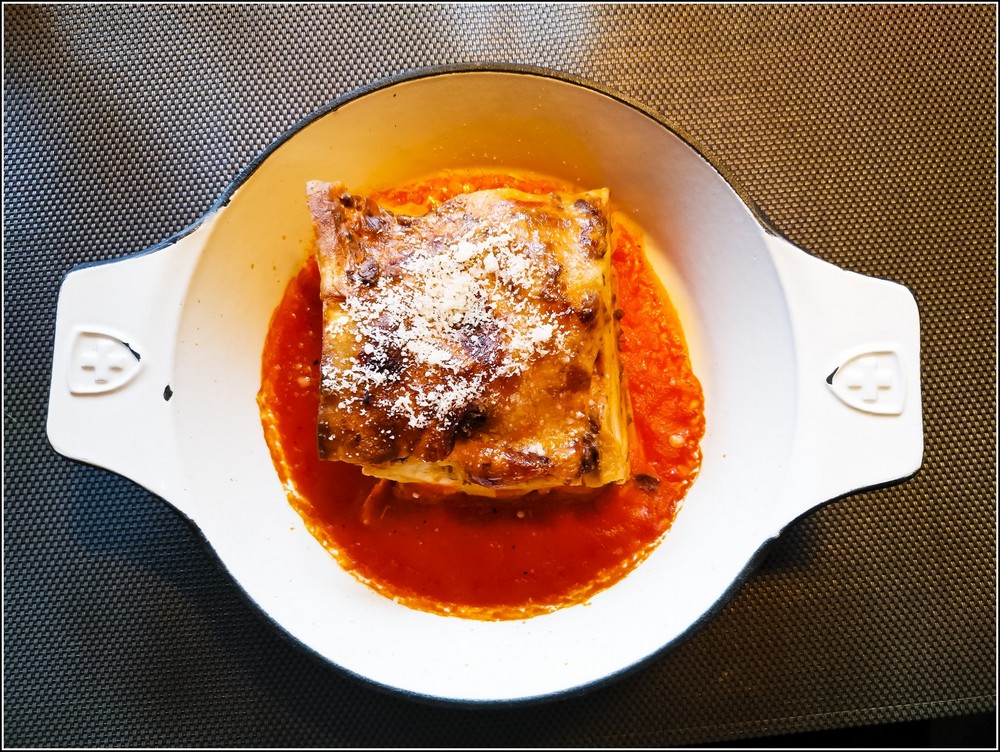
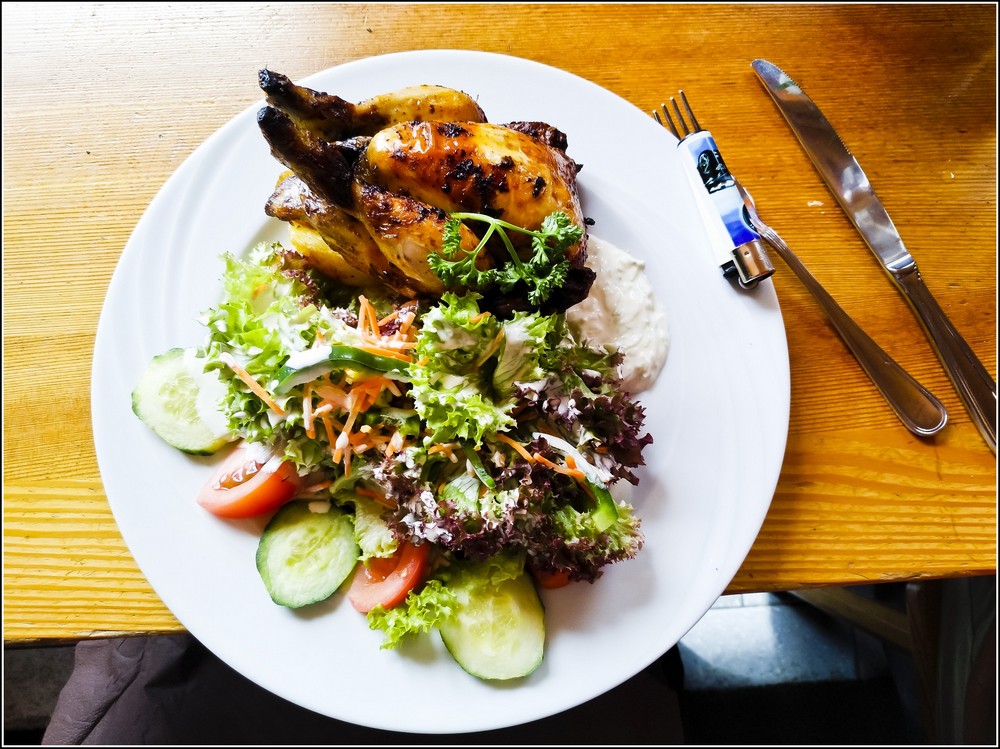
After lunch we loaded ourselves into an electric taxi (because of the bags and the time; otherwise it’s a 700-meter walk) and headed to the train station. Our next stop was another unique resort — Leukerbad. And now we said goodbye to Zermatt, hoping it wouldn’t be forever — I still have so many untouched slopes here, an unresolved Italy plan, and I still haven’t seen the Matterhorn glowing in the sunset… Wow, I think I’ve never written such a long-read before. Anyway — definitely see you again, Zermatt!
Useful information and links
Ski pass prices in Zermatt 2026
- Ski passes winter: CHF 88.00
- Flex ski passes: CHF 173.00
- Beginners ski pass: CHF 63.00
Discounts in Zermatt
- Children 9 – 15 years of age: 50%
- Youth 16 – 19 years of age: 15%
- Groups from 20 guests: 10%
- Zermatt ski pass for children under 16 on Saturdays for free
- More info at Zermatt.swiss
Resort info
- Length of slopes: 200 km (360 km with Breuil-Cervinia)
- Number of lifts: 52
- Altitude: 1620–3899 m
- Season: year-round (glacier area from 2900 m)
Useful links
- Current weather and slope conditions in Zermatt
- Real-time list of open and closed lifts
- Interactive map of the Zermatt ski area
- Swiss Railways train tickets
- Car rental in Switzerland
- Hotels in Zermatt: