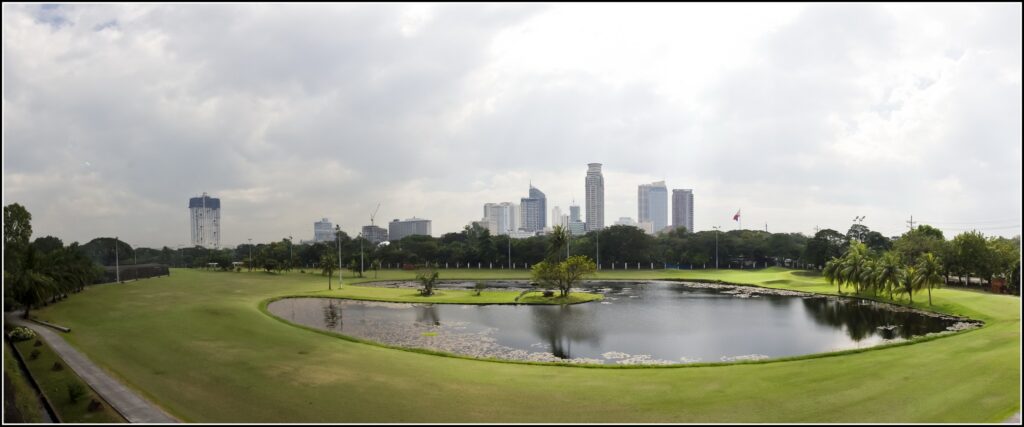
Manila is a large and very colorful Asian city. In many ways, it resembles other megacities in Southeast Asia that I have visited, such as Bangkok or Jakarta. At the same time, however, it feels very different, mainly because of the Spanish and American colonization of the Philippines.
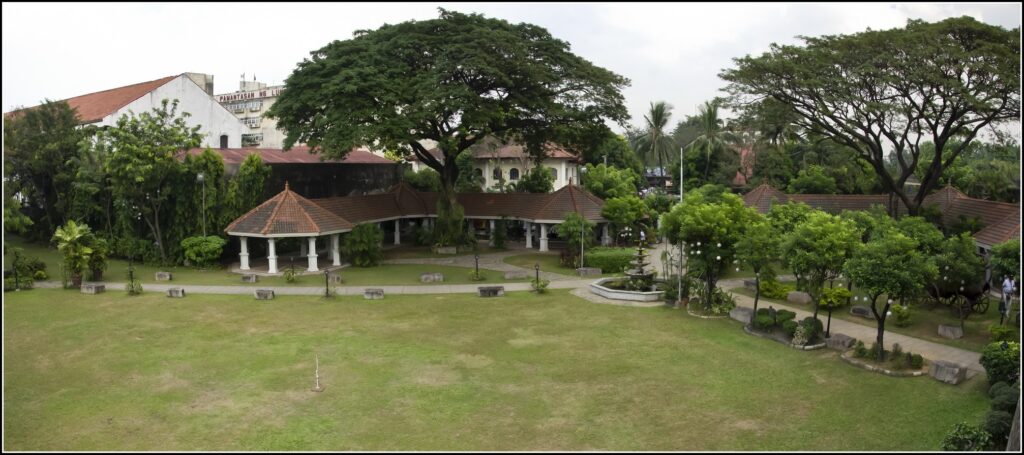
Today, Manila benefits from this cultural mix. As a result, the city has a unique character that sets it apart from other places in the region. Moreover, this heritage slightly reduces the language barrier. For instance, many people speak English even outside the tourism industry. Almost all signs and markings appear in English, and advertisements in shopping malls and offices also use English. The names, however, are often Spanish. Because of this widespread use of English, getting around the city is easy. People clearly explain directions and can tell you whether a jeepney will take you where you need to go.
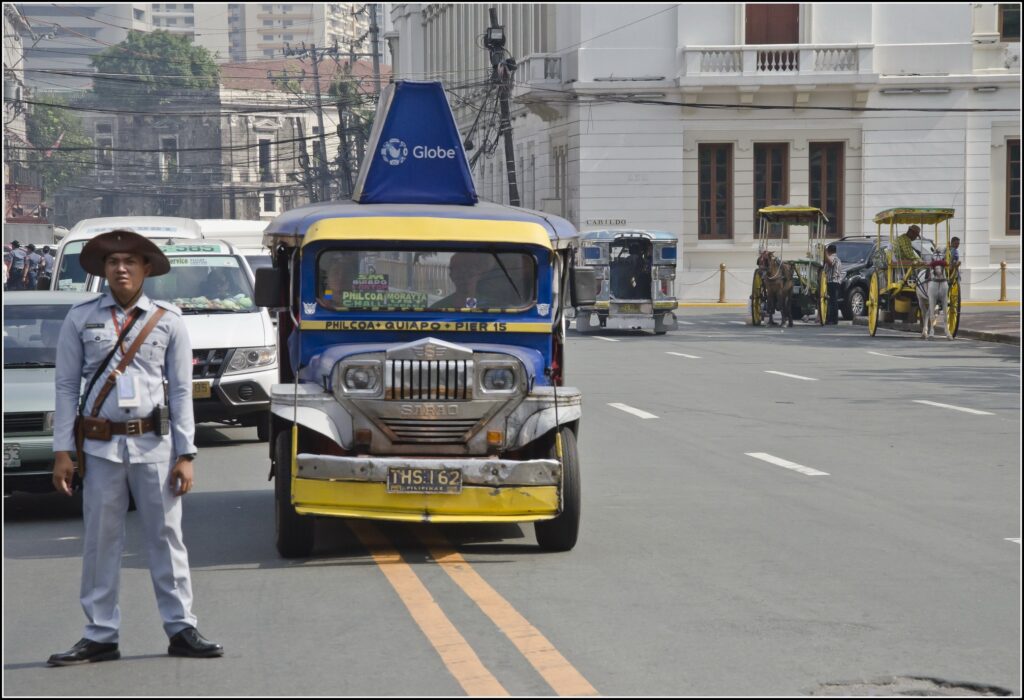
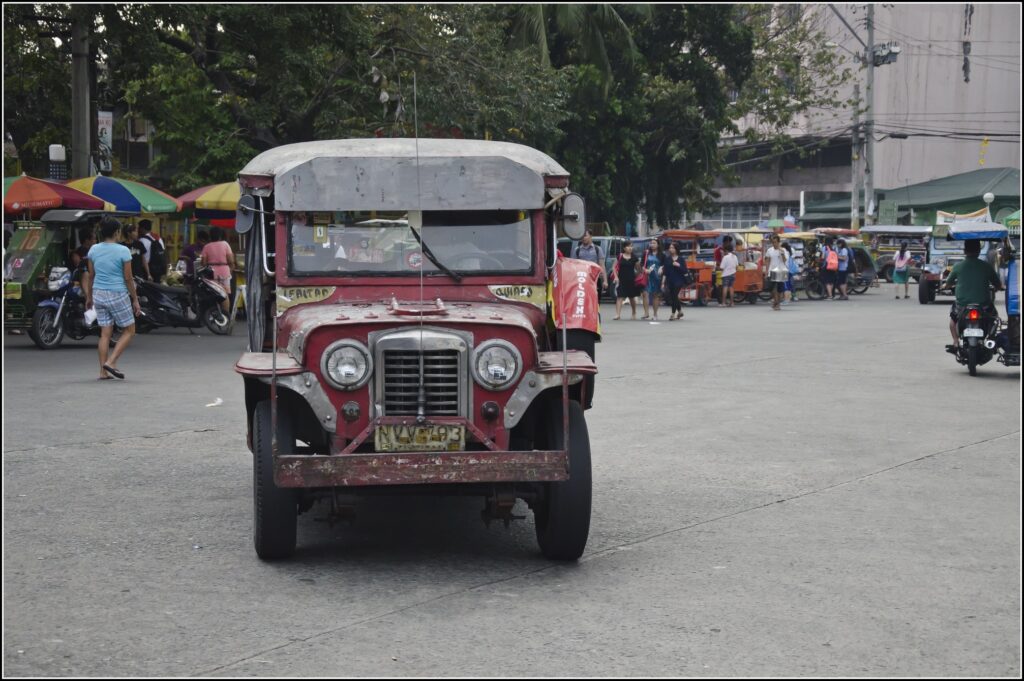
Speaking of jeepneys, they represent one of the most distinctive features of the Philippines, and naturally, Manila has the largest number of them. In the suburbs of the capital, a factory produces these vehicles in a very hands-on, artisanal way. Unfortunately, I did not have time to visit the production site, although similar workshops exist in other parts of the country. Originally, jeepneys appeared as a solution for reusing military jeeps left behind by the Americans. Over time, locals adapted them for passenger transport. The design looks extremely simple and very cheap. There are no safety systems at all. Still, these vehicles feel both creepy and fun. Each one is unique, and you will not find two identical jeepneys anywhere in Manila—or anywhere else.
But before getting carried away, it makes sense to start with the arrival. Since the Philippines is an island nation, travelers can reach it only by air. Direct sales and special offers from Europe are rare. However, there is a useful trick. If you find an inexpensive flight to Bangkok, it is worth taking it. From there, AirAsia, the largest low-cost airline in Asia, operates flights to Manila. When booked in advance, tickets can cost surprisingly little.
The airport in Manila feels clumsy and clearly needs modernization. Still, it works well enough. Travelers can reach the city by a system similar to light rail. While convenient, it does not go directly to the airport. The nearest stop, PNR EDSA Station, lies several kilometers away. A taxi to this station costs less than a ride to the city center, so it can be a good option if you travel light. Slightly closer is Nichols railway station, where local trains run to Tutuban, the central station. Neither option works at night, and fares remain very low, at around 20 pesos. A taxi ride to the city usually costs about 400 pesos. For a more exotic start, you can catch a jeepney near the airport exit. However, traffic jams in Manila are severe and slow, so keep that in mind when choosing anything other than trains.
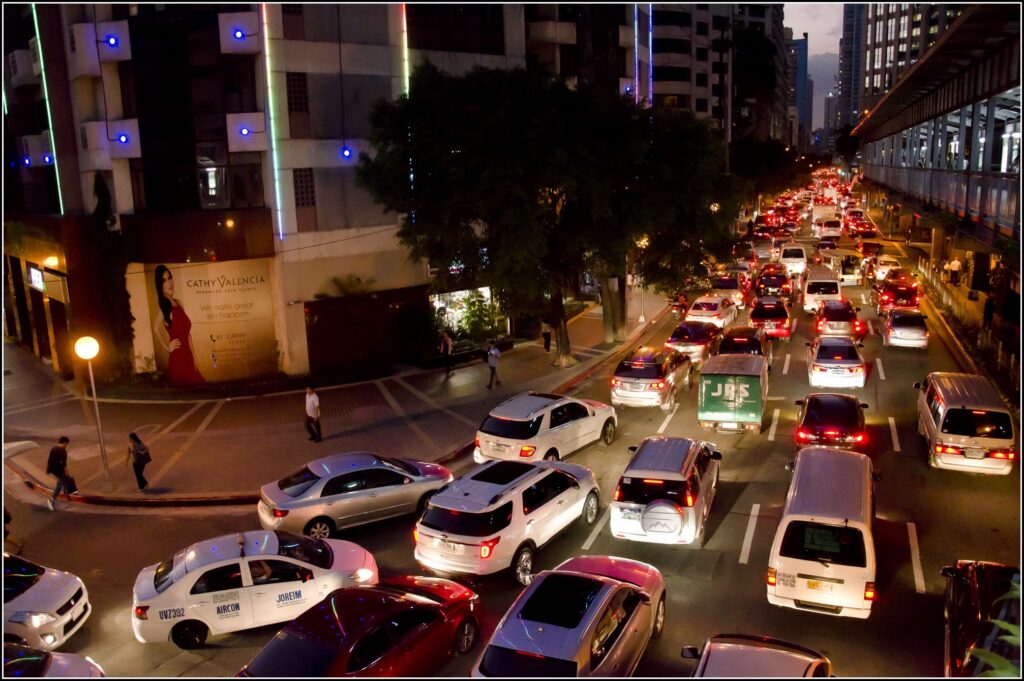
As for accommodation, Manila offers both budget and luxury options in almost every area. Still, some neighborhoods stand out. In Quiapo, travelers can find ultra-budget hostels, often with poor conditions. By contrast, the area around Intramuros has many solid mid-range hotels. If you prefer large, high-end hotels with full services, Makati is the best choice.
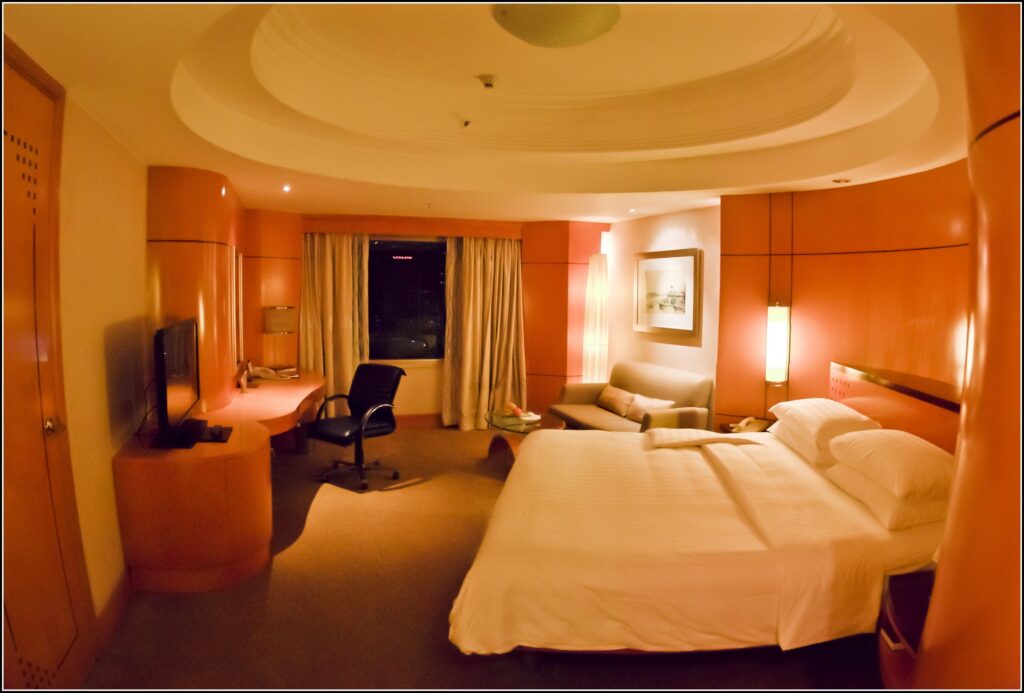
I stayed at the Shangri-La Makati, which is very posh, expensive, and luxurious—and for good reason. Although the furniture is not new, it remains high-quality and made from natural materials. Everything feels well maintained and professional. The staff performed excellently and easily moved me to a room with a more interesting city view. Around the hotel, and throughout this upscale district, many luxury cars appear, including Porsches and Bentleys, along with other premium brands. In addition, many well-dressed women offer intimate services. This presence feels unobtrusive and seems tailored to the clientele.
Interestingly, just a few blocks north of the Shangri-La, my colleagues and I found the local equivalent of Khao San Road. The area offers everything: music bars, go-go bars, plenty of alcohol, street food, and, once again, many girls. Unlike Walking Street in Pattaya, they do not aggressively approach visitors. Still, if you show interest, they can become persistent. Out of professional curiosity, we asked about prices, which start at around 1,000 pesos per hour or 2,000 pesos for longer stays. Leaving the area was not easy. Overall, for young travelers without families, it is quite a lively place.

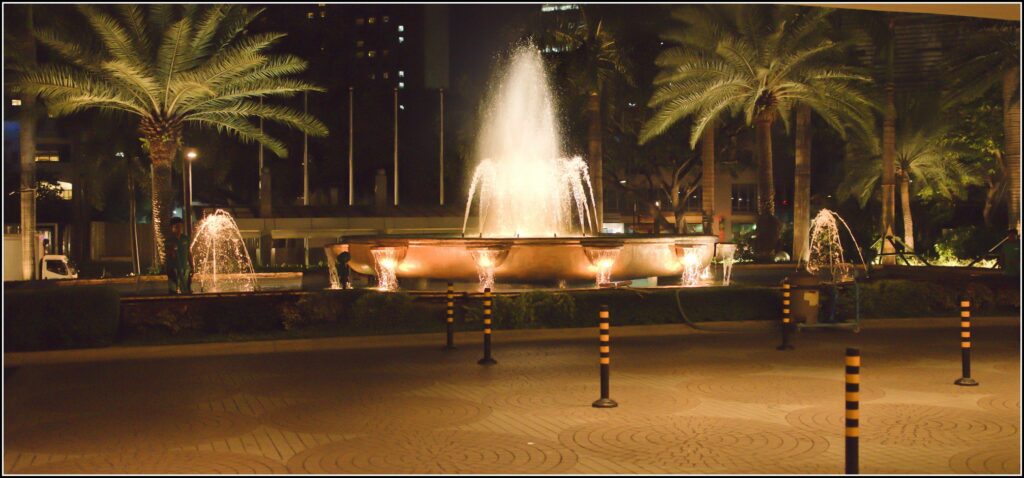
So, what should you see and do in Manila? Since we are already in Makati, it makes sense to start there. The district itself feels like a tourist attraction. This part of Manila looks as if the future has already arrived. Skyscrapers, shopping malls, glass, metal, and concrete dominate the view. In addition, you will notice multi-level pedestrian crossings, fast food chains, and wide streets with barriers. At the same time, jeepneys remain everywhere. Between the towers, you can also find parks with fountains and elements of modern art.
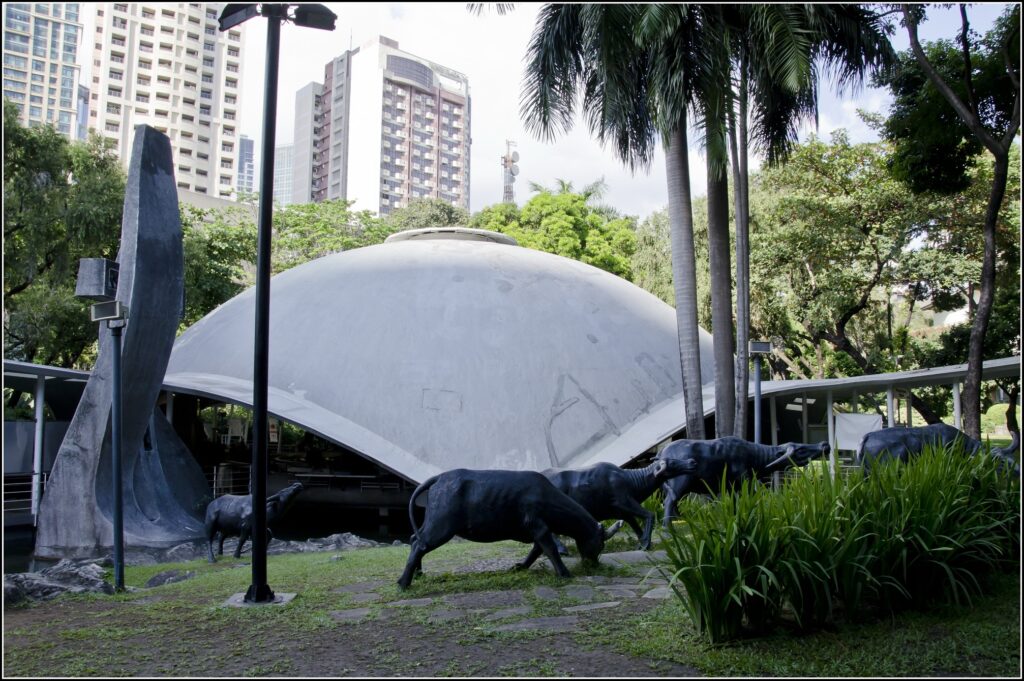
One detail in Makati surprised me in particular. In a park between two shopping malls, there is an open-air church with no walls at all. Its dome rests on four supports, and statues of mules stand around it. Late in the evening, while passing by, I noticed that the place was not lit at all. For a moment, I considered stepping inside, since I had never been in a church at night. Suddenly, however, a security guard emerged from the darkness. That encounter quickly changed my plans and almost made me stutter.
If you move toward the neighboring district of Pasay, you get closer to the bay. As a result, the air feels less heavy. Because of the nearby luxury hotels and business centers, this area has developed rapidly. Today, it offers conference centers, convention halls, and large shopping malls. The main attraction here is Mall of Asia, one of the largest shopping and entertainment centers in the world. You can easily get lost inside it. Overall, everything in this district feels oversized.
For example, I once needed to walk from one building to another for a meeting. On the map, the distance looked trivial. In reality, the walk took me forty minutes. Because of this, it is better not to trust maps too much in Manila. Take Shangri-La and the airport as another example. According to the map, they seem close. By taxi, however, the ride can take almost an hour. The same situation applies to the distance between Shangri-La and Mall of Asia.
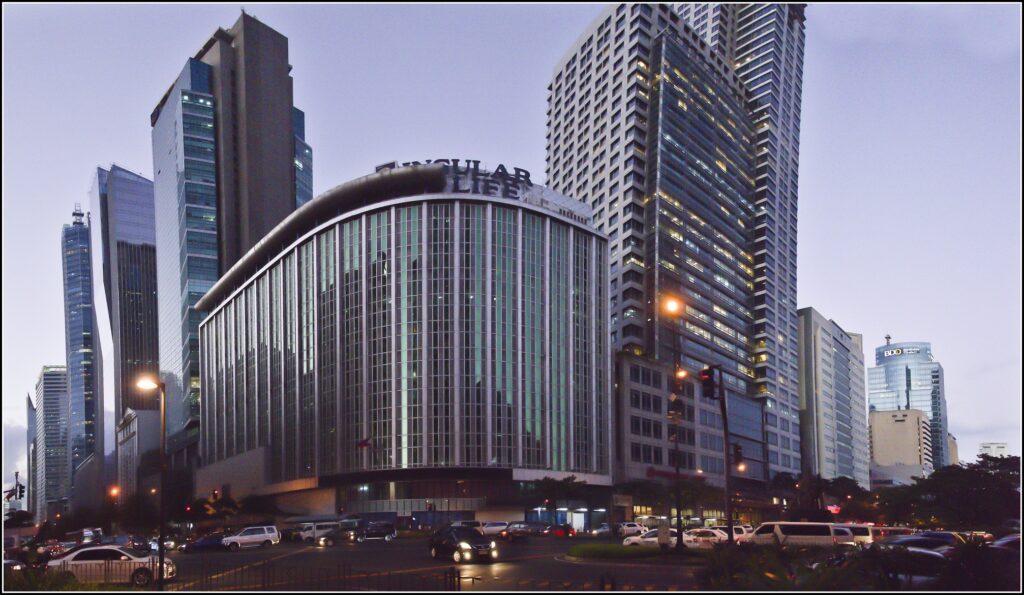
Roxas Boulevard connects this area with the city center and runs along the bay. It is a long seaside promenade with bike lanes and other features of a modern city. Along the way, the boulevard passes the zoo, Malate Church, Pambata Museum, the aquarium, and Rizal Park before reaching Intramuros. This historic district lies on the right side of the road, very close to Rizal Park and surrounded by golf courses.
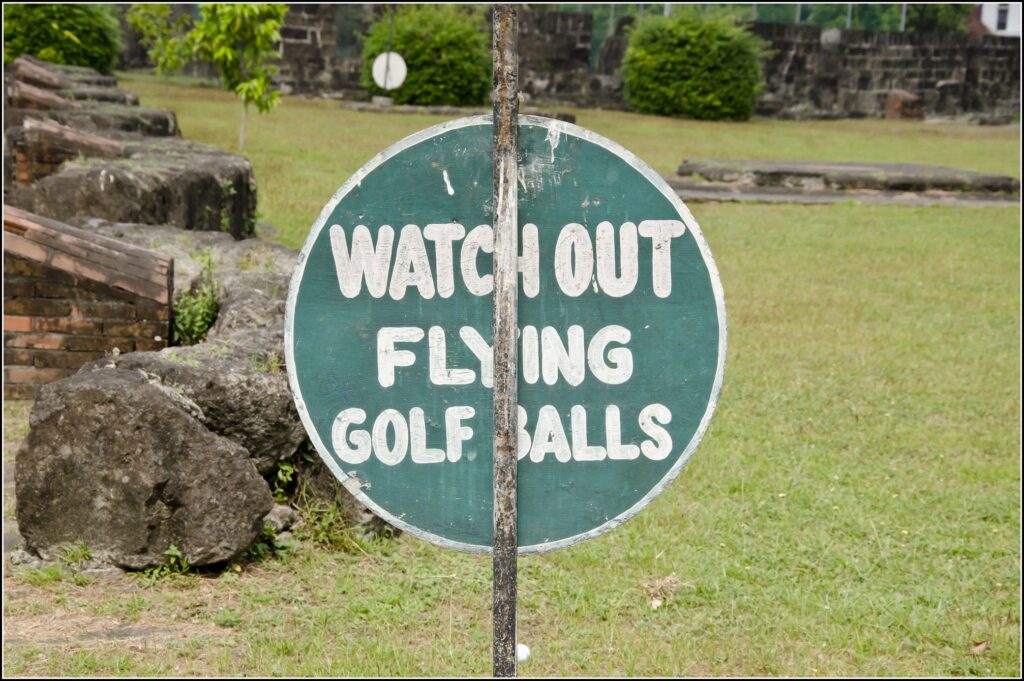
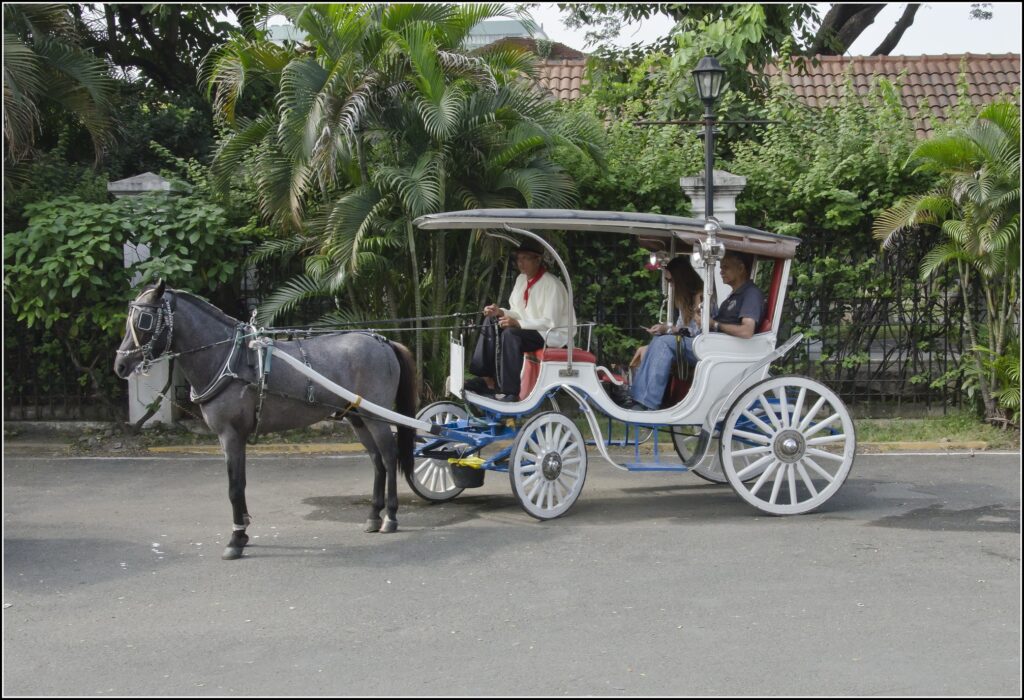
Intramuros is a must-see for any serious traveler. It offers a compact introduction to Philippine history. The name comes from Spanish and means “within the walls.” Essentially, the district is a massive fortress, known as Fort Santiago, with a small city inside. The Spanish colonizers built it as their first settlement. As a result, most major historical sights are concentrated here. Thanks to its small size, you can explore the entire area quite quickly—especially if you hire a carriage.
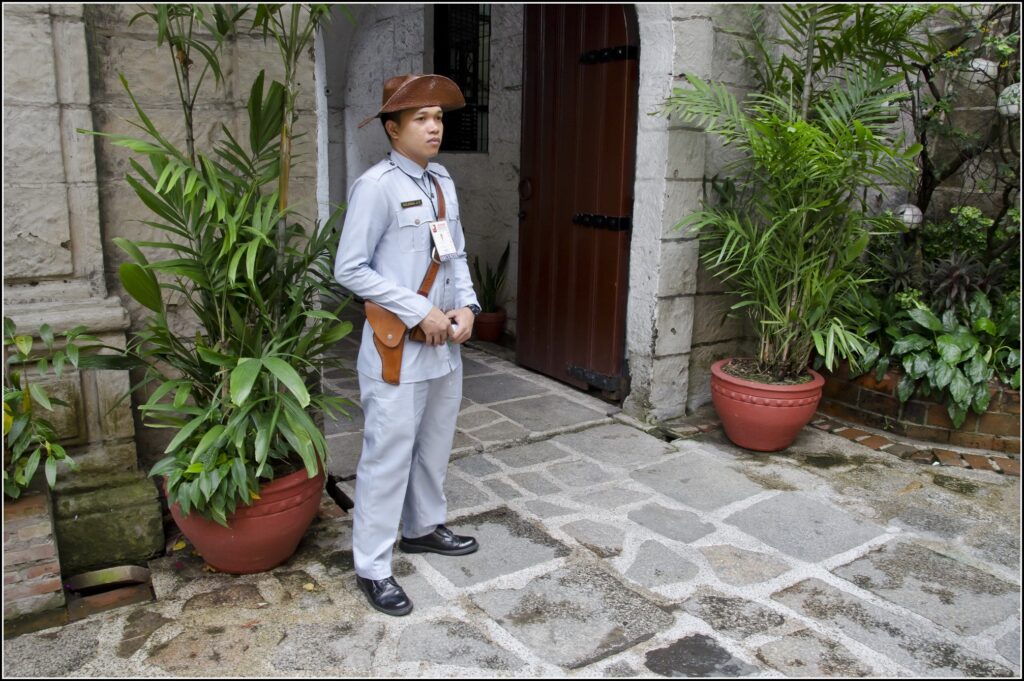
The streets and houses of Intramuros seem to breathe history. Several buildings, including Casa Blanca, or the White House, now serve as museums of colonial life. Inside, you can see authentic or near-authentic furniture and interior details. At Casa Blanca, you can also dine in a cozy restaurant and try traditional dishes. In addition, the district has many restaurants competing in atmosphere, as well as art galleries and souvenir shops.
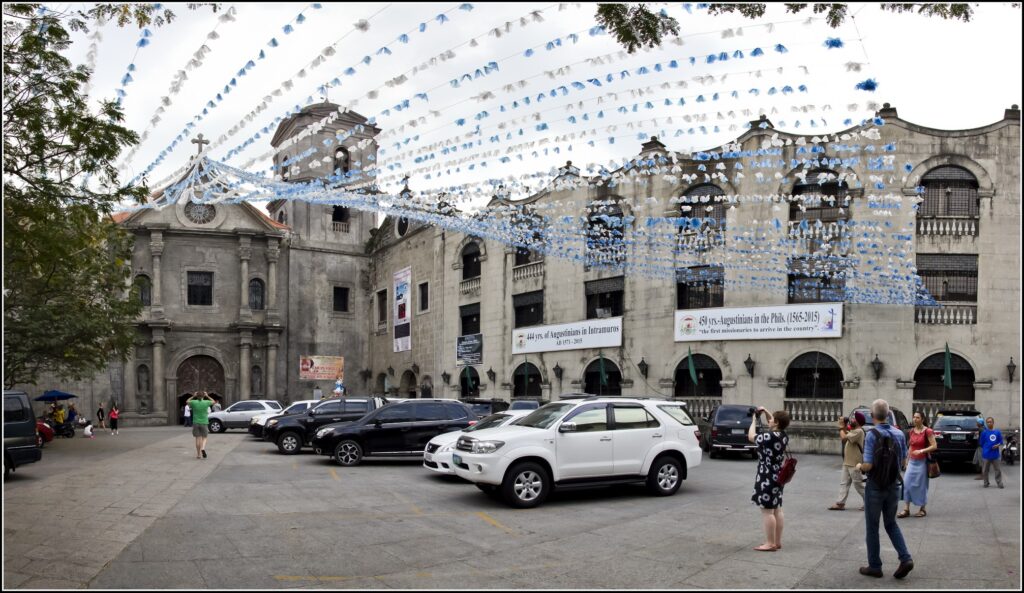
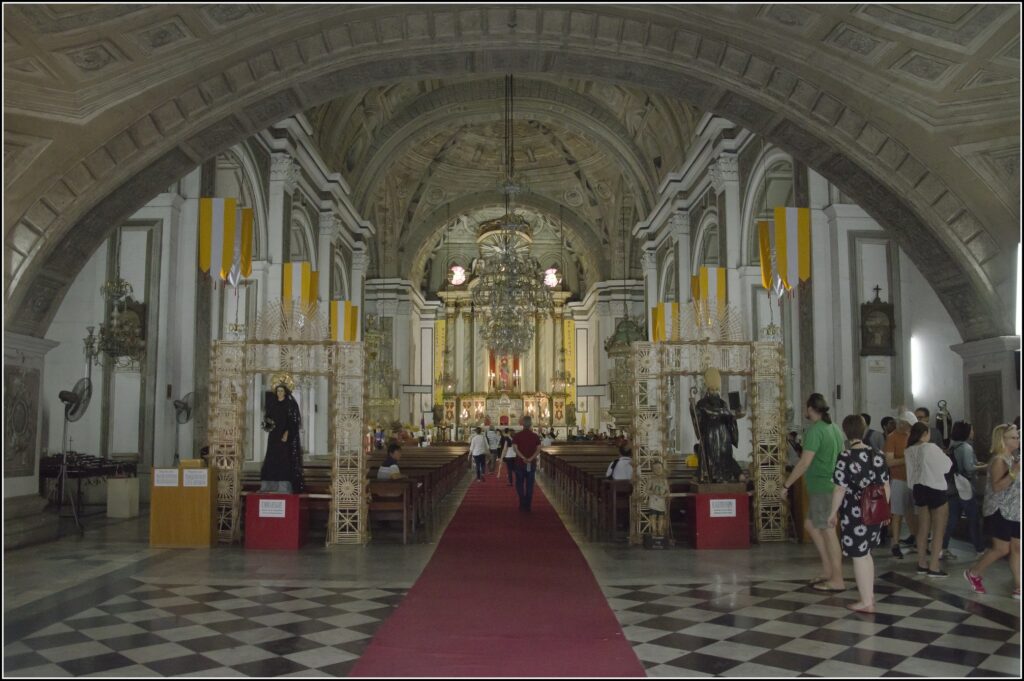
Within Intramuros, you will find two main cathedrals: Manila Cathedral and St. Augustine Cathedral. St. Augustine Cathedral stands out as the more interesting one. It is the oldest church in Manila, with construction starting in 1586. Moreover, it is one of only four churches in the Philippines recognized by UNESCO. Naturally, souvenir stalls nearby offer enough items to fill half a suitcase. Manila Cathedral, by contrast, has had a troubled history. Since its early days, earthquakes, fires, and typhoons have destroyed it several times. The current structure dates to the mid-20th century.
Fort Santiago, which forms the outer boundary of Intramuros, appeared even earlier. Builders completed it in 1571 to protect the settlement from Manila Bay. On one side, the fort and the old city border the Pasig River, which flows into the bay. Inside, you can explore maze-like paths, dense greenery, and stories collected over nearly five centuries. The fortress also contains a museum that tells the dramatic history of the site. From the walls, you can enjoy wide panoramic views of different parts of Manila.
Beyond the Pasig River, many other interesting places await. These include the colorful Quiapo district with its cathedral and the Black Jesus, the Malacañang Presidential Palace, which I could not visit because of student groups, and even a residential cemetery. There is also a metal cathedral and several other unusual sights. I will cover these places in more detail in the article “Unusual Manila.”