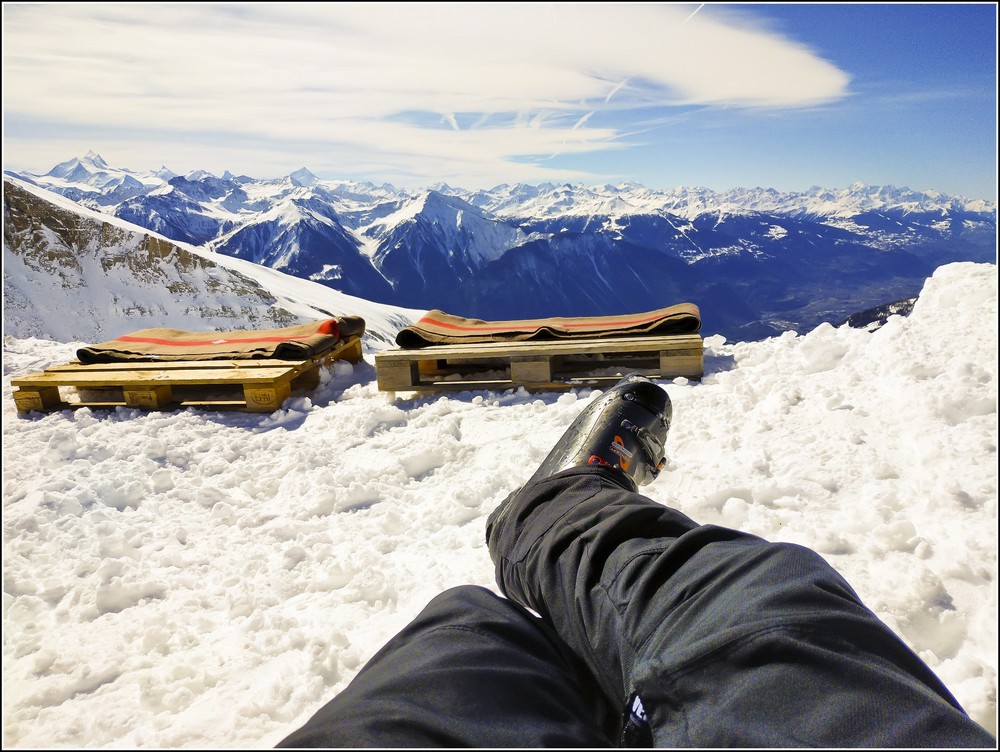
So, after skiing in Engelberg and discovering a little bit of the 360 kilometers of slopes in Zermatt and see the Matterhorn, we are heading to a Swiss ski resort of a different kind, unlike these two – Leukerbad.
- Overall and transportation
- The first attempt at skiing
- When skis are not always necessary
- Leukerbad – a thermal resort
- The second day of skiing
- Useful information and links
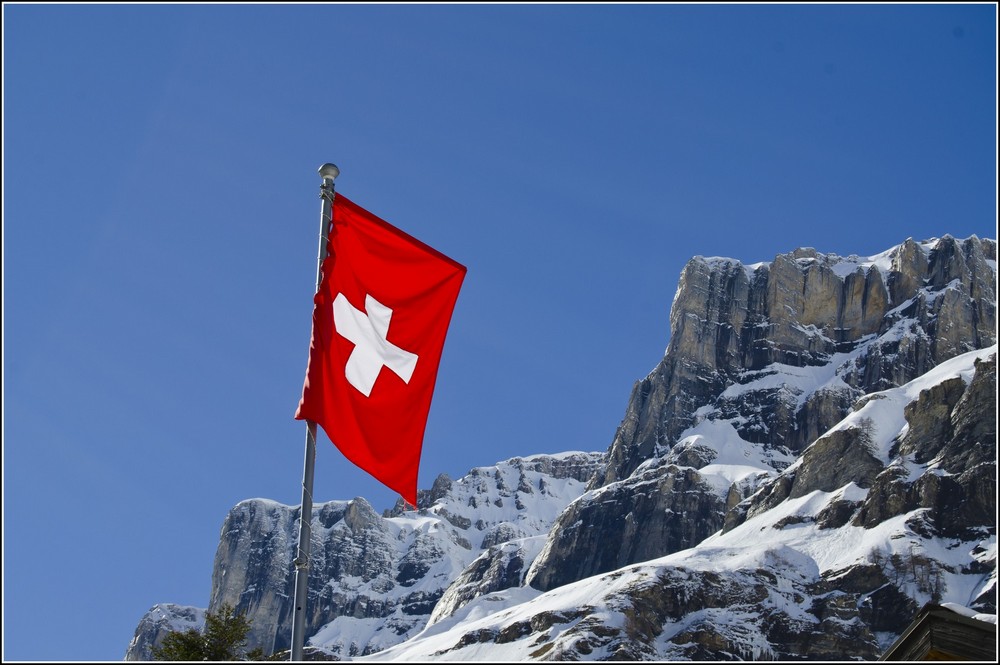
Overall and transportation
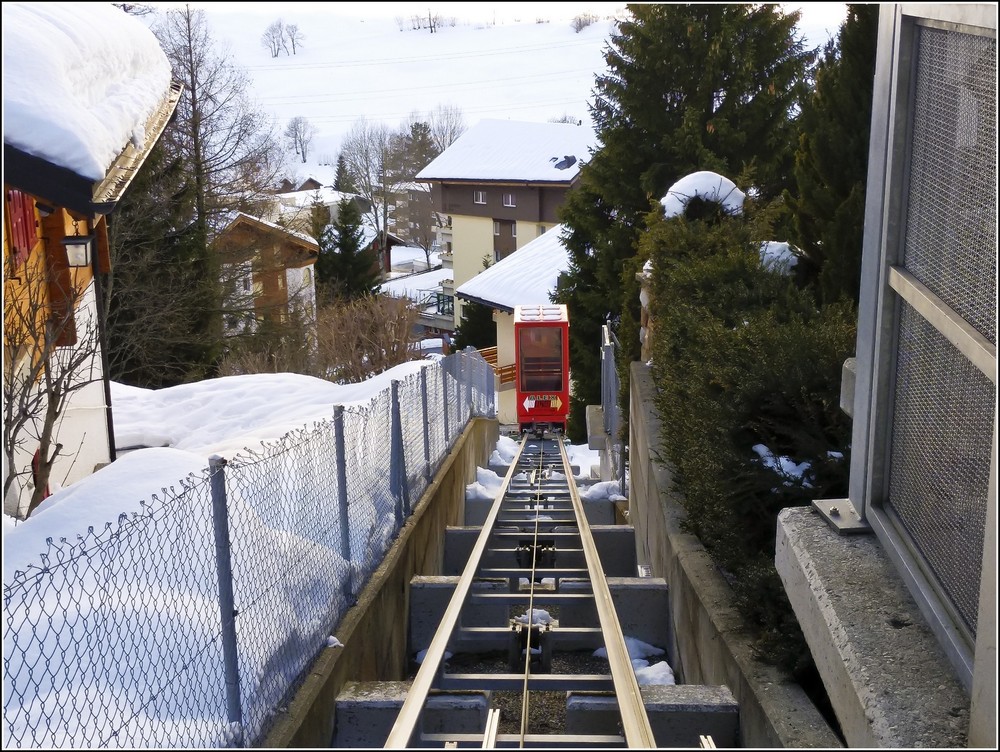
The differences begin at the Leuk railway station. Already accustomed to the comfort and ubiquity of Swiss trains, I am surprised to discover that I will have to take a bus with the chains on the wheels to get to Leukerbad. There used to be a railway, but they dismantled it in 1967. However, buses in Switzerland are very comfortable, stop right at the railway station platform, and the journey takes only half an hour along a beautiful serpentine road. The Swiss Travel Pass is still valid, so I didn’t have time to get upset.
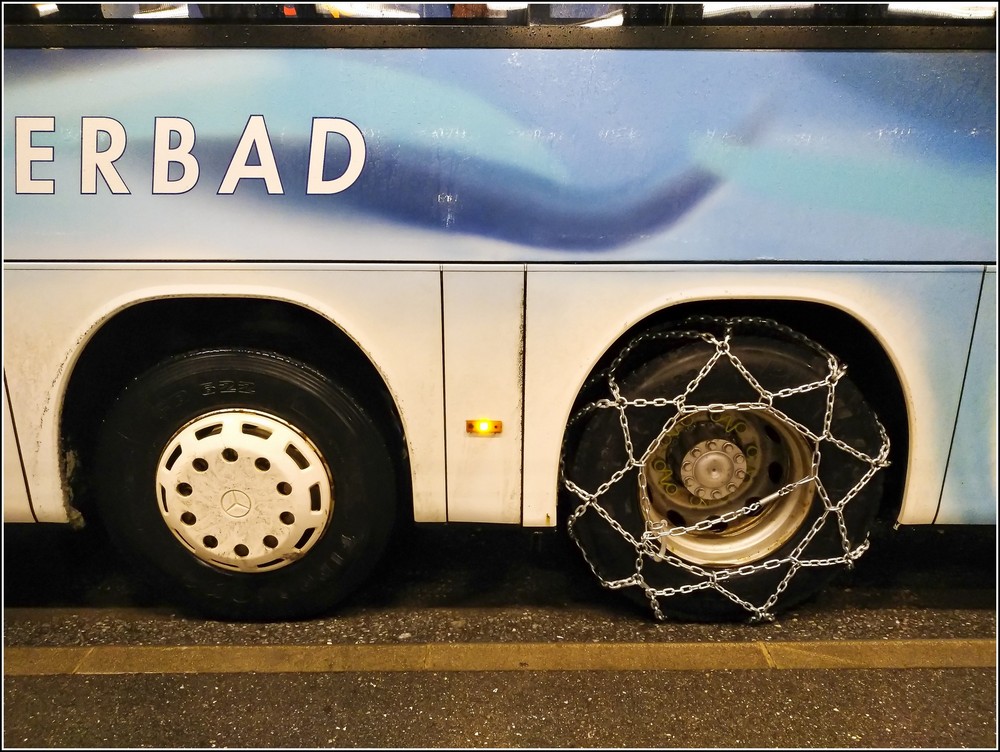
I discovered how beautiful the serpentine road was on the way back, when we were already traveling in the dark, although we arrived at the Leuk station while it was still light out and didn’t have to wait long for the bus. What can you do, mountains! A taxi was waiting for us at the Leukerbad bus station, but I preferred to walk — the hotel was not far, and I really wanted some evening exercise after sitting on the bus and before dinner.
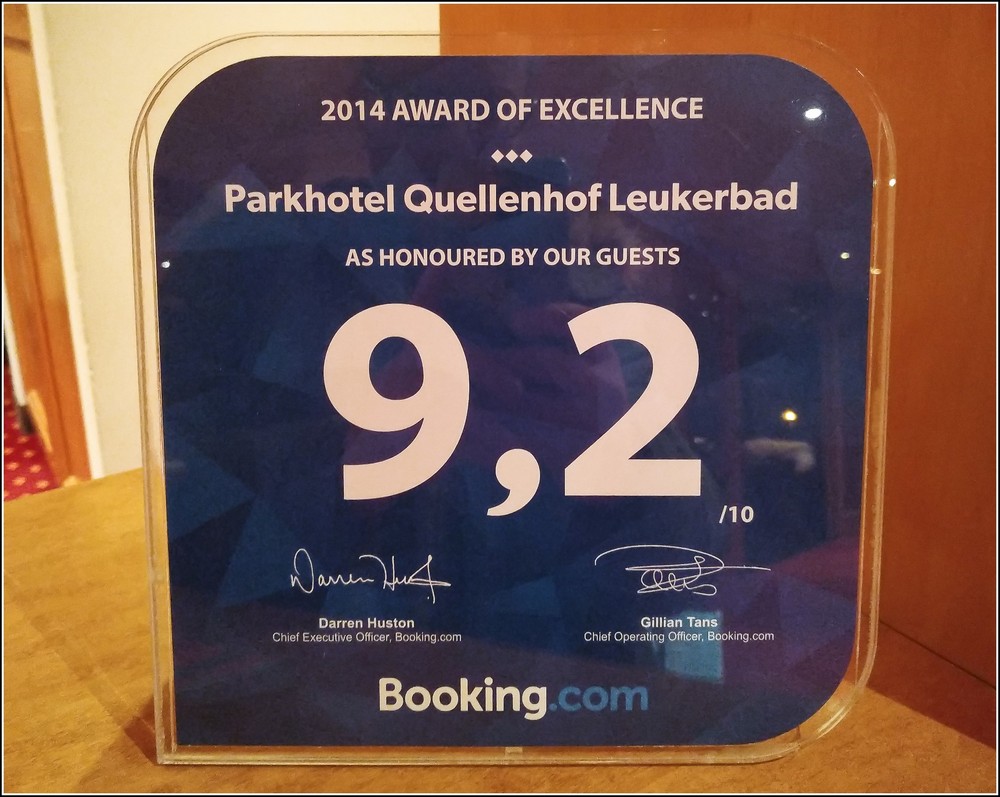
We planned to have dinner at the hotel Quellenhof so that we wouldn’t have to make any unnecessary movements after the train and bus and could just collapse into bed — tomorrow we would be hitting the slopes early in the morning! The hotel proudly announced at the entrance that it had a rating of 9.2 on Booking.com. My first impression was that it was a solid, good hotel, but I wouldn’t give it a 9.2. Although, considering the low cost for Switzerland and its proximity to the ski lift… Well, dinner at the restaurant finally answered all my questions about the rating — the restaurant fully deserved it, and I can recommend it with a clear conscience.
Before we head to the slopes, let’s find out what Leukerbad is. This town, located at an altitude of 1,400 meters, was familiar to the ancient Romans, and not just for its thermal springs. Many people appreciated the properties of the water gushing from the ground — the first written source mentioning bathing procedures dates back to 1315, in 1478 inns appeared here, and in 1501 Cardinal Syon began construction of a hotel complex with baths using thermal waters. So, first and foremost, it is a balneological resort, and such figures as Goethe, Maupassant, and Mark Twain came here specifically to relax in the waters. But we will return to them — in the sense of the waters — a little later.
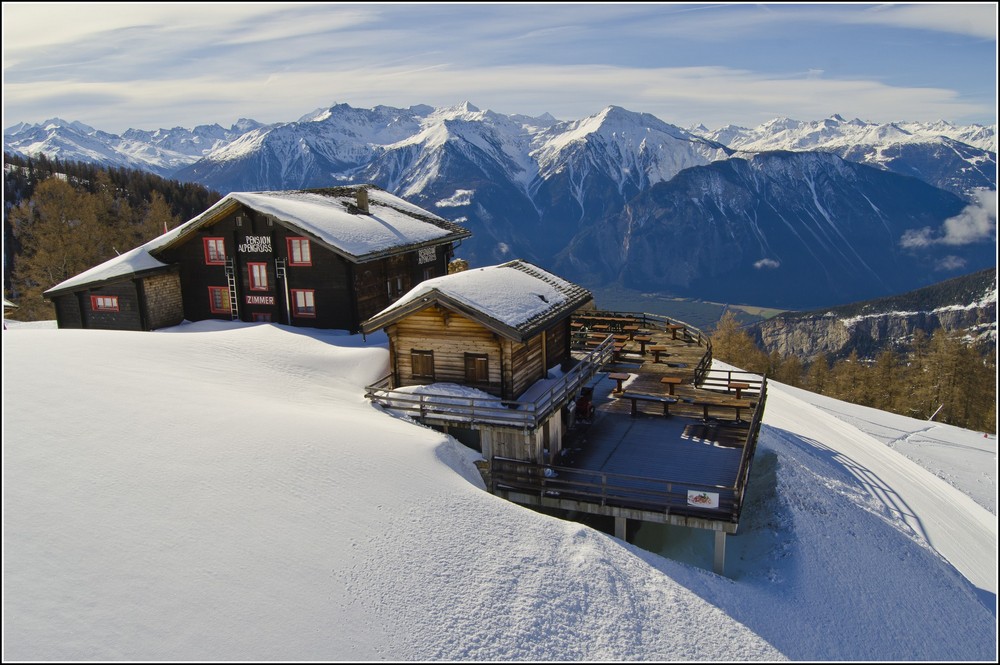
Secondly, in the second half of the 20th century, with the introduction of ski lifts in the region and the Torrent mountain range, which is perfect for skiing, the resort of Leukerbad became a ski resort. But it would be wrong to call this a secondary destination: 50 kilometers of first-class trails, FIS-certified slopes for world championships, a vertical drop of 1,289 meters, a snow park with a half-pipe, a children’s area with a special ski lift, and sledding trails all hint that the development of alpine skiing is not happening on a residual basis. We decided to see for ourselves the very next day.
The first attempt at skiing
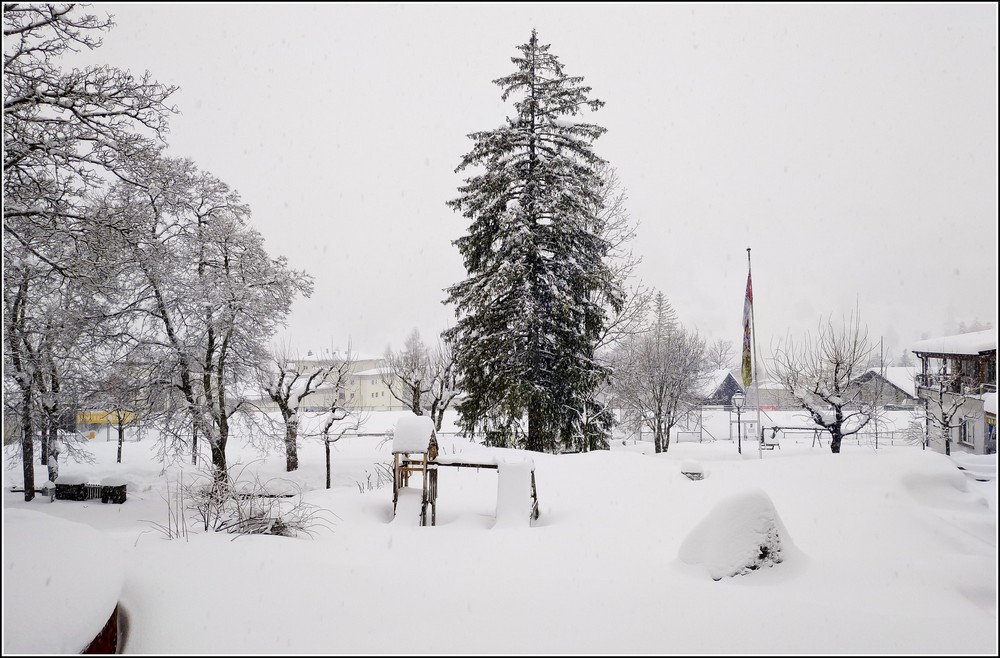
The view from the balcony in the morning was not particularly encouraging. But it wasn’t discouraging either — after all, it’s time to get used to the changing conditions in the mountains. So, for now, I am full of optimism. After a wonderful breakfast, I put on my ski suit and ski boots, as the cable car cabins are only a couple of hundred meters from the hotel.
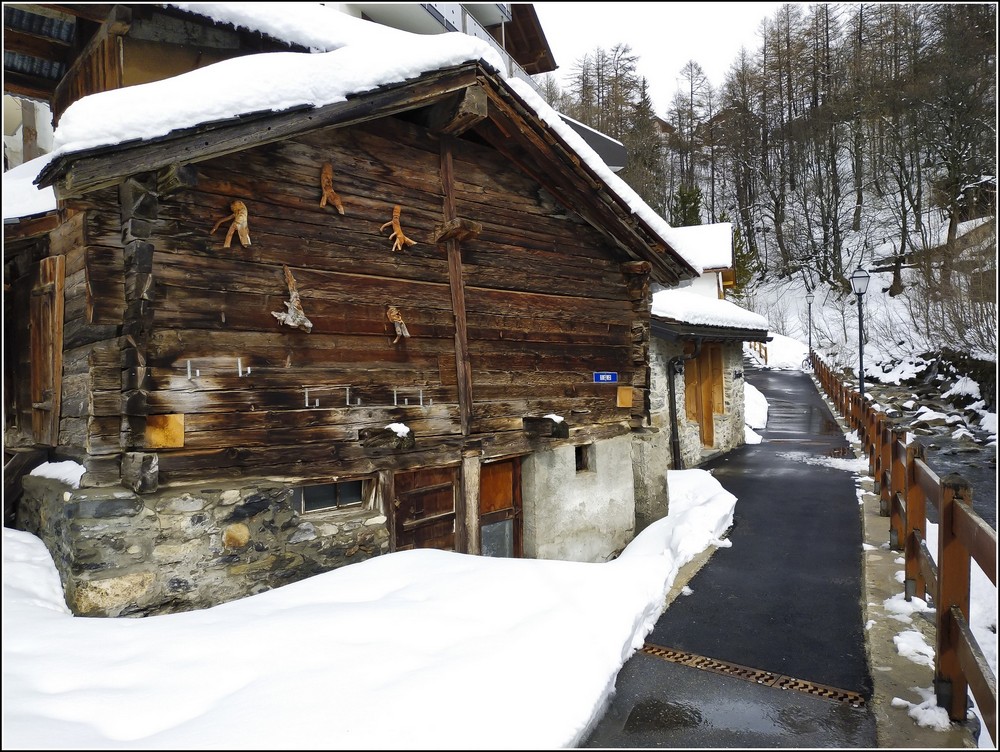
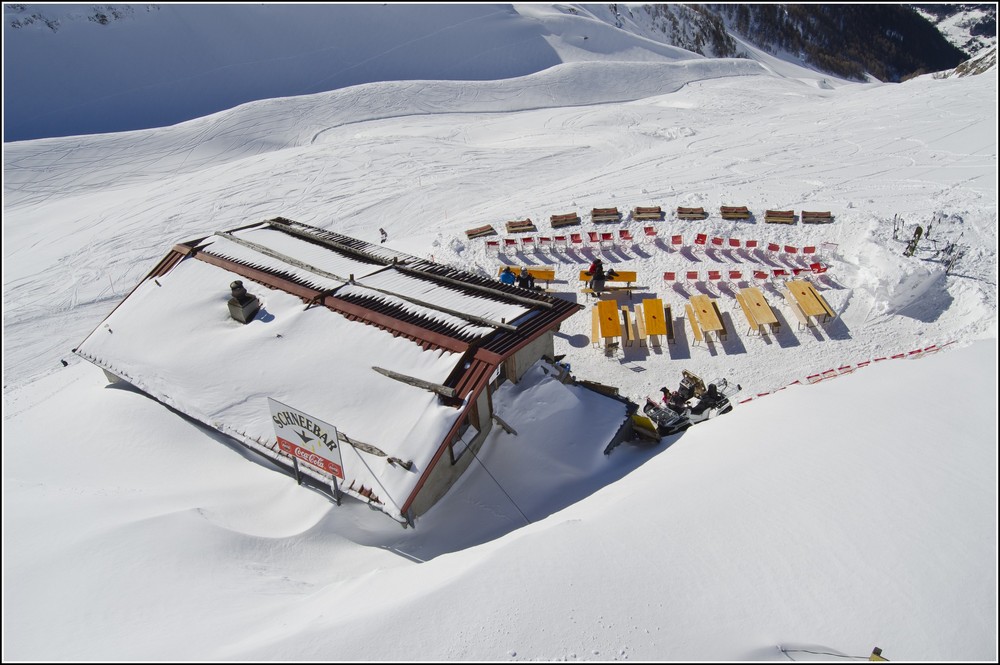
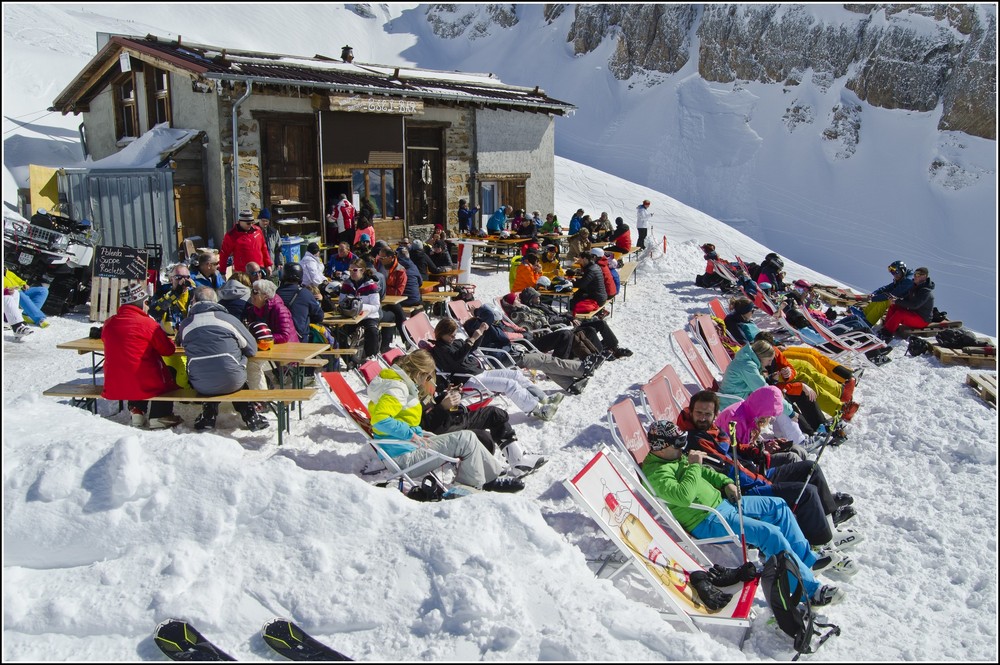
As in many other Alpine resorts, you first reach the “base camp,” so to speak, by cable car. In Leukerbad, it runs from 9 a.m. every half hour, so be careful not to miss it, or you’ll have to wait for the next one. The cabin has a decent capacity, of course. I don’t have the exact numbers, but it can hold about a hundred people. The “base camp” has a restaurant, slopes downhill (halfway back to the base, another cable car with cabins will take you back), and lifts uphill, even higher. There are both chairlifts and T-bar lifts, and the aforementioned cable car with cabins also goes further, so if you want to go higher, feel free to skip one stop.
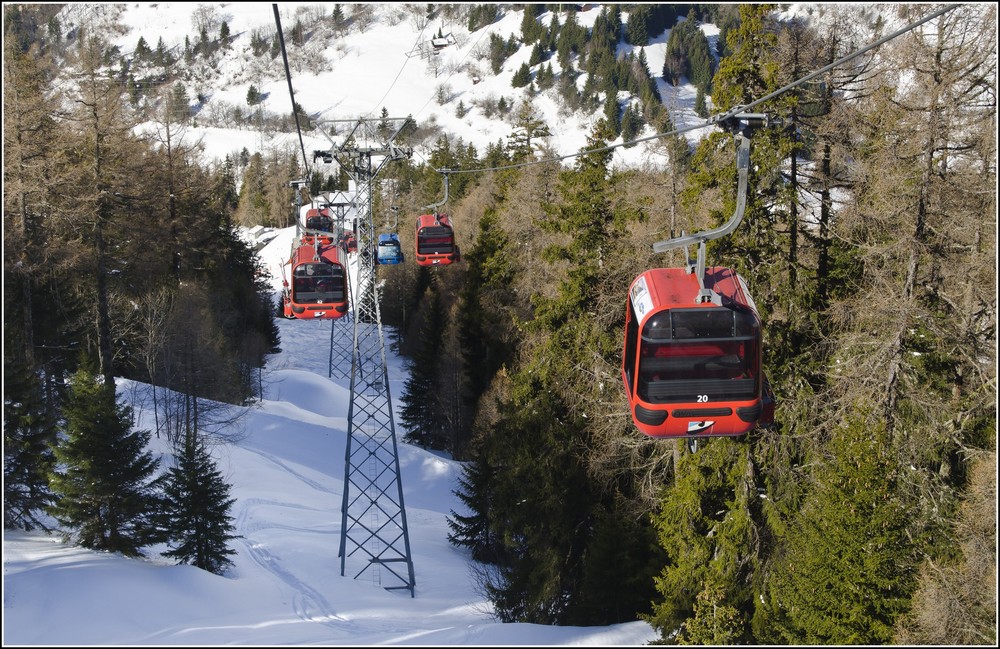
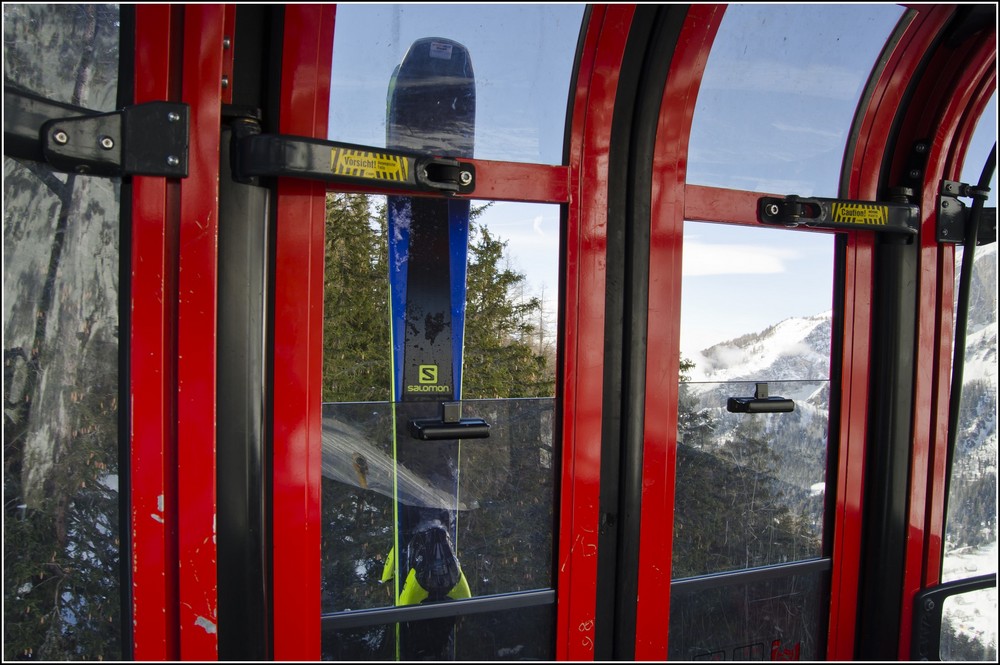
And so, looking ridiculous (it’s impossible to look any other way in ski boots), at 9 a.m. we set off straight from the hotel (fortunately nearby) along the road to the cabin, get our ski passes, wait for the opening, and go up in a giant cabin. The weather is fine so far, there is even blue sky in places, and the mood is good. We have an instructor with us, Peter from Poland. He is a young guy who knows six languages. He works in Switzerland in the winter and goes to the ski resorts of Australia in the summer.
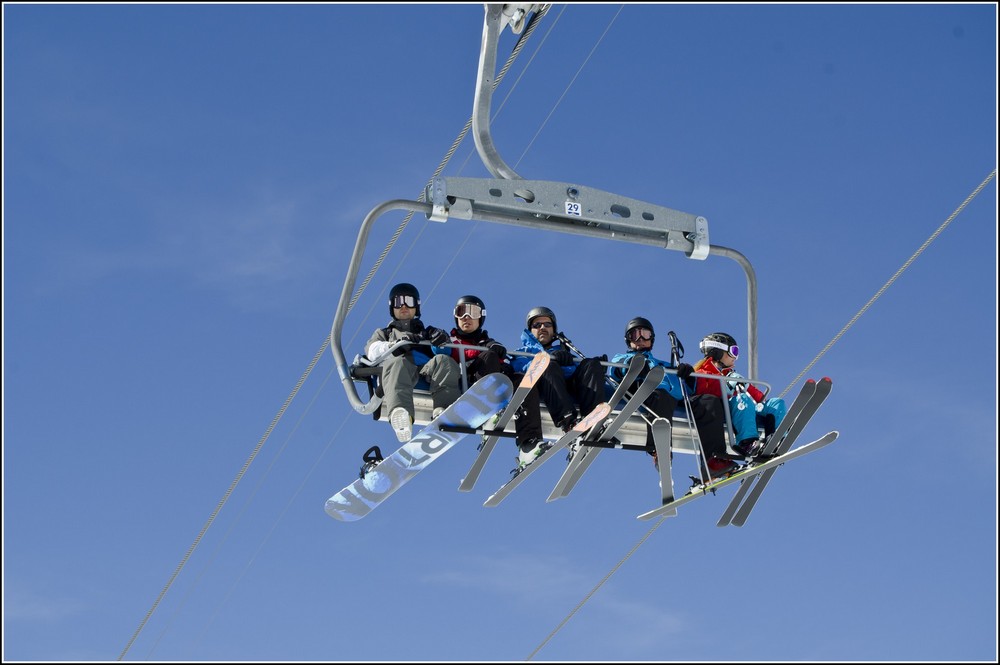
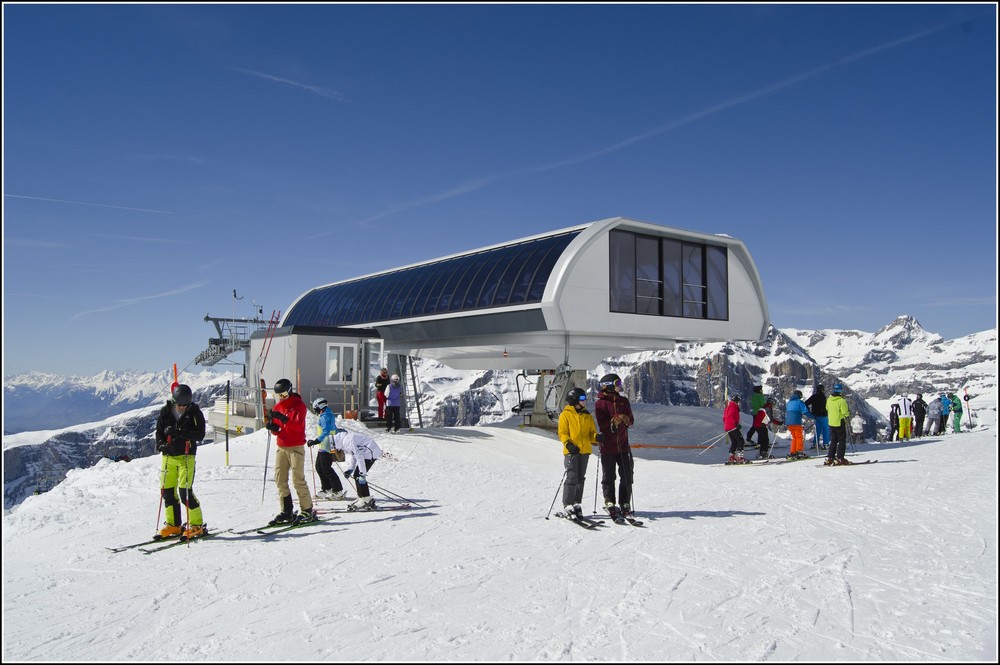
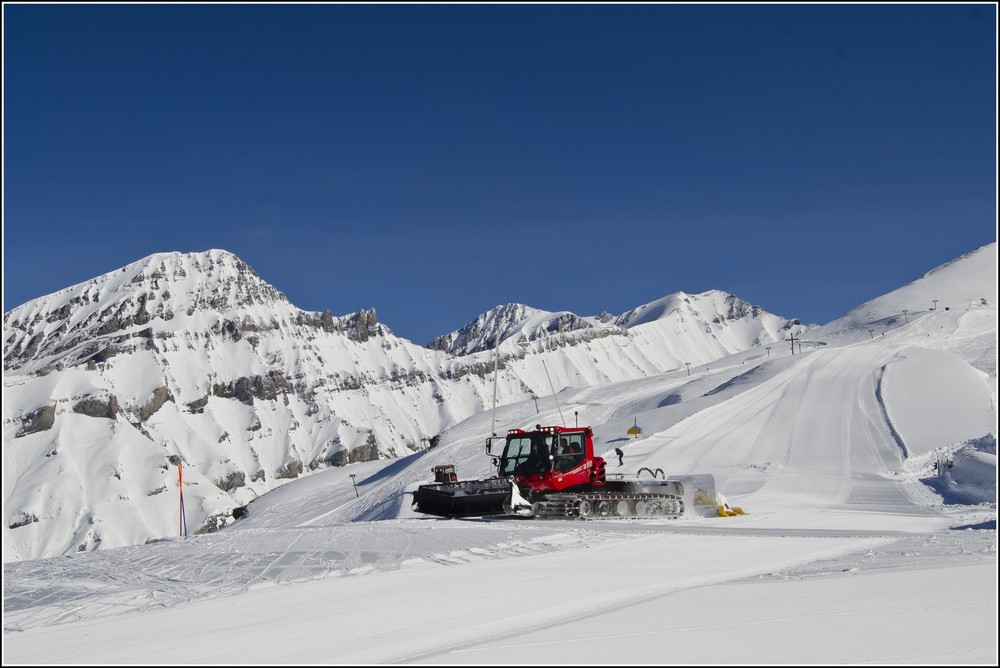
For a while, as we rolled down the velvet slopes, the weather remained more or less acceptable. But then, when Piotr decided to show us some interesting trails further away from the main ones, it started to snow. Not like on the first day in Engelberg, when visibility was no more than five meters, but still quite heavy. However, we honestly skied absolutely all the marked trails above the base camp. But such skiing, of course, took a lot of energy, so after a snack, we decided to go down. Besides, first of all, there are things to do in the city without skis and snowboards, and secondly, we had planned to visit the thermal springs in the evening anyway.
When skis are not always necessary
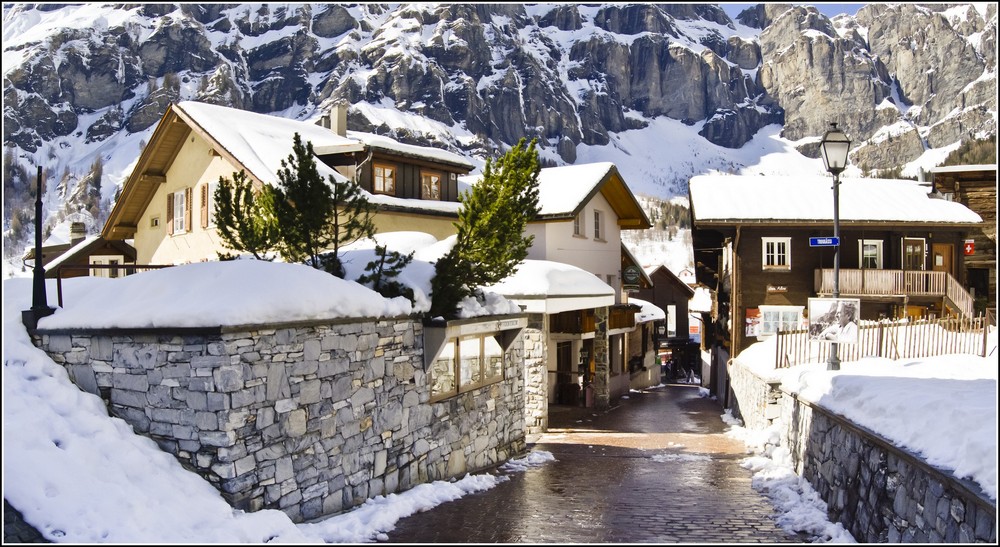
According to statistics, only 30% of visitors to Leukerbad come to ski. Despite the fact that skiing here, although not particularly varied, is very good and perfectly balanced for intermediate skiers. So what do the other 70% do? They go to the spa, of course! But we decided to postpone the water activities until the evening and see what else this unique Swiss resort has to offer.
We find the answer in the new sports complex. There is a gym, a climbing wall, an ice rink, tennis, squash, and even curling. I’ve tried everything except the last one, so we decided to try this strange sport. To be honest, it looks much easier on TV! In reality, even with special shoes, your feet tend to slide in different directions, and the acceleration you give to the stone is sometimes too weak, sometimes too strong, but almost never just right. Like many things in this world, it takes practice and training to get it right.
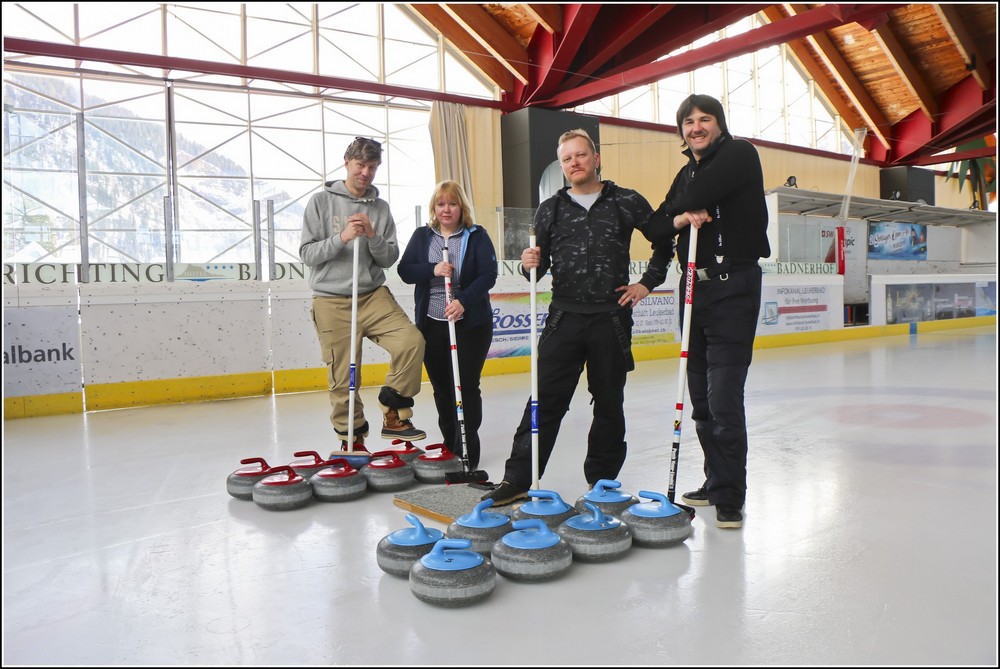
In addition to downhill skiing and snowboarding, you can also go cross-country skiing in the surrounding mountains — 25 kilometers of trails make this possible. And lots of cross-country trails plus good slopes create ideal conditions for ski touring — a combination of these two types of skiing. I saw quite a few European pensioners on the ski lift; we were going up just to ski, but they were going up to go ski touring.
Don’t ski at all, but want to go down the mountain? For such cases, there are two toboggan runs in Leukerbad. And if sledding for you is a childhood memory of a small slope in a suburban forest, inevitably ending in a collision with a tree, then here everything is very different. However, there was no time to try it out for myself. Although there are only 50 kilometers of ski slopes, they won’t ski themselves, and we only had two days at our disposal.
There is another option that is sure to appeal to a birdwatching enthusiasts. This is almost the only place in Switzerland where white-headed vultures nest, so you can observe hunters hunting this bird. Hunters with cameras, of course.
Leukerbad – a thermal resort
As I mentioned, Leukerbad first became famous for its thermal waters, known since the time of the ancient Romans. And statistics showing that only 30% of the town’s visitors are skiers and snowboarders confirm that this is primarily a balneological resort. It turns out that even the generally excellent and varied skiing does not steal the limelight — apparently, the thermal aspect really is something unique here. On the evening of the first day, after skiing in a snowstorm and trying our hand at curling, our whole friendly group set out to find out exactly what that was.
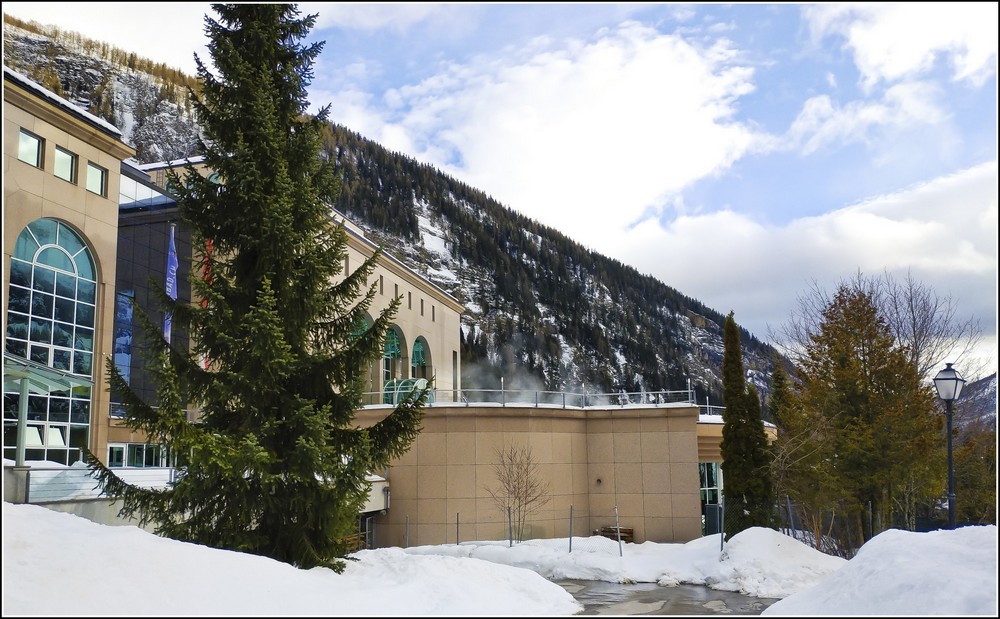
Thermal waters are not uncommon in the Alps and their foothills (you’ve heard about the waters of Vichy). But each place has its own unique features. As I learned, 65 springs around the resort release four million liters of water daily at a temperature of 51 degrees Celsius. This water “ages” for as long as 40 years. It begins its journey a few kilometers from Leukerbad, between the Maiensass and Torrenthorn mountains, from the waters of the Schwarzsee and Wyssensee lakes (yes, they didn’t bother much with the names) at an altitude of 2,300–3,000 meters. From there, the water seeps through rock down to 500 meters below sea level, saturating itself with all kinds of microelements along the way. After more than 40 years, it finally emerges on the surface, saturated with microelements, like Jeff Bezos is with dollars. Of course, the outlet temperature of 51 degrees is lowered to a comfortable 36–40 degrees.
The Walliser Alpentherme & Spa Leukerbad complex occupies several floors and is quite large. Here you will find Roman-Irish baths, where you follow a step-by-step route: shower – steam room – sauna – dry massage – thermal bath – jacuzzi – cool pool. The complex also offers two huge pools with hydromassage. And the most enjoyable part is the Welsh bath village. At the entrance, don’t forget to take off your swimsuits. If you’re shy, you can wrap yourself in towels, but then everyone will immediately identify you as Russian—almost everyone else walks around naked, so we didn’t want to lag behind the Europeans (no photos). Speaking of towels, bring them with you from the hotel, as well as slippers and bathrobes, since the spa charges extra for them.
It is a small settlement covering about 300 square meters under one roof, with various wooden houses inside, each containing saunas with different characteristics: hot (Finnish, 90 degrees Celsius), cooler (70 degrees), herbal, hammam, and a stone sauna with a bucket of water that automatically pours onto the stones. Around these buildings, you will find many pools with water at different temperatures, some of them especially icy, as if straight from a glacier. And maybe they are — why not?
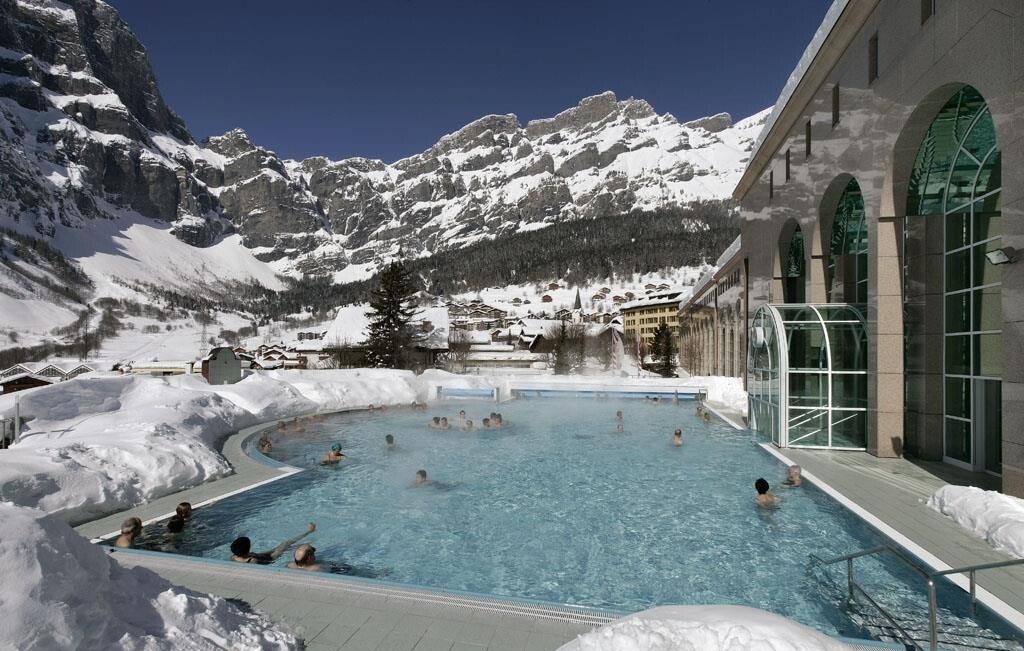
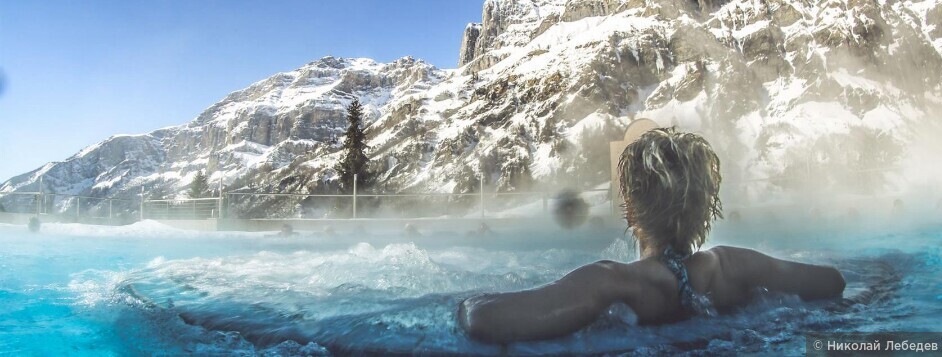
But the best part, for which I wouldn’t mind paying 25 francs for three hours (which is very reasonable for Switzerland), is the outdoor pool overlooking the surrounding Alps. It is one of the most powerful, mind-blowing experiences. I experienced something similar at the end of May in Spain, in the town of Baños de Panticosa, but it didn’t feel quite the same — either because it was the second time, or because there was no snow outside, or because the Pyrenees are more modest than the Alps. Most likely, it was a combination of all these factors. In any case, I recommend the outdoor thermal pool with a mountain view as one of the things to do before you kick the bucket.
Walliser Alpentherme stands next to our hotel (which is also close to the ski lift, making it a great location), and Leukerbad Therme is nearby as well. I don’t know how it is now, but not so long ago people considered it the largest thermal complex in Europe. In addition to the outdoor pool, it offers about ten other pools for various purposes, and children will definitely love the built-in water park. Another interesting feature is “Breakfast with Champagne.” Staff serve breakfast and a glass of prosecco on wooden trays directly in one of the pools, with something like a buffet arranged on a separate large tray. However, we didn’t have time to visit Leukerbad Therme, and I learned all this from my companions, who had been to Leukerbad more than once.
Have you noticed how particularly hungry you feel after water treatments? And if you’ve been actively burning calories on the slopes beforehand, you could eat an elephant. So dinner at the traditional Alpina restaurant was very welcome. There I finally tried raclette. They heat the cheese by the fireplace, cut it onto your plate in a semi-liquid form, and serve it with young potatoes in their skins and pickled cucumbers. I love good cheese, but usually only in solid form; all these processed varieties are not for me. I feel neutral about potatoes and completely indifferent to pickled cucumbers. But my goodness—it was one of the best dishes I’ve ever eaten in my life. This dish is unlikely to pass you by, but just in case it does, make up for it in every possible way, even if it means changing your flight.
The second day of skiing
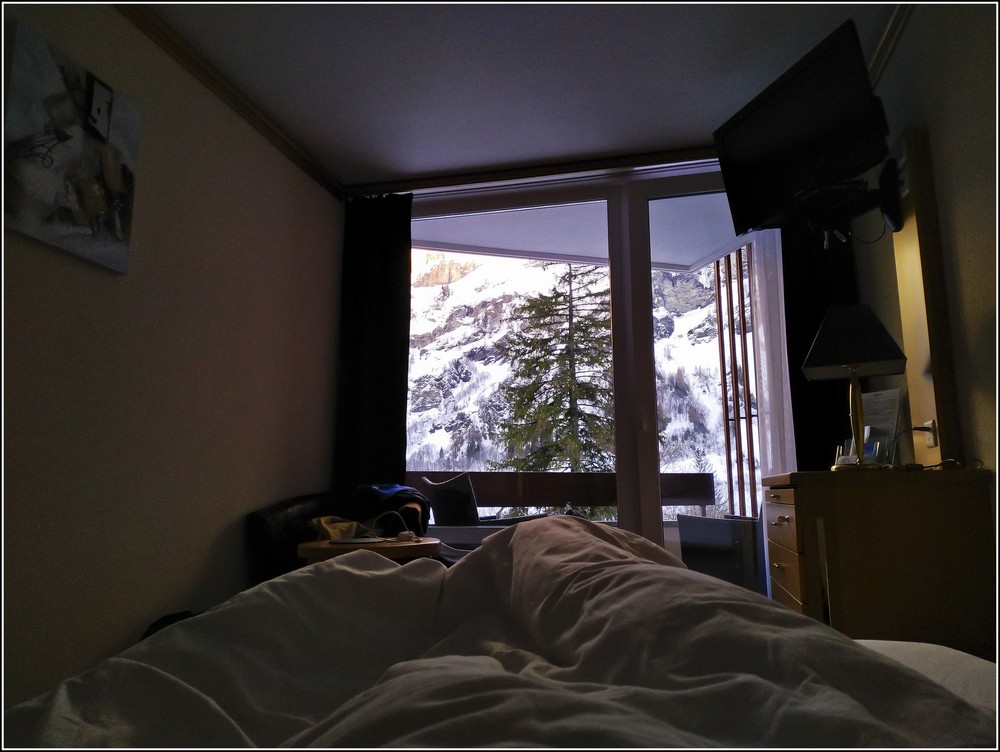
In the morning, lying in bed facing the window, I saw an attractive sky, and its blue color put me in a very positive mood. I was already imagining skiing in the same sunny weather as on the second day in Engelberg or the first day in Zermatt. We had already gotten used to the fact that on this trip, one day of skiing was completely different from the next. The weather caused this, and with it the changing possibilities, quality, and routes.
There is no such thing as bad weather, just weather that is not suitable for you at the moment. After all, a squally wind that knocks you off your feet, with snow and zero visibility, may well suit you — for example, it suits sitting at home, drinking mulled wine, and watching TV series. But today’s weather was definitely better for skiing than yesterday’s. And if yesterday we mainly skied at the top, today we skied everywhere, especially just below the base station, because that is where one of Leukerbad’s highlights as a ski resort is located.
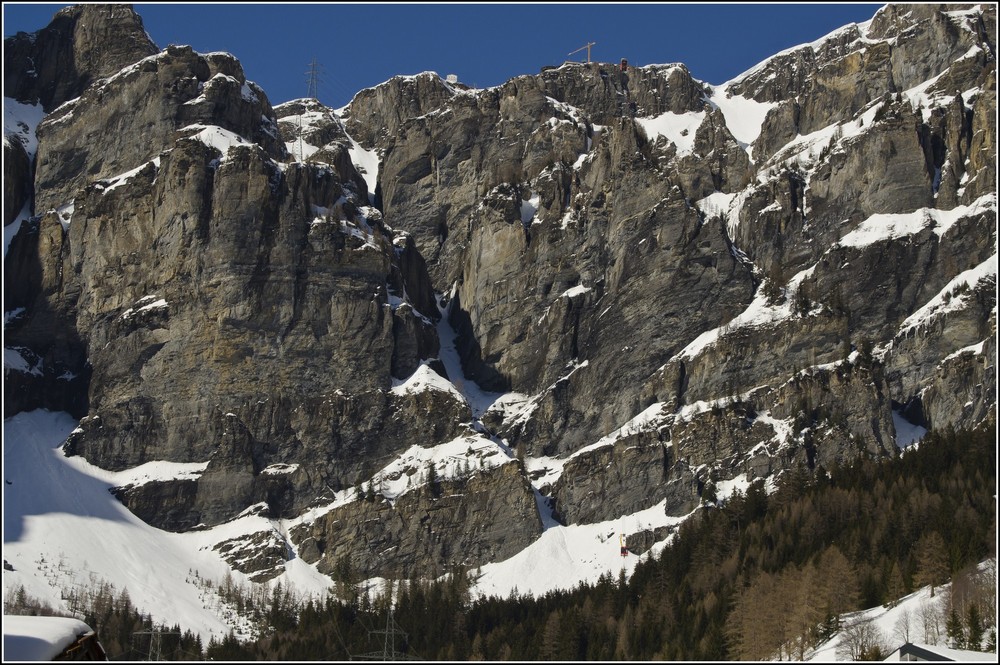
We are talking about the Alte Stafel slope. The FIS (International Ski Federation) has certified it as a black slope. In the 80s and 90s, it hosted World Cup and European Cup slalom competitions. At the end of the slope, the slalom descent reaches a 60% gradient, and the rest of the slope has remained almost unchanged since the 90s: since then, the authorities have changed the requirements in favor of less extreme slopes, but here you still find very steep descents, several rather narrow sections, and 90-degree turns. After skiing down it twice, I decided not to tempt fate any further and to see what the upper part of the slopes looked like in good weather.
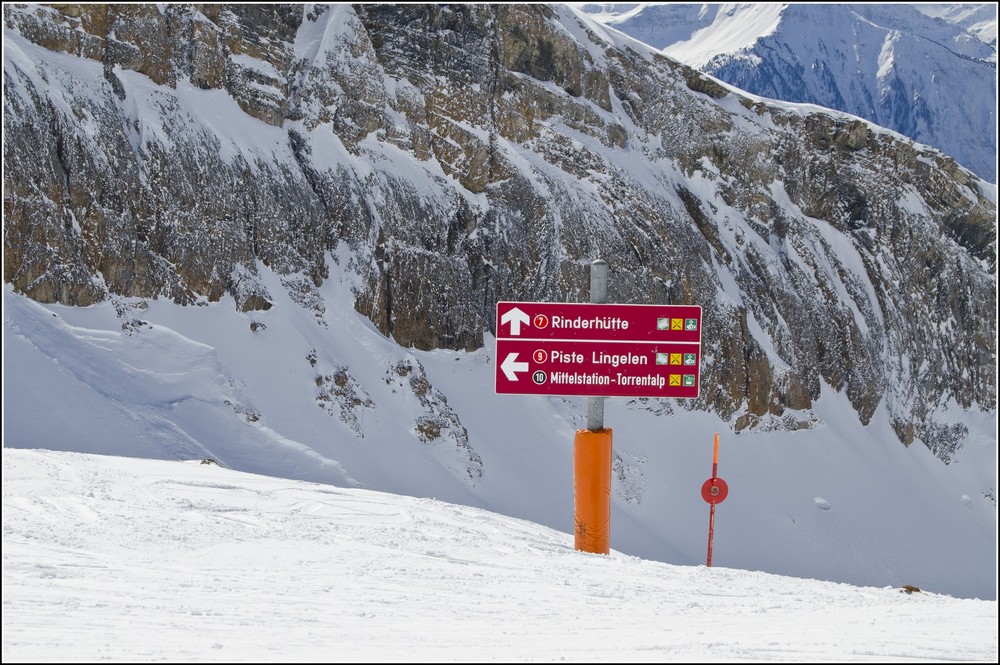
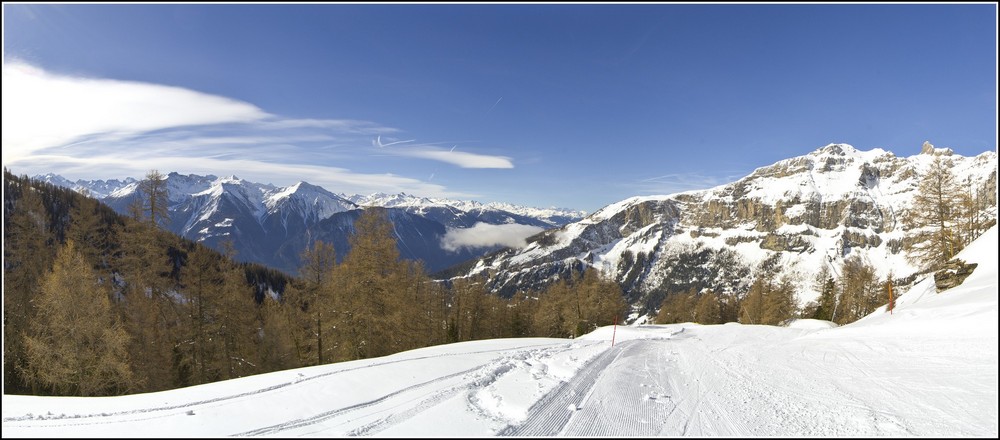
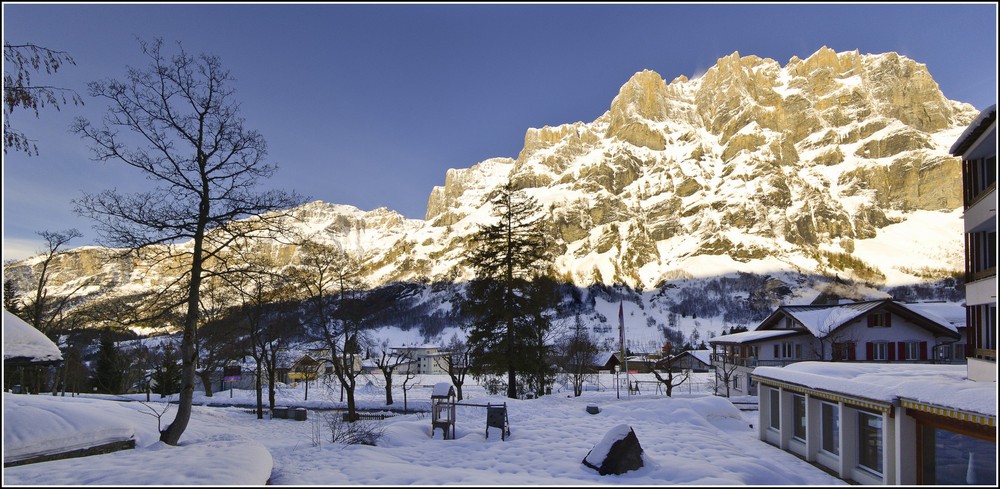
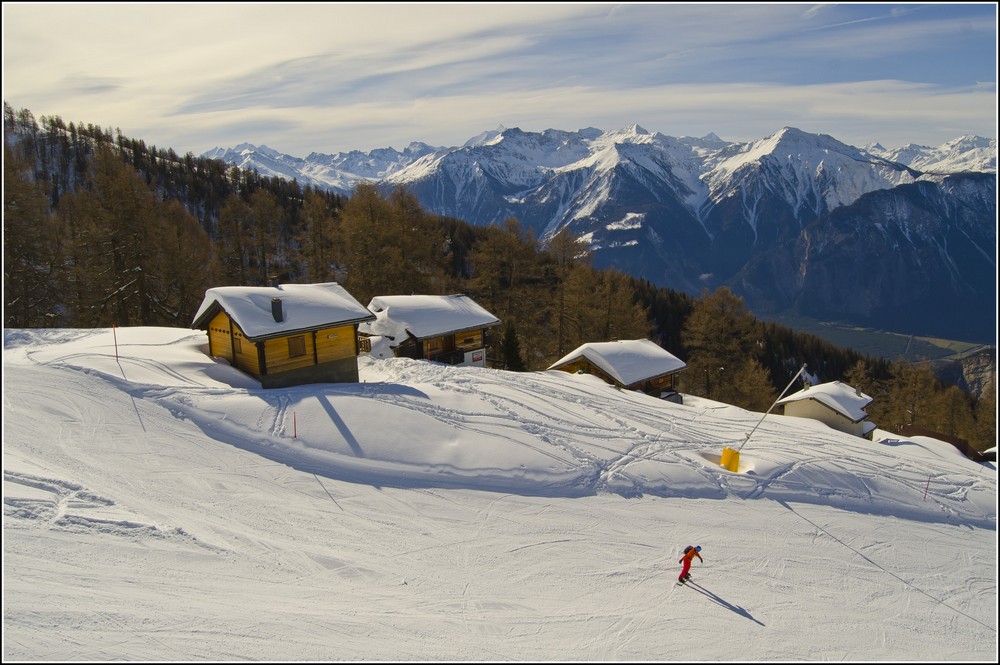
And it looks simply stunning; I think I took the best photos of the trip here. It’s amazing how different the same places look in different weather conditions, and how much sunlight means in our lives.
Since we had to leave after lunch that same day, we rode as if it were our last time. A lot, very productively, very cool. So I can say with full responsibility that this is not just a thermal resort — it’s a great place to ski.
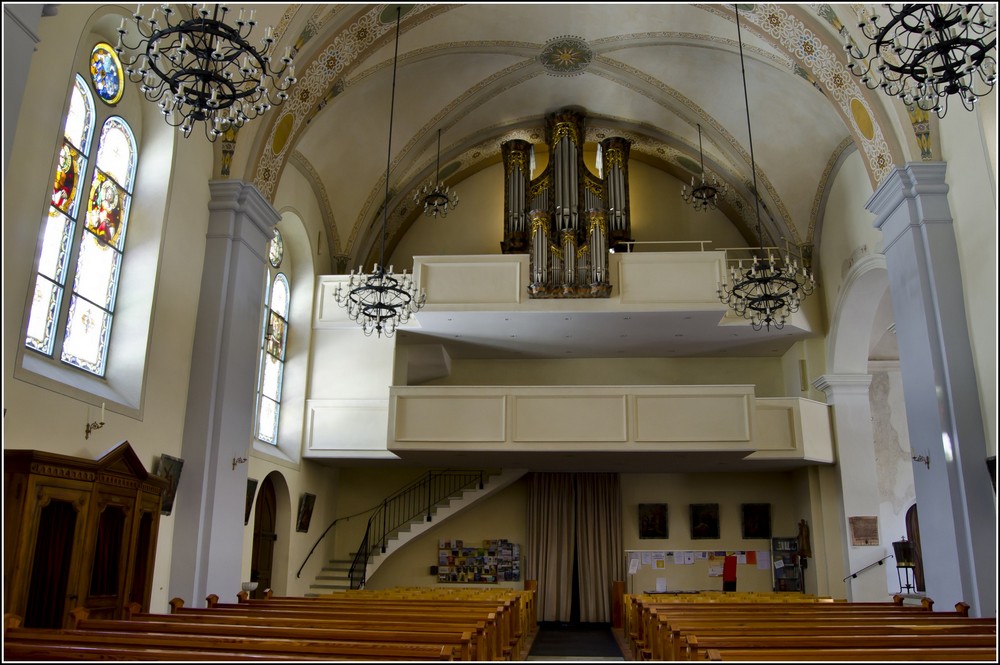
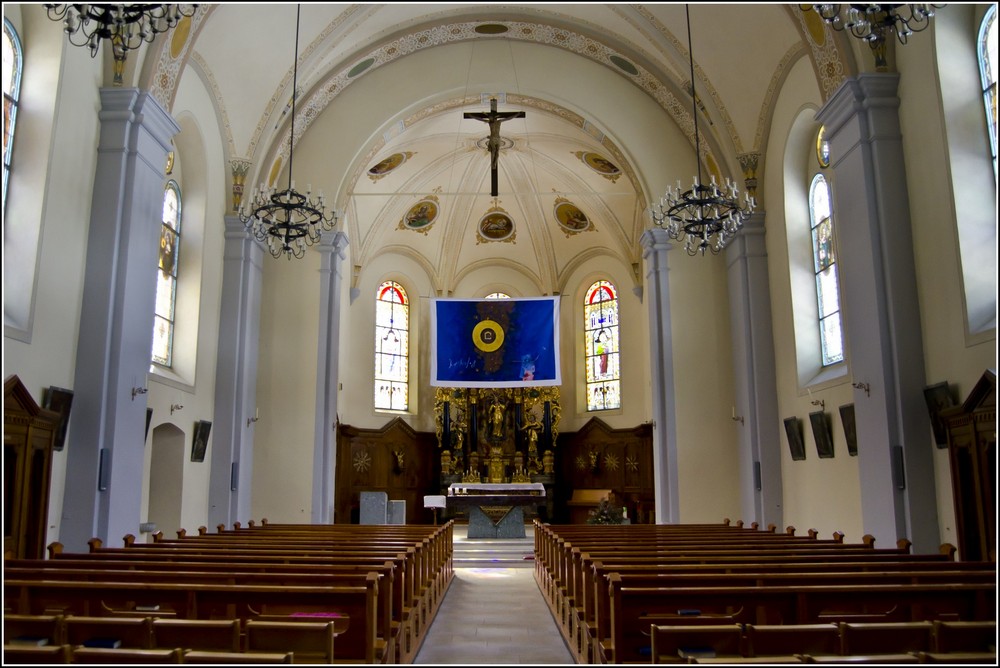
Finally, since I managed to get ready early, I ran around the town a little. I came across a Roman Catholic parish church. Small, but with its own organ!
And then came the sad part of any trip: the departure home. Once again, the trains ran with Swiss-watch punctuality, Zurich Airport greeted us with its shops, and we waited for the flight. Apparently, so that we wouldn’t be too sad, Swiss Airlines upgraded our entire group to business class, which sweetened the pill of returning home. After all, the Swiss know a thing or two about expensive things. The business lounge, although small, is cozy, comfortable, and offers a wide selection of everything.
Since Switzerland is seeing us off like this, we will definitely have to come back here. Especially since the country resembles the business lounge at Zurich Airport: small but cozy, comfortable, and with a rich selection of everything. See you in the mountains!
Useful information and links
- Length of marked trails: 55 kilometers
- Length of hiking trails: 50 kilometers
- Length of freeride trails: 18 kilometers
- Elevation difference: 1411 – 2610 meters
- Lifts: 7 T-bar lifts, 2 gondola lifts, 1 chairlift
- Season: early December – early April
- Ski pass prices in Leukerbad
- Current slope conditions in Leukerbad
- Weather in Leukerbad
- Official website of Leukerbad
- Leukerbad on the website of the Swiss Tourism Office
- Transport timetable and tickets in Leukerbad
- Car rental in Switzerland
- Hotels in Leukerbad
- Ski insuranse