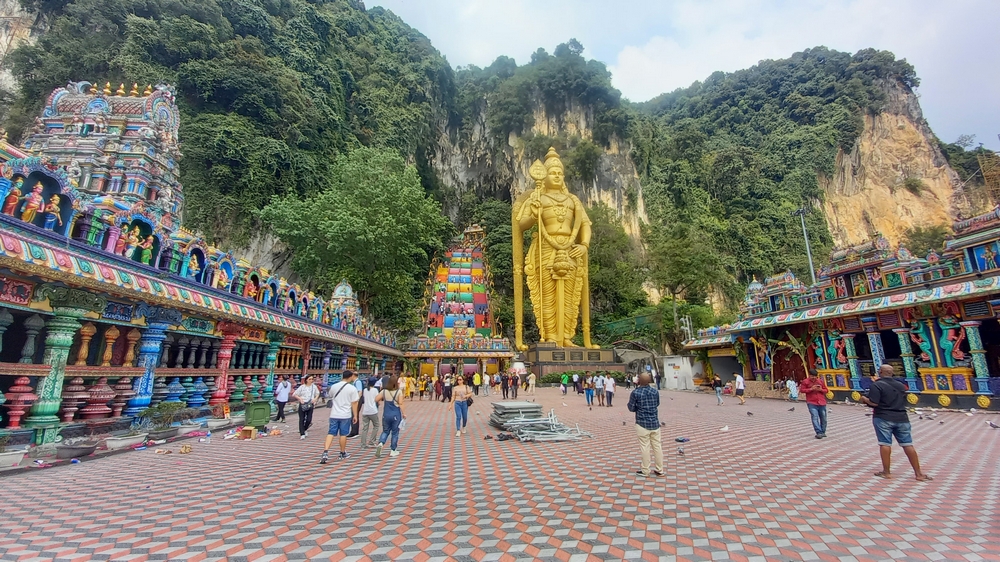
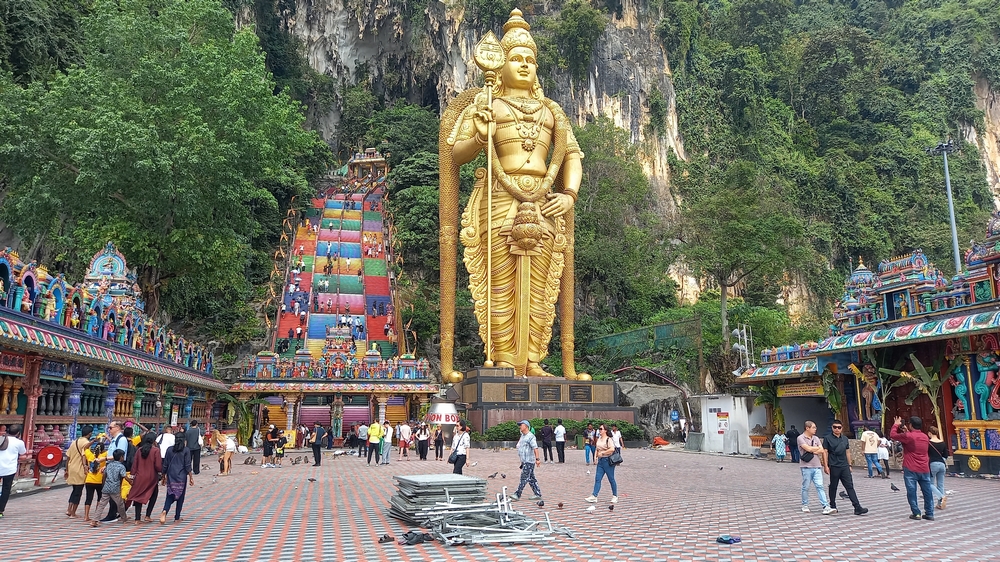
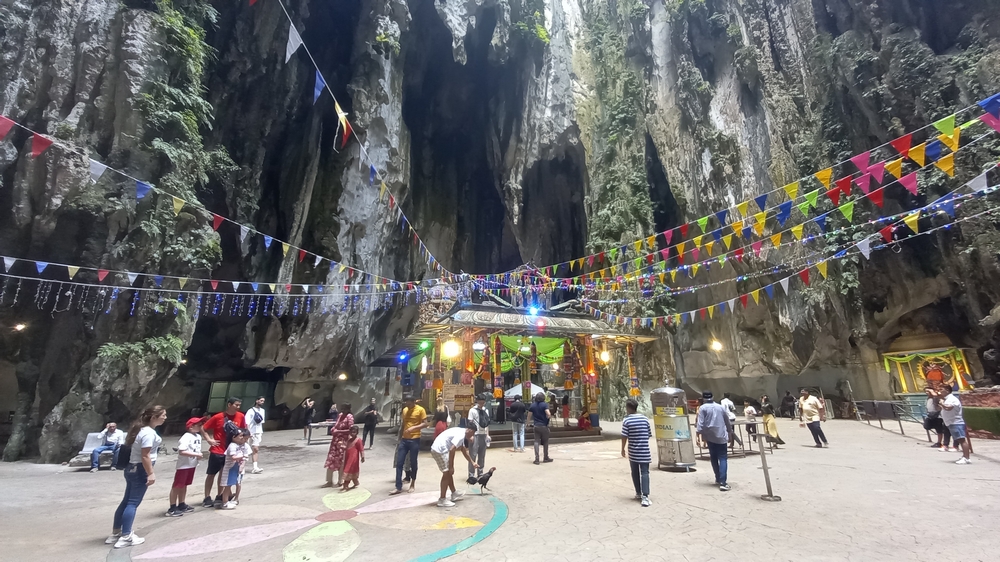
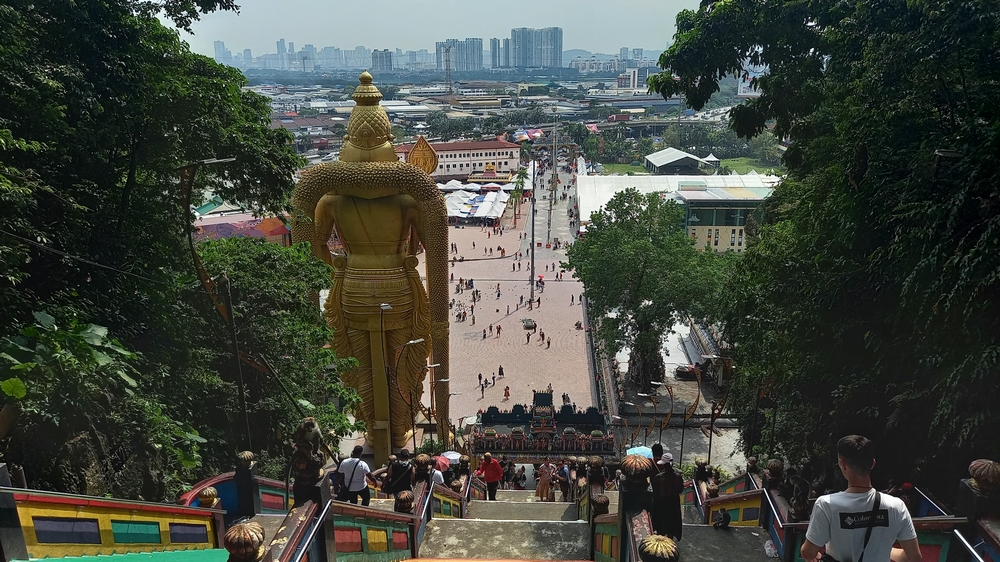
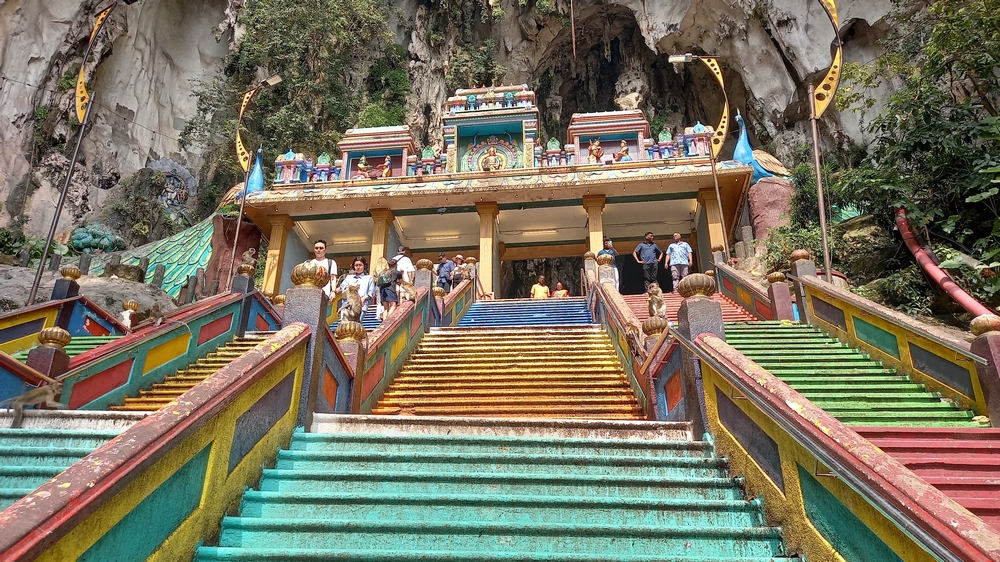
Batu Caves is a massive cave complex dedicated to Hindu deities. It lies 13 km north of downtown Kuala Lumpur. This site ranks among Malaysia’s top attractions and natural wonders. Each year, it attracts nearly 1.5 million tourists and pilgrims. At the entrance stands a 42.7-meter golden statue of Lord Murugan. The complex includes about 30 caves. The most famous is the Temple Cave, which houses Hindu relics. A multicolored staircase with 272 steps leads to the top.
The History of Batu Caves
Despite their divine appearance, the caves formed naturally from limestone. They cover an area of nearly 2.5 km² and appeared over 400,000 years ago. The nearby Sungai Batu River gave them their name.
Over time, water and wind shaped the caves. Early local tribes used them as shelter during hunting trips. For centuries, dense forest hid the caves from outsiders.
In the early 18th century, Indian merchant Tambusami Pillai discovered the caves. He decided to build a temple dedicated to Lord Murugan. This decision marked the beginning of the complex’s religious importance.
In the 1860s, Malaysia was part of the British Empire. Chinese workers mined guano in the caves. In 1878, American naturalist William Hornaday described the caves in his work, bringing them wider recognition.
Since 1892, the caves have hosted a major Tamil festival. It takes place annually from late January to early February. In 1920, the site officially opened to tourists. Builders later constructed a staircase with 272 steps to improve access. They first used wood, then replaced it with concrete as visitor numbers grew.
Today, geologists continue to monitor the caves. Natural processes still affect their structure, and some passages remain unsafe.
The Temples of Batu Caves
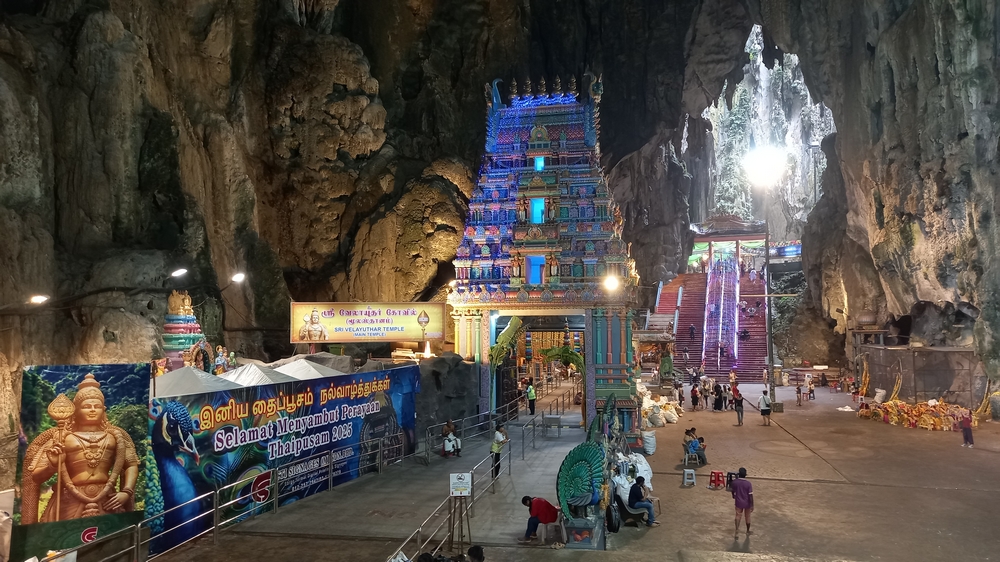
Batu Caves form the largest Hindu shrine outside India. Most religious sites are located inside the Temple Cave.
The Temple Cave rises almost 100 meters above ground. It serves as the main attraction for both pilgrims and tourists.
In 2018, workers painted the staircase in bright colors. Authorities later questioned this decision because it violated heritage regulations.
The Ramayana Cave sits to the left of the main complex. A large green statue of Hanuman marks the entrance. This cave focuses on tourism rather than religion. Inside, displays tell the story of Rama. The Hanuman temple nearby opened in 2001.
At the base of the hill, visitors can explore the Gallery Cave and Museum Cave. These spaces display frescoes, sculptures, and artworks посвящённые (→ replace: dedicated to) Lord Murugan. Both opened in 2008. Nearby, a pond and performance area add to the atmosphere.
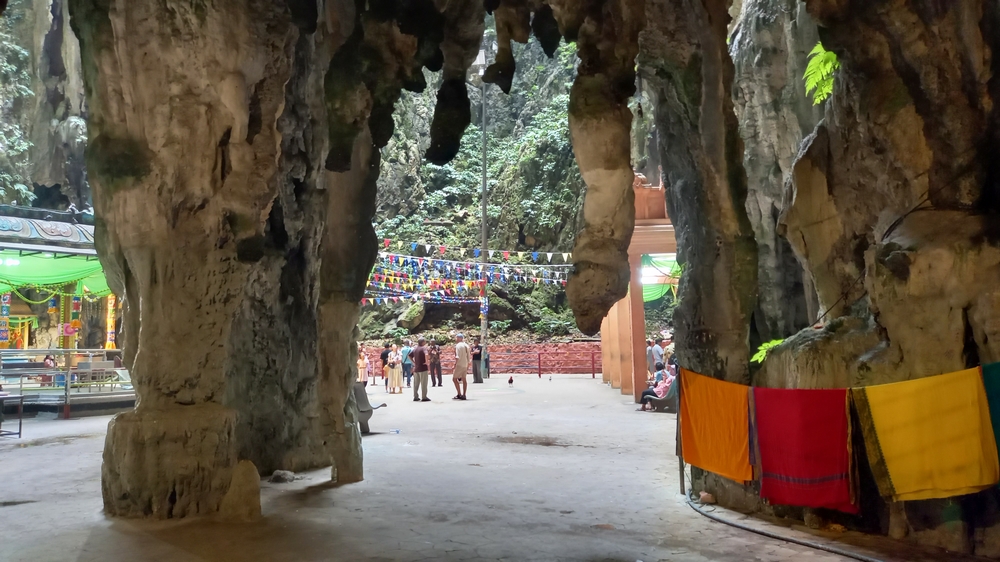
The Dark Cave stretches over 2 km and remains under exploration. It has no religious role. Visitors can enter only with guided tours. Inside, they can see stalactites and stalagmites.
The Statue of Batu Caves
A 43-meter gilded statue of Lord Murugan stands at the entrance. Builders unveiled it in 2006 after three years of construction. It remains the tallest statue of Murugan in the world.
Murugan is also known as Skanda, Kumara, and Kartikeya. In Hindu belief, he is the god of war and the leader of the divine army. He also represents love. Many legends in the caves connect to his victory over the demon Surapadman.
A Legend about Shiva, Ganesha, and Murugan
According to legend, Shiva guarded all beings but often remained in deep meditation. The gods needed another leader. Vishnu asked Shiva to appoint one of his sons.
Shiva proposed a contest. The son who circled the universe fastest would become the leader. Murugan set off immediately on his peacock. Ganesha chose a different approach. He walked around his parents, seeing them as the universe itself. Shiva accepted this wisdom and declared Ganesha the winner.
How to Get to Batu Caves
By train
Take the KTM Komuter from Kuala Lumpur to Batu Caves Station. The station is located right next to the complex. Tickets cost 2.6–5 ringgit. Trains run from 5:00 a.m. to 10:30 p.m. every 30–60 minutes.
By bus
Buses 11, 11D, and 13 run from Chinatown (Petaling Street). Fares start from 2.5 ringgit.
By taxi
Many tourists book a round trip with waiting time. This costs about 140–150 ringgit.
Batu Caves on the map
FAQ
How much is admission?
Admission to the main Temple Cave is free. However, there may be a fee to visit some of the additional caves, such as the Dark Cave.
Where are the Batu Caves located?
They are located about 13 km north of downtown Kuala Lumpur.
How do I get to the Batu Caves?
The most convenient way is to take the KTM Komuter train from KL Sentral. You can also get there by taxi or bus.
How many steps lead to the main cave?
There are 272 brightly colored steps leading to the Temple Cave.
What statue is at the entrance?
A huge golden statue of Lord Murugan, standing about 42.7 meters tall, is located in front of the entrance—one of the largest in the world.
When is the best time to visit Batu Caves?
It’s best to arrive early in the morning to avoid the heat and crowds of tourists.
What is the dress code?
Since this is a religious site, modest clothing is recommended: shoulders and knees must be covered.
Are there monkeys there?
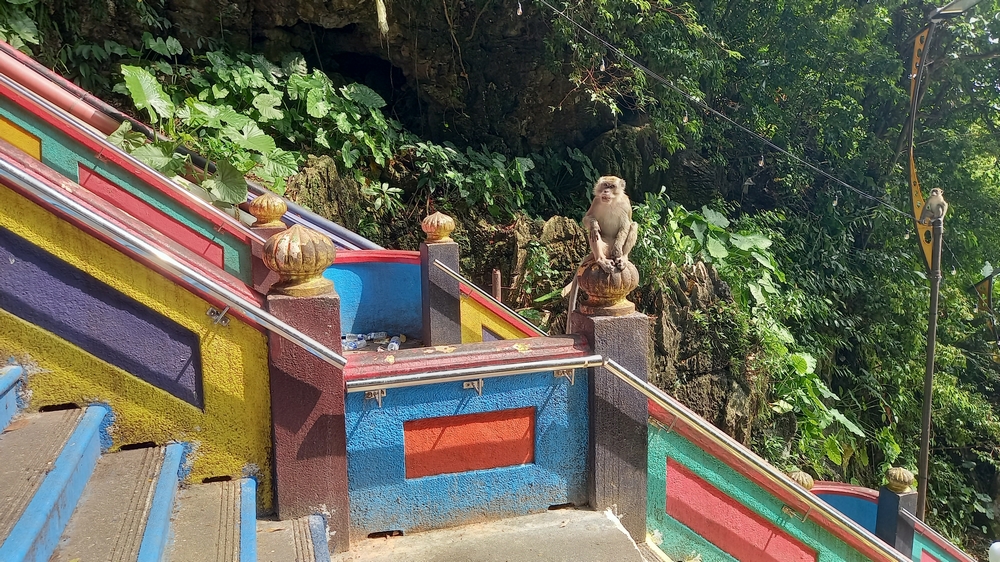
Yes, there are many macaques on the grounds. They can be quite persistent, so avoid showing food and keep your belongings secure.
How much time should I allow for a visit?
It usually takes 1 to 2 hours to tour the complex.
Are there any festivals held there?
Yes, the most famous event is the Hindu festival of Thaipusam, which attracts thousands of pilgrims every year.
Is the site suitable for children and the elderly?
Climbing the 272 steps can be challenging, especially in the heat, so you should consider your physical fitness.