Travelers head to Vietnam for turquoise beaches, jungle adventures, dramatic bays, ancient pagodas, imperial palaces, snake restaurants, and endless rice terraces. Here’s what you need to know about entry rules in 2026.
Visa-Free Entry to Vietnam
Under Resolution 44/NQ-CP dated March 7, 2025, citizens of 12 countries can enter Vietnam visa-free for up to 45 days. Visa-free countries:
- Denmark
- Finland
- France
- Germany
- Italy
- Japan
- Norway
- Russia
- South Korea
- Spain
- Sweden
- United Kingdom
This rule remains valid until March 14, 2028. It applies to mainland Vietnam and Phu Quoc. Transit passengers for those countries also do not need a visa.
Documents required for entry into Vietnam
Entry into the country is carried out using a foreign passport — biometric or regular. Its validity must exceed the date of crossing the border by at least 6 months. It must have blank pages for a stamp with the date of expiry of the visa-free period. You must leave Vietnam before the specified date, otherwise you will have to pay a fine for each day you overstay.
Upon arrival, you may be asked to present your return ticket and confirmation of your accommodation booking for the duration of your stay in the country.
Vietnam E-Visa
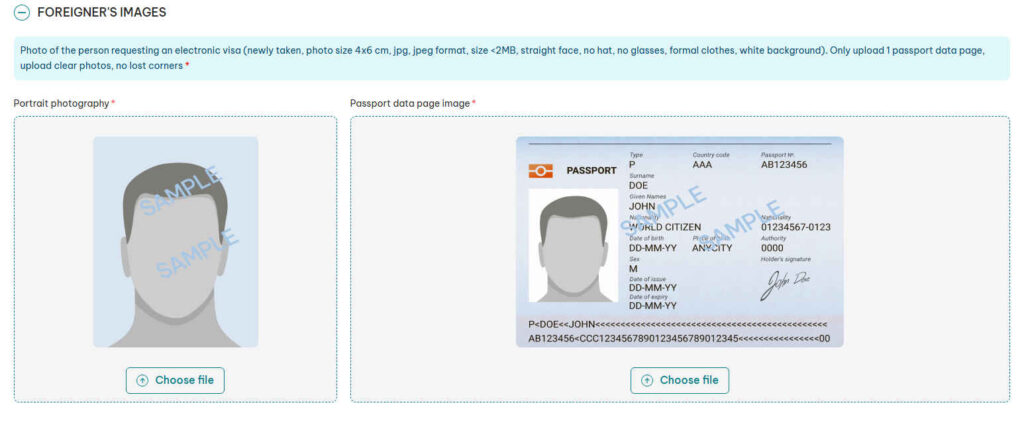
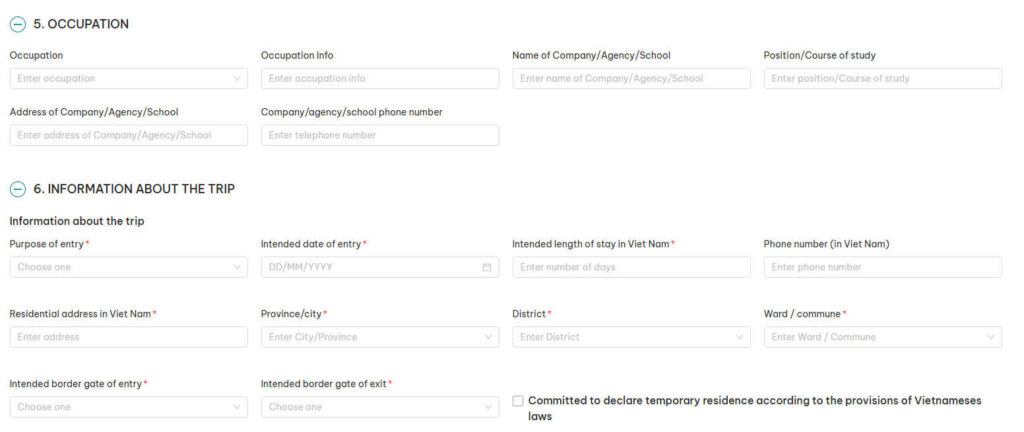
If you plan to stay longer than 45 days, apply for an electronic visa (valid for up to 90 days). You can submit your application online through Vietnam’s official portal: evisa.gov.vn.
Application Form
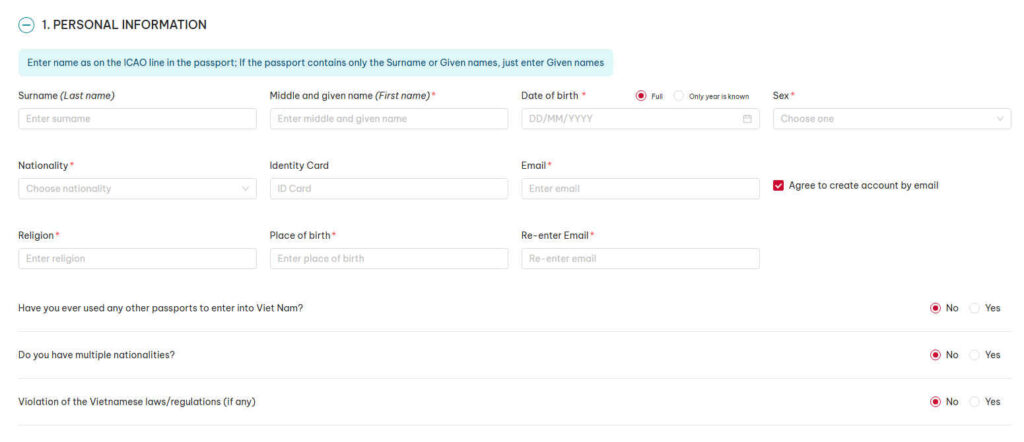
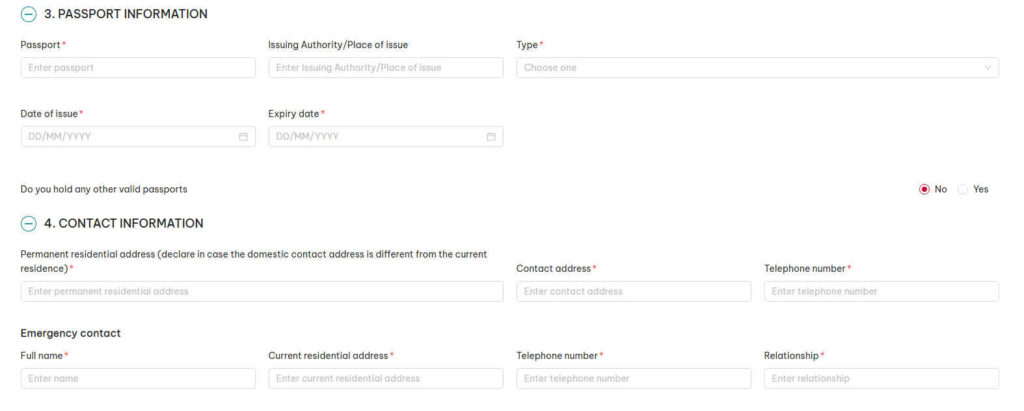
The form must be completed in English. You will need to provide:
- Personal details (full name, nationality)
- Passport information
- Contact details (address, phone, email)
- Travel details (purpose, entry date, accommodation address)
After submission, you will receive a registration code by email to track your application status.
Processing Time and Fees
- Processing time: 3–15 working days
- Single-entry visa: from $25
- Multiple-entry visa: from $50
Payment is made online by bank card.
Important E-Visa Rules
Entry with an e-visa is allowed only through designated border checkpoints (including 13 airports). Full list of checkpoints you will find below.
You must specify your exact entry point in the application. Entry through another checkpoint will be denied.
If you are eligible for visa-free entry (45 days) but fail to present the correct e-visa documentation, you must leave the country within 45 days.
You cannot extend an e-visa while in Vietnam.
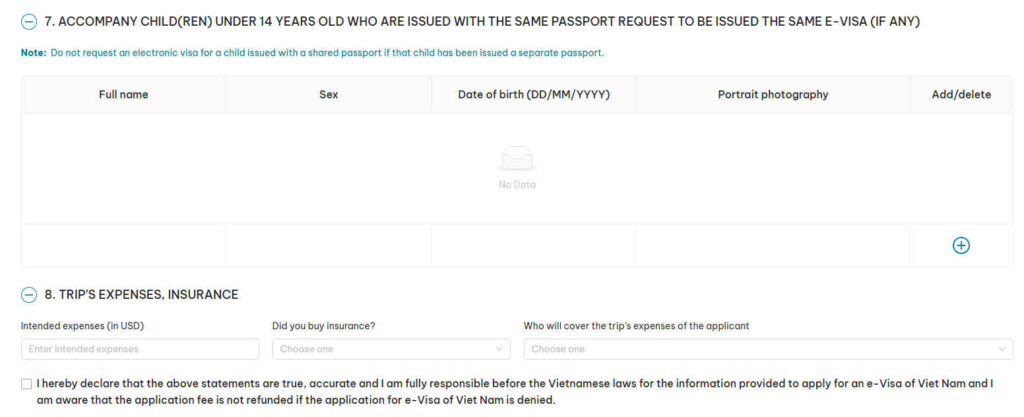
E-visa for children under 14
Children under 14 can travel to Vietnam without their own passport. An entry in the passport of one of the parents is sufficient. When filling out the form for an electronic visa, the child’s details are entered in the adult’s application form. If the minor has their own passport, they will need a separate entry permit.
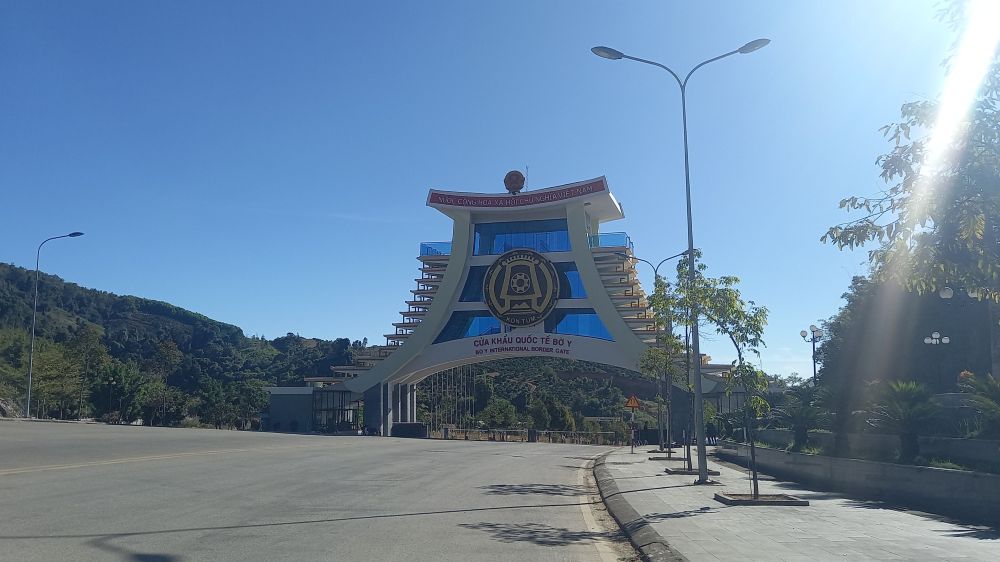
List of e-visa border points
Airports
- Cat Bi Airport Border Gate
- Cam Ranh Airport Border Gate
- Can Tho Airport Border Gate
- Da Nang Airport Border Gate
- Noi Bai Airport Border Gate
- Phu Quoc Airport Border Gate
- Phu Bai Airport Border Gate
- Tan Son Nhat Airport Border Gate
- Van Don Airport Border Gate
- Tho Xuan Airport Border Gate
- Dong Hoi Airport Border Gate
- Phu Cat Airport Border Gate
- Lien Khuong Airport Border Gate
Seaports
- Chan May Port Border Gate, Thua Thien Hue Province
- Cam Pha Port Border Gate, Quang Ninh Province
- Da Nang Port Border Gate, Da Nang City
- Duong Dong Port Border Gate, Kien Giang Province
- Dung Quat Port Border Gate, Quang Ngai Province
- Hon Gai Port Border Gate, Quang Ninh Province
- Hai Phong Port Border Gate, Hai Phong City
- Nghi Son Port Border Gate, Thanh Hoa Province
- Nha Trang Port Border Gate, Khanh Hoa Province
- Quy Nhon port border gate, Binh Dinh province
- Ho Chi Minh City Port Border Gate, Ho Chi Minh City
- Vung Ang Port Border Gate, Ha Tinh Province
- Vung Tau Port Border Gate, Ba Ria – Vung Tau Province
Land border crossing points
- Bo Y international border gate, Kon Tum province
- Cha Lo international border gate, Quang Binh province
- Cau Treo international border gate, Ha Tinh province
- Huu Nghi international border gate, Lang Son province
- Ha Tien international border gate, Kien Giang province
- Lao Bao international border gate, Quang Tri province
- Lao Cai international border gate, Lao Cai province
- La Lay international border gate, Quang Tri province
- Moc Bai international border gate, Tay Ninh province
- Mong Cai international border gate, Quang Ninh province
- Nam Can international border gate, Nghe An province
- Na Meo international border gate, Thanh Hoa province
- Vinh Xuong international land and river border gate, An Giang province
- Tinh Bien international border gate, An Giang province
- Tay Trang international border gate, Dien Bien province
- Xa Mat international border gate, Tay Ninh province
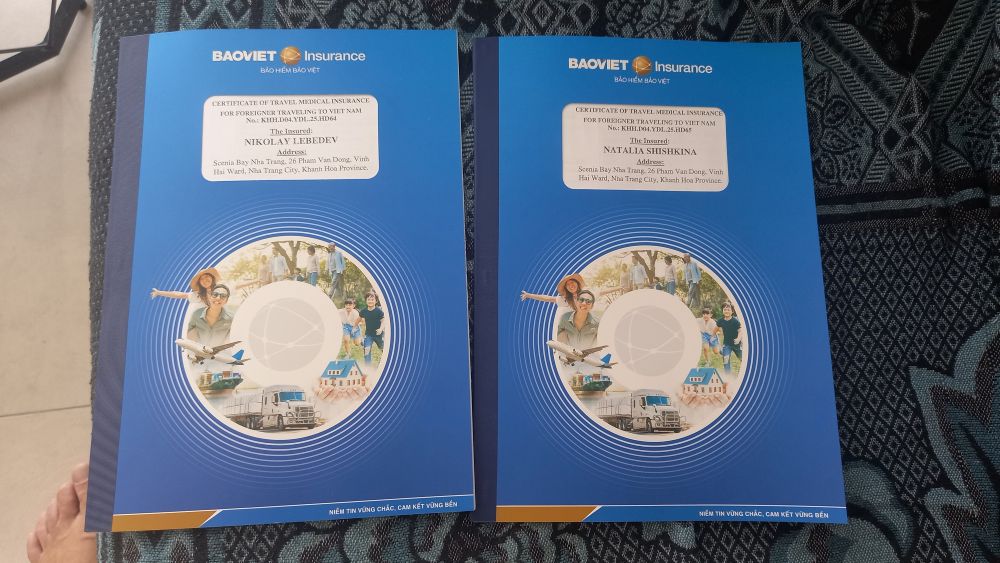
Medical insurance for a visa
Medical insurance for travel to Vietnam is not mandatory, but it is recommended. You can choose any insurance policy online in advance, or take out a medical insurance policy at a local clinic, such as Bao Viet.
Custom rules
There are strict drug controls when entering Vietnam: attempting to bring prohibited substances into the country can result in imprisonment or even the death penalty. In addition to drugs, customs will not allow firearms, pornographic materials, or items that discredit local traditions. From January 1, 2025, it will be prohibited to bring vapes and electronic cigarettes into Vietnam.
Allowed Without Declaration:
- Foreign currency up to $5,000
- 400 cigarettes, 100 cigars, or 500 g of tobacco
- 2 liters of alcohol under 22% or 1.5 liters of stronger alcohol
- 5 kg of tea and 3 kg of coffee
- Personal goods worth up to $300
Prohibited for Export:
- Weapons and ammunition (including collectible items)
- Medications
- Antiques
- Live wild animals
- Turtle shells
- Corals and rare plants